






Key Takeaways What is delivery management system? It is a digital platform that digitizes and automates the entire logistics lifecycle, from order intake to final proof of delivery. The importance of the delivery management system lies in its ability to meet rising customer expectations for speed while controlling operational costs. Key elements of effective delivery management include automated route optimization, real-time tracking, and comprehensive fleet analytics.
What is Delivery Management ?

Delivery management is the process of planning and coordinating deliveries from dispatch to the destination. It ensures orders are assigned and completed efficiently, often supported by a professional logistics transportation system.
The process starts with order allocation based on location and available resources. Routes are then optimised to help drivers complete deliveries within the required timeframes.
Real-time tracking gives dispatch teams a live view of where each driver is and whether schedules are holding. When a delay is detected, teams can reroute or notify customers before the problem compounds.
Key Elements of Effective Delivery Management
No single process makes delivery management work. It requires several components operating together, each covering a different stage of the cycle, from how orders are received to how performance is measured.
1. Order Processing and Management
Collecting and organising order data from multiple channels into one system reduces the chance of duplicate orders or missing delivery details reaching a driver.
Accurate order validation ensures delivery schedules are realistic and resources are properly allocated, consequently reducing failed deliveries and improving overall efficiency.
2. Route Planning and Optimization
Route planning sounds straightforward, when it isn’t. A route that looks efficient on paper can fall apart the moment a driver hits school-zone traffic at 3pm.
Optimised routes support better vehicle optimization, reducing fuel use and improving productivity. Routes can be adjusted in real time if necessary, allowing businesses to minimise delays and maintain consistent performance.
3. Real-Time Tracking and Visibility
Real-time tracking lets dispatch teams see where each driver is and whether deliveries are running on schedule. When something falls behind, teams can respond before it affects the customer.
It also enhances customer communication by providing accurate delivery updates. Thus, createing a more transparent and reliable delivery experience for your business.
4. Delivery Driver and Fleet Management
Drivers and vehicles are essential to delivery operations and require clear coordination. Structured workflows help drivers follow routes efficiently and complete deliveries on time.
Fleet management ensures vehicles are properly maintained and reliable. Regular monitoring reduces breakdown risks and supports consistent operations.
5. Performance Monitoring and Analytics
Measuring delivery performance helps businesses understand operational efficiency. Key data, such as delivery times and route effectiveness, provides insight into daily operations.
This data allows businesses to identify issues and improve planning strategies. Over time, it supports better decisions and continuous operational improvement.

Benefits of Managing Delivery
The impact of delivery management extends beyond getting parcels to the door on time. When the process is structured well, it affects costs, team workload, customer trust, and how well a business can scale.
1. Cost Reduction and Profitability
Effective delivery management reduces operational costs by optimizing routes and improving resource allocation. Shorter routes and better planning help lower fuel usage and reduce vehicle wear over time.
It also minimizes failed deliveries by ensuring accurate scheduling and verified delivery details. This helps businesses avoid additional costs from repeated delivery attempts and returns.
2. Enhanced Customer Satisfaction and Loyalty
Delivery management improves transparency by providing accurate delivery updates and estimated arrival times. This helps businesses keep customers informed throughout the delivery process.
Reliable and timely deliveries increase customer satisfaction and trust. Consistent service encourages repeat purchases and strengthens long-term customer relationships.
3. Operational Agility and Scalability
As delivery volumes grow, structured delivery management helps businesses handle complexity more efficiently. It ensures that operations remain organised without increasing manual workload.
Businesses can quickly adjust routes, reassign deliveries, and respond to unexpected changes. This flexibility helps maintain service quality even during periods of high demand.
4. Improved Employee Satisfaction and Retention
Clear delivery planning and coordination make daily tasks easier for drivers and dispatch teams. With better workflows, teams can complete deliveries more efficiently and with less confusion.
Reduced manual work and clearer schedules help lower stress levels. This contributes to better performance and improved employee satisfaction.
5. Data-Driven Strategic Growth
Delivery management gives businesses access to operational data such as delivery times and route efficiency. This helps businesses evaluate performance more accurately.
By analysing this data, companies can identify inefficiencies and improve planning strategies. Over time, this supports more informed decisions and continuous operational improvement.
Industry-Specific Applications of Delivery Management

Delivery management looks different depending on the industry. What a retailer needs from it differs significantly from what a pharmaceutical supplier or a construction site needs.
1. Retail and E-commerce: Hyper Local Fulfillment
Retail and e-commerce focus on fast delivery and customer convenience. Delivery management helps assign orders to the nearest location to support same day or next day delivery.
It also simplifies returns by organising pickups and updating inventory, reducing the back-and-forth that typically slows down post-delivery operations.
2. Manufacturing and Construction: Just-in-Time Coordination
Manufacturing and construction rely on precise delivery timing to support workflows. Late or early deliveries can disrupt operations and increase costs.
Delivery management helps schedule deliveries accurately so materials arrive when they are needed, not before storage runs out of space or after a workflow has already stalled.
3. Food, Beverage, and Pharmaceuticals: Cold Chain Integrity
These industries require strict control of temperature and handling conditions. Delivery management helps maintain product quality during transportation.
Monitoring tools track temperature and handling conditions in real time, giving businesses documented evidence of compliance and a faster response when conditions drift out of range.
4. 3PL and Courier Services: Multi-Tenant Management
Logistics providers handle deliveries for multiple clients at the same time, which creates a risk of mixing up data, reporting, or driver assignments if the system does not keep each client separated.
It also improves efficiency by combining shipments and optimising routes. This supports better coordination and simplifies billing and reporting.
Australia’s Regulation Regarding Delivery
Delivery operations in Australia must follow regulations to ensure safety and compliance. Understanding these rules helps businesses avoid penalties and maintain reliable processes.
Australian Consumer Law (ACL)
The Australian Consumer Law outlines customer rights when goods are not delivered as promised. Businesses must ensure products are delivered within agreed timeframes or provide appropriate resolutions.
Australia Post Delivery Policy
The Australia Post delivery policy defines how mail and parcels should be handled across Australia. It sets expectations for delivery standards, timeframes, and service coverage.
Transport, Postal, and Warehousing Laws
Regulations related to transport, postal, and warehousing govern how goods are moved and stored. These laws ensure businesses follow safety standards, licensing requirements, and operational guidelines.
Tax Reporting for Courier Services
Businesses involved in delivery services may be required to report contractor and courier payments under the tax regulations, keeping records clean and obligations met.
Common Pitfalls in Delivery Management and Practical Solutions
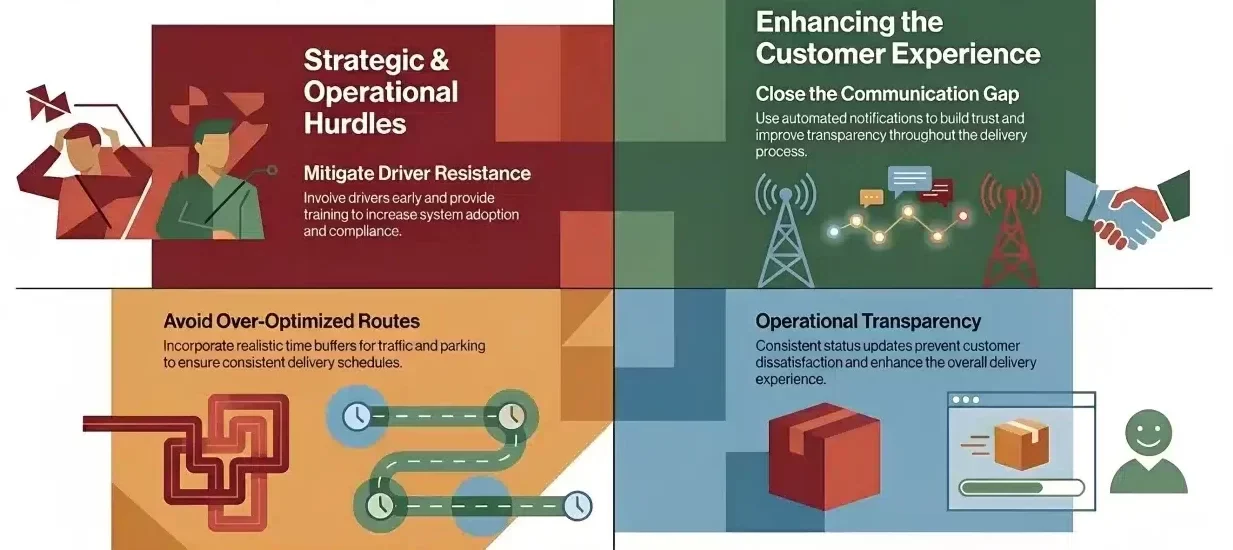
The Importance of The Delivery Management System in Australia
1. Improving delivery speed and reliability: Delivery management helps businesses plan routes and schedules more efficiently. This reduces delays and ensures deliveries arrive on time.
2. Enhancing visibility and tracking: Businesses can monitor deliveries in real time and respond quickly to issues. This improves transparency for both teams and customers.
3. Reducing operational costs: Optimized routes and better coordination help reduce fuel usage, labour costs, and failed deliveries.
4. Supporting better customer experience: Accurate delivery updates and reliable service improve customer satisfaction and build long-term trust.
Conclusion
Delivery management is more than a logistics function. It shapes how well a business controls costs and maintains service quality when the pressure is on.
Businesses that get this right see the results across multiple areas: fewer failed deliveries, lower fuel spend, better driver retention, and customers who come back. Process drives it, not just technology.
If your business wants to improve delivery performance and streamline operations, you can consult our expert to find the right solution for your needs.
A courier app typically focuses on the driver's interface for a single delivery, while a Delivery Management System is a comprehensive platform that manages the entire logistics lifecycle, including order processing, fleet management, route optimization, and analytics for the entire company. Route optimization reduces costs by calculating the most efficient paths for deliveries, which significantly lowers fuel consumption and vehicle maintenance expenses. It also maximizes the number of deliveries a driver can complete in a shift, improving labor efficiency. Yes, modern Delivery Management Systems are designed to integrate seamlessly with existing business software, including ERPs, CRMs, and Warehouse Management Systems (WMS), ensuring data synchronization across sales, inventory, and logistics. Absolutely. While enterprise-grade systems exist, many DMS providers offer scalable solutions tailored for small to medium-sized businesses. These systems help small fleets compete with larger players by improving efficiency and customer service without a massive upfront investment. Electronic Proof of Delivery (ePOD) is a digital method of verifying that a shipment has been delivered. It can take the form of a digital signature captured on a mobile device, a photograph of the package at the doorstep, or a barcode scan, providing indisputable evidence of fulfillment.Frequently Asked Question