





Key Takeaways Understand the core definition and purpose of an invoice in business. Learn the critical differences between standard and tax invoices. Explore the various invoice types used in the Australian market. Discover the 7 mandatory fields required by the ATO. An invoice is a formal document issued by a seller to a buyer requesting payment for goods or services provided. It outlines what was sold, how much is owed, and when payment is due. For example, Net 30 means payment is due within 30 days of the invoice date. Invoices are commonly used by businesses, freelancers, contractors, and suppliers to manage transactions professionally. They also create a clear record between both parties. In Australia, invoices may also support GST reporting and business bookkeeping, making them an essential part of day-to-day operations. An invoice is a general payment request used for goods or services supplied to a customer. It may include pricing, payment terms, and seller details. A tax invoice is a specific type of invoice used by GST-registered businesses in Australia. It includes extra details such as the seller’s ABN and GST information. Businesses often need tax invoices so customers can claim GST credits where eligible and to meet ATO compliance requirements.
What Is an Invoice?

Invoice vs. Tax Invoice

Invoice vs. Bill, Receipt, and Purchase Order
Invoices, bills, receipts, and purchase orders are commonly used in business transactions, but each document serves a different purpose. Understanding when they are used can help businesses manage payments, approvals, and record-keeping more effectively using electronic invoicing tools.
1. Invoice vs. Bill: same document, two perspectives
An invoice and a bill are usually the same document. Businesses often call it an invoice when sending it, while customers may call it a bill when receiving it.
2. Invoice vs. Receipt: before vs. after payment (AU ATO Context)
An invoice is sent before payment is made, while a receipt is issued after payment is received. Receipts are proof of payment and useful for tax and record-keeping purposes.
3. Invoice vs. Purchase Order: request to sell vs. authorisation to buy
An invoice requests payment after goods or services are supplied, while a purchase order is created by the buyer before the sale to approve the purchase. Businesses often streamline this process using an automated invoicing software platform.
Types of Invoices in Australia
Business transactions vary wildly in complexity, duration, and structure. Consequently, a single, one-size-fits-all invoice is rarely sufficient for all scenarios. Australian businesses utilising a modern accounting system in Australia utilise several different types of invoices to suit specific operational needs, project phases, and accounting requirements.
1. Standard Tax Invoice
A standard tax invoice is the most common invoice used by GST-registered businesses. It includes required tax details and GST charges where applicable.
2. Proforma Invoice
A proforma invoice is a preliminary invoice sent before goods or services are delivered. It outlines estimated costs but is not a final payment request.
3. Progress Invoice
A progress invoice is used for staged payments during long projects. It allows businesses to bill clients at agreed milestones.
4. Recurring Invoice
A recurring invoice is issued on a regular schedule, such as weekly or monthly. It is common for subscriptions, retainers, and ongoing services.
5. Credit Note (Adjustment Note)
A credit note reduces or cancels part of a previous invoice. It is often used for returns, discounts, or billing errors.
6. Commercial Invoice
A commercial invoice is used in international trade and exports. It includes shipment and customs details for goods crossing borders.
What Must Be on an Australian Invoice?
Australian invoices must include key business and transaction details so customers know what they are paying for. If GST applies, additional tax invoice requirements may also need to be met.
1. 7 Required fields on a standard tax invoice (ATO Rules)
A standard tax invoice should include the seller name, ABN, invoice date, item description, quantity, price, and GST amount or statement showing GST is included.
2. Invoices over $1,000 (incl. GST)
Invoices over $1,000 including GST should also include the buyer’s identity or ABN. This helps meet ATO documentation requirements.
3. Simplified invoice requirements for supplies under $82.50
For low-value sales under $82.50 including GST, simplified tax invoice rules may apply. Fewer details are generally required.
4. The 28-Day Rule: when you must provide a tax invoice upon request
If a customer requests a tax invoice, businesses must generally provide it within 28 days if required under ATO rules.
How to Write an Invoice in Australia
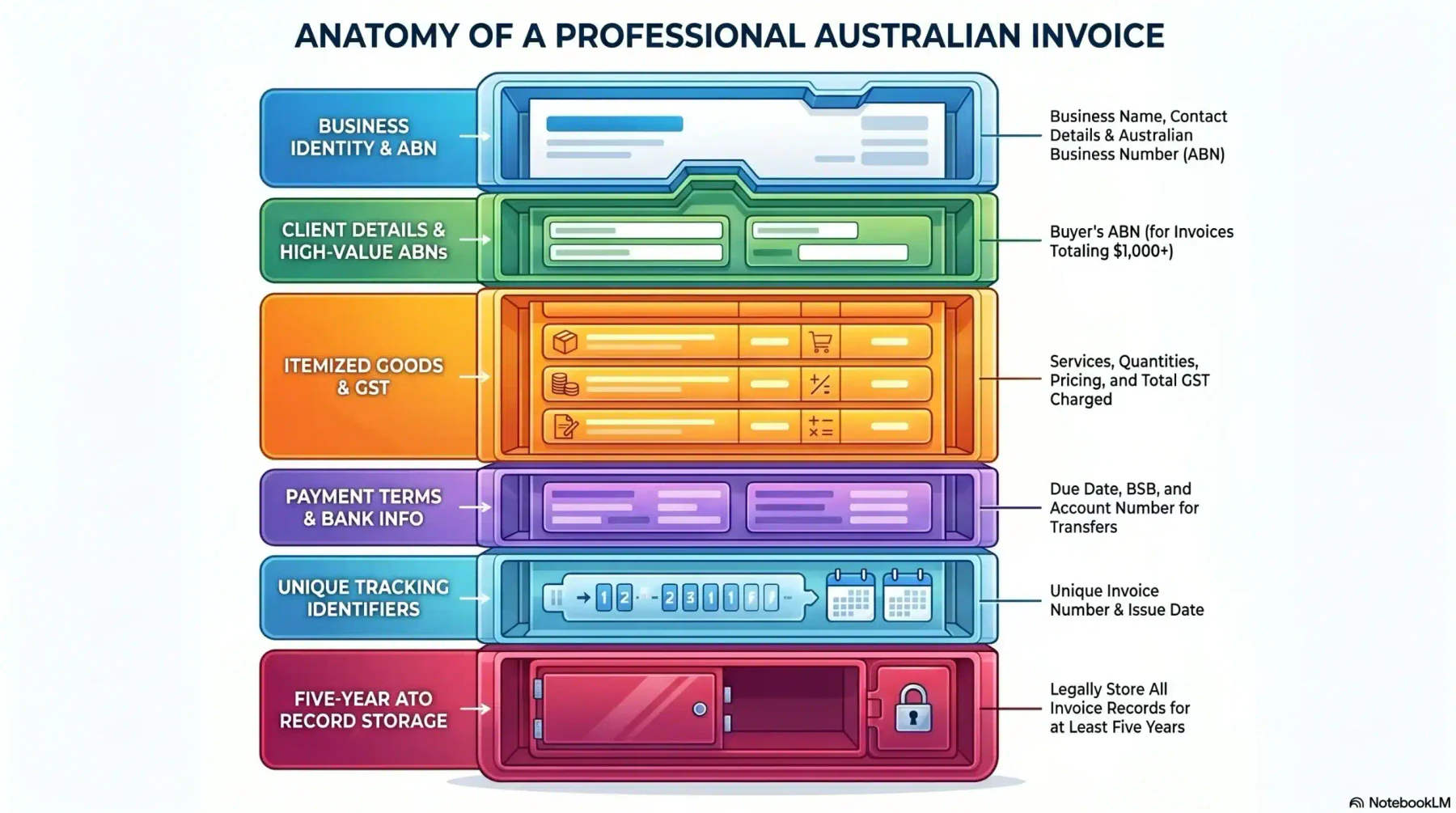
Writing an invoice correctly helps businesses look professional, reduce payment delays, and keep accurate records. A clear invoice should include business details, pricing, payment terms, and required tax information.
1. Choose the right invoice type and add your business details + ABN
Select the correct invoice type and include your business name, contact details, and ABN if applicable.
2. Add client details (include buyer’s ABN for invoices ≥$1,000)
Add the client’s name and address. For higher-value invoices, include the buyer’s ABN when required.
3. Describe goods or services and calculate GST
Clearly list each product or service provided, quantities, pricing, and any GST charged.
4. Set payment terms and include BSB/Account Number
Include payment due dates, accepted payment methods, and your bank details such as BSB and account number.
5. Assign a unique invoice number and issue date
Use a unique invoice number for tracking and include the issue date for accurate records.
6. Send, follow up, and store records for 5 Years (ATO)
Send the invoice promptly, follow up on overdue payments, and keep records for at least five years.
Download Invoice Templates for Australian Businesses for Free
Invoice templates help businesses save time while maintaining a consistent and professional format. Download the invoice templates below, which meet Australian standards and can be customised to suit your needs.
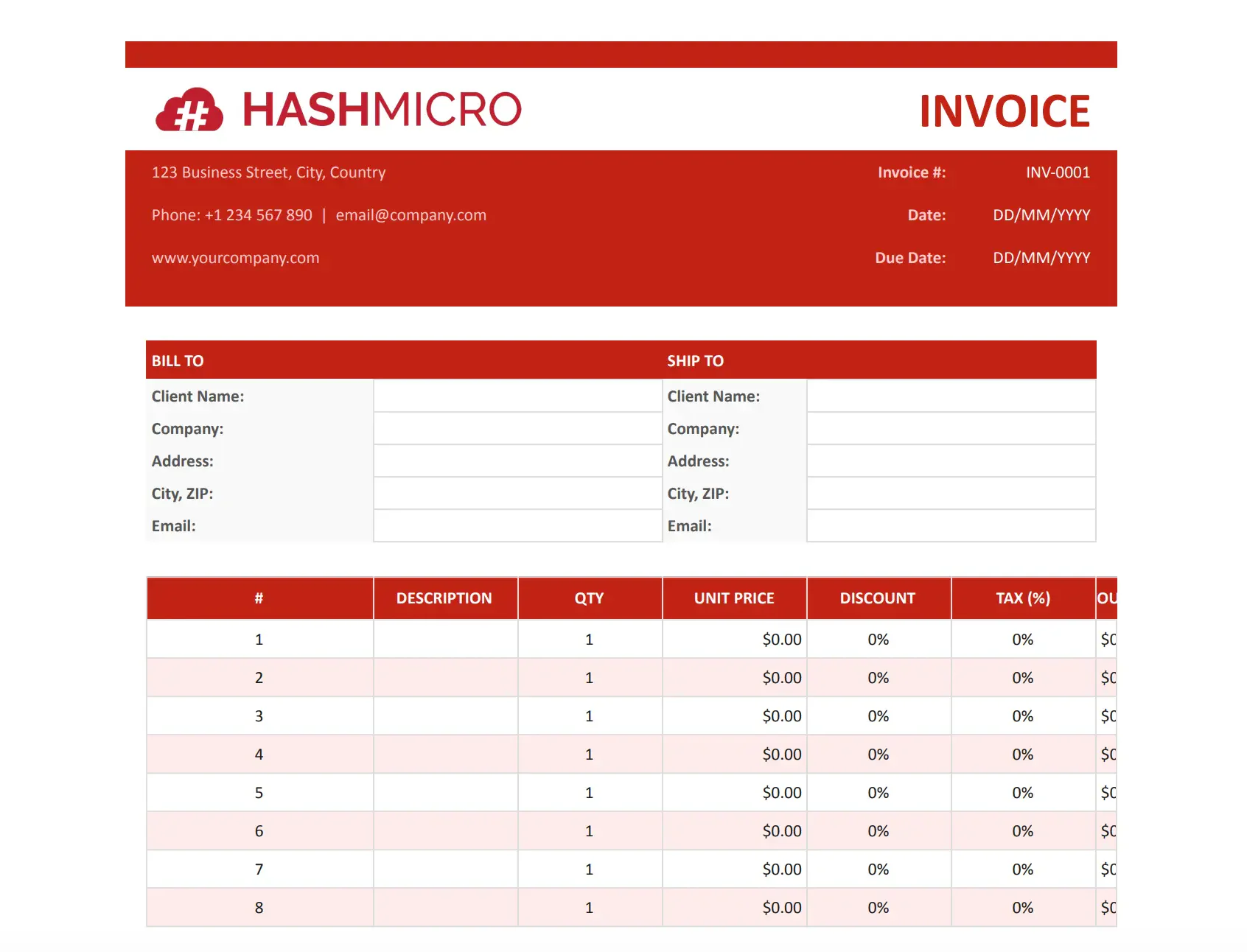
1. Standard Invoice Template
A standard invoice template suits most product or service businesses needing a simple professional format.
Standard Invoice Template
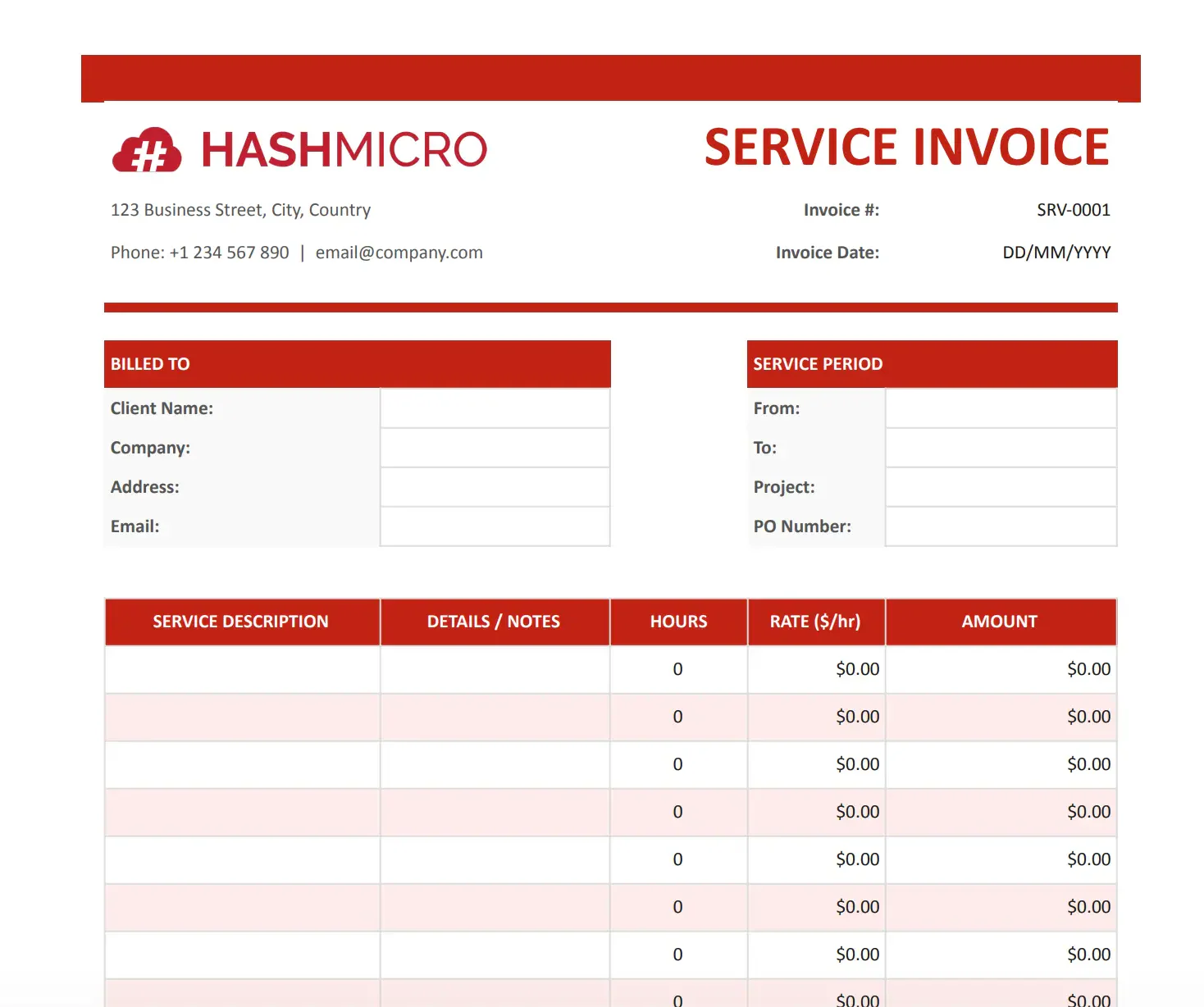
2. Service Invoice Template
A service invoice template is ideal for consultants, freelancers, and trades charging for labour or hourly work.
Service Invoice Template
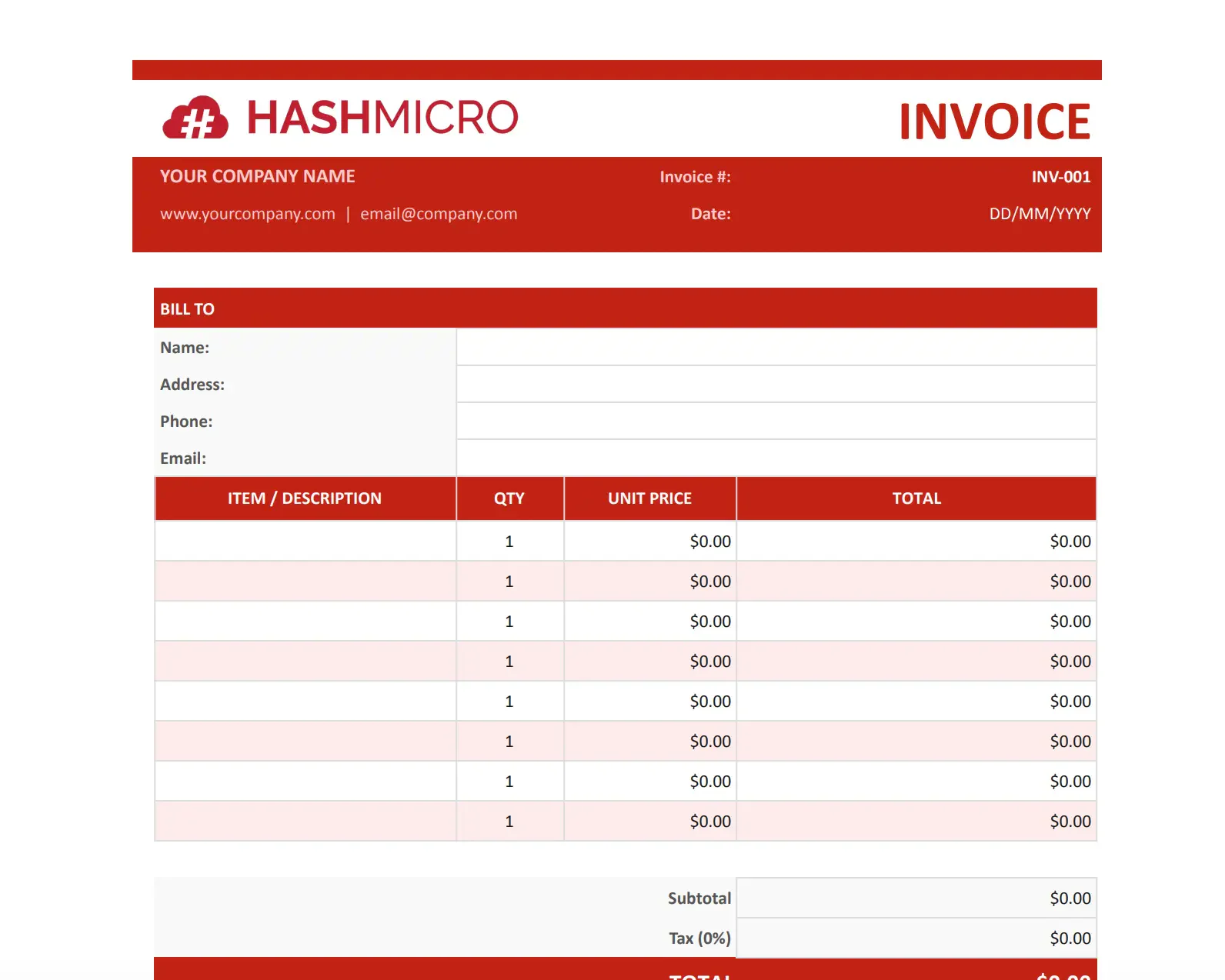
3. Simple Invoice Template
A simple invoice template is best for quick one-page invoices with basic payment details.
Simple Invoice Template
How to Send and Manage Invoices in Australia
Sending invoices quickly can improve cash flow and reduce payment delays. Using digital tools or invoicing software can make the process faster and more efficient.
1. Email, post, and eInvoicing via Peppol
Invoices can be sent by email, post, or digitally through the Peppol eInvoicing network used by many Australian businesses.
2. How to chase an unpaid invoice in Australia (friendly reminder to legal options)
Start with a polite reminder, then send follow-up notices. If unpaid, businesses may consider debt recovery or legal action.
3. Invoice Record-Keeping: the ATO’s 5-Year obligation
The ATO generally requires businesses to keep invoice and financial records for at least five years.
Key Elements of an Invoice
An invoice should give both the seller and buyer a clear record of the transaction. It explains who issued the invoice, who needs to pay, what was supplied, how much is owed, and when payment is due.
For Australian businesses, these details also support bookkeeping, GST reporting, and payment tracking. If the seller is registered for GST, the invoice may need to meet ATO tax invoice requirements.
1. Seller and buyer details
Include the seller’s business name, contact details, and ABN where required. The buyer’s name and details should also appear, especially for higher-value invoices.
Clear business details help both parties identify the transaction and reduce disputes during payment or record checks.
2. Invoice number and issue date
Each invoice should have a unique invoice number and issue date. These details make it easier to track payments, organise records, and match invoices with bank transactions.
A consistent numbering system also helps finance teams find past invoices quickly when preparing reports or following up unpaid accounts.
3. Description of goods or services
List the goods or services supplied in simple and specific terms. Add quantities, unit prices, service periods, or project details where relevant.
This helps customers understand exactly what they are being charged for and makes the invoice easier to review.
4. Pricing, GST, and total amount due
Show the price of each item or service, any GST charged, and the final amount payable. If GST is included in the total price, the invoice should make this clear.
GST-registered businesses should check that their invoices meet ATO requirements, especially when issuing tax invoices to customers.
5. Payment terms and due date
Add clear payment terms so customers know when payment is expected. Common examples include payment due on receipt, 7 days, 14 days, or Net 30.
Clear due dates can reduce confusion and help businesses manage cash flow more effectively.
6. Payment methods and bank details
Include accepted payment methods such as bank transfer, card payment, or online payment link. If using bank transfer, add the correct BSB, account number, and account name.
Providing complete payment details makes it easier for customers to pay on time and reduces back-and-forth communication.
7. Notes, terms, and record-keeping information
Invoices may also include extra notes such as late payment terms, purchase order references, delivery details, or thank-you messages.
Businesses should keep invoice records for the required period so they can support tax reporting, GST claims, and financial audits when needed.
Australian Tax Invoice Requirements and GST Rules [2026]
GST rules affect when Australian businesses need to issue tax invoices and how GST should be displayed. Understanding these requirements can help businesses stay compliant and avoid reporting mistakes.
1. GST registration threshold ($75,000) and when a tax invoice Is required
Businesses with GST turnover of $75,000 or more usually need to register for GST and issue tax invoices where required.
2. How to show GST on your invoice: the two ATO-accepted methods
You can show GST as a separate line item or state that the total price includes GST.
3. PAYG Withholding: why your contractor’s ABN matters
If a contractor does not provide an ABN in some situations, PAYG withholding obligations may apply.
Invoice Best Practices for Australian Business
Strong invoicing habits can help businesses get paid faster, improve customer relationships, and maintain healthier cash flow in a modern digital billing process. Simple improvements in timing, follow-up, and systems can make a big difference.
1. Send your invoice promptly after delivery
Send invoices as soon as work is completed or goods are delivered to improve payment speed.
2. Set clear payment terms and follow up early to protect cash flow
Use clear due dates and follow up early on overdue accounts to reduce cash flow pressure.
3. Use invoice software to automate GST, BAS, and EOFY reconciliation
Invoice software can automate billing, GST tracking, reporting, and year-end reconciliation tasks.
Conclusion
An invoice is more than a request for payment. It is an important business document that helps record sales, track payments, and keep financial records organised. For businesses of any size, invoices are a key part of daily operations.
For Australian businesses, using the correct invoice format is also important for GST reporting, bookkeeping, and meeting tax requirements. Including the right details can help avoid payment delays, disputes, and compliance issues.
By following good invoicing practices and using the right tools, businesses can save time, improve cash flow, and manage payments more efficiently. You can also speak with experts to find the best invoicing solution for your needs.
Get a free consultation with our experts to find the right invoicing solution for your business and improve payment management with confidence.
Frequently Asked Question
The purpose of an invoice is to request payment for goods or services provided. It also helps businesses record sales, track outstanding payments, and maintain accurate financial records.
No, an invoice is not the same as a receipt. An invoice is issued before payment to request payment, while a receipt is given after payment as proof that the transaction has been completed.
An Australian invoice should generally include the seller’s business name, invoice date, item description, prices, total amount due, and payment terms. If GST applies, it may also need ABN and tax invoice details.