





In 2023, the Asia-Pacific region accounted for over 40% of the global Computer-Aided Manufacturing (CAM) market, reflecting the region’s rapid adoption of technology. However, many manufacturers, especially in the Philippines, still face challenges such as low productivity, high labor costs, and inconsistent product quality.
A Rockwell Automation study found that over 45% of Asia-Pacific manufacturers struggle to compete due to a lack of innovation, skilled labour, and advanced tech. These issues hinder competitiveness in a demanding market, making it challenging for businesses to meet customer expectations and manage costs effectively.
Fortunately, integrating CAM technology can help manufacturers overcome these hurdles. CAM automates processes, reduces errors, and improves product consistency, leading to higher efficiency and better quality control.
Want to learn how CAM can revolutionize your manufacturing processes and increase your profitability? Continue reading to learn how this technology is revolutionising industries and how you can leverage its benefits.
Key Takeaways
What is Computer-Aided Manufacturing?Computer-Aided Manufacturing (CAM) is a technology that leverages software and machinery to automate and enhance manufacturing processes. It converts the designs created in Computer-Aided Design (CAD) into precise instructions for computer numerical control (CNC) machines. These machines include milling machines, CNC routers, and CNC lathes. CAM software guides them to accurately transform raw materials into finished products, minimizing waste and human error. This automation boosts efficiency, consistency, and product quality. History of Computer-Aided ManufacturingThe origins of computer-aided manufacturing (CAM) date back to the post-World War II era, when the first numerical control (NC) machines were developed. These machines, though initially operated manually, relied on punched tape to control their movements, marking the early steps toward automation in manufacturing. In the 1960s, the introduction of computer numerical control (CNC) machines further advanced the field, replacing manual operations with computer-driven precision. The integration of computer-aided manufacturing systems introduced even greater efficiency, allowing manufacturers to streamline processes and reduce human error. The 1970s marked the breakthrough of computer-aided design and manufacturing (CAD/CAM) software, transforming the industry. This software enabled the creation of digital designs that could be directly translated into machine instructions, establishing the basis for modern production workflows. Companies began recognizing the advantages of this integration, leading to widespread adoption across various manufacturing software types and industries. How Does Computer-Aided Manufacturing Work?Computer-Aided Manufacturing (CAM) automates turning digital designs into physical products by converting uploaded designs into machine instructions. Here’s how it works: 1. Importing the CAD modelThe process begins with a CAD model, a 3D digital representation of the product. This model serves as the foundation of the manufacturing process, giving the CNC machine the necessary data to create the physical product. 2. Preparing toolpathsOnce the CAD model is in place, the CAM software takes over by generating toolpaths, which are detailed routes that CNC machines follow during production. These toolpaths ensure precise movement, allowing the machine to shape the material according to the design. 3. Generating G-codeThe next step is to convert the toolpaths into G-code, the language understood by CNC machines. This stage highlights the strength of computer-aided manufacturing systems, ensuring the machine accurately follows every detail to produce the final product with high precision. 4. Executing the instructionsAfter the G-code is prepared and fed into the CNC machine, the CNC machine executes the manufacturing process to match the CAD specifications while ensuring that every component aligns with the Bill of Materials. 5. Finished productThe result is a finished product that matches the design specifications, produced with minimal waste and maximum precision. By automating these processes with CAM, manufacturers can achieve high efficiency, reduce human error, and significantly increase production speed. How Do Various Industries Use Computer-Aided Manufacturing?
Computer-Aided Manufacturing (CAM) is widely utilized across various industries to optimize production processes, enhance product quality, and boost efficiency. Here are some real case scenarios illustrating its applications in key industries: 1. Automotive industryCAM is used for the manufacture of complex automotive parts, such as engine blocks, cylinder heads, and transmission components. It helps design and machine precise parts, reducing errors and ensuring consistency. 2. Aerospace industryThe aerospace sector uses CAM to produce precise, complex parts vital for safety and performance. Airbus, for example, has integrated over 1,000 3D-printed parts into its aircraft. Computer-aided manufacturing helps Airbus cut production time, costs, and waste, while boosting supply chain flexibility and meeting delivery schedules. 3. Electronics industryCAM automates PCB and electronic component fabrication, ensuring high precision and scalability. RayPCB employs CAM software to optimize PCB manufacturing processes, enhancing layer alignment and inter-layer connections, which are critical for the performance of electronic devices. 4. Consumer goods and furnitureIn consumer goods and furniture, CAM automates complex, customised designs. Steelcase, an office furniture manufacturer, utilises CAM software to automate the cutting, drilling, and shaping of wood, metal, and plastic, ensuring consistent quality and minimising waste. The integration of CAM across various industries has revolutionized manufacturing processes, offering enhanced precision, efficiency, and customization. By adopting CAM technologies, businesses can stay competitive and meet the evolving demands of the market. Benefits of CAM for ManufacturingCAM systems offer numerous benefits to the manufacturing industry, making it an indispensable part of modern production processes. These benefits include: 1. Improved efficiencyCAM systems significantly optimize manufacturing workflows, reducing lead times and accelerating production speed. This not only results in faster time-to-market but also translates into notable cost savings for businesses. 2. Increased accuracy and qualityBy utilizing computer-controlled machinery, CAM minimizes the risk of human errors, ensuring precision and consistency. This would result in the production of high-quality parts that meet exact specifications, reducing the need for rework or product recalls. 3. Greater flexibilityCAM allows manufacturers to quickly adjust production processes in response to design changes. Whether it’s a slight tweak in the design or a significant shift, CAM software facilitates easy modifications without the need for complex machine recalibrations, enabling manufacturers to efficiently accommodate custom orders. 4. Reduced wasteOne of the most significant advantages of CAM is the reduction of material waste. The software optimizes cutting paths and maximizes material usage, ensuring that raw materials are used as efficiently as possible, contributing to both cost savings and environmental sustainability. 5. Enhanced safetyAs a result of automation, CAM significantly reduces the involvement of manual labor in dangerous tasks. This decrease in human intervention not only speeds up the process but also minimizes the risk of accidents and injuries, ensuring a safer work environment. Streamlining manufacturing operations management with the best manufacturing software enhances 3D manufacturing accuracy and efficiency. By automating toolpath generation and G-code translation, manufacturers improve output. Check out our pricing options below to find the best fit for your business.
What are the Future Trends in CAM?The global CAM market is projected to grow from approximately USD 3.5 billion in 2025 to over USD 5.5 billion by 2030, at a CAGR of 9.6%, driven by advancements in AI, automation, additive manufacturing, and cloud technologies. Asia-Pacific comes as the fastest-growing region, fueled by rapid industrialization and automation investments. As the manufacturing industry evolves, several trends are shaping the future of computer-aided manufacturing. Here are some of the key advancements that are expected to dominate the industry in the near future: 1. AI and machine learning integrationAI-driven algorithms in CAD/CAM systems are being increasingly utilized to optimize tool paths, predict potential issues, and enhance productivity. This helps increase precision and reduces material waste, proving AI’s ability to enhance CAM systems in real-world scenarios. 2. Increased automationAutomation is becoming central to CAM, with systems managing entire manufacturing workflows, from machine setup to quality control. Industry 4.0 initiatives drive this integration, where robotics and IoT devices work in tandem with CAM software to streamline production. 3. Additive manufacturing expansionAs previously noted, a growing number of companies across diverse sectors, from aerospace to automotive, are adopting additive (3D printing) manufacturing and are expected to continue. For example, CAM platforms such as Siemens NX and Autodesk Fusion 360 enable hybrid manufacturing by integrating both additive and subtractive methods. 4. Cloud-based CAMCloud-based CAM platforms are transforming manufacturing by enabling remote access, real-time collaboration, and automatic software updates. The cloud computing market’s strong growth underpins this trend, making cloud CAM increasingly accessible to manufacturers of all sizes Improve Your Computer-Aided Manufacturing Using HashMicro
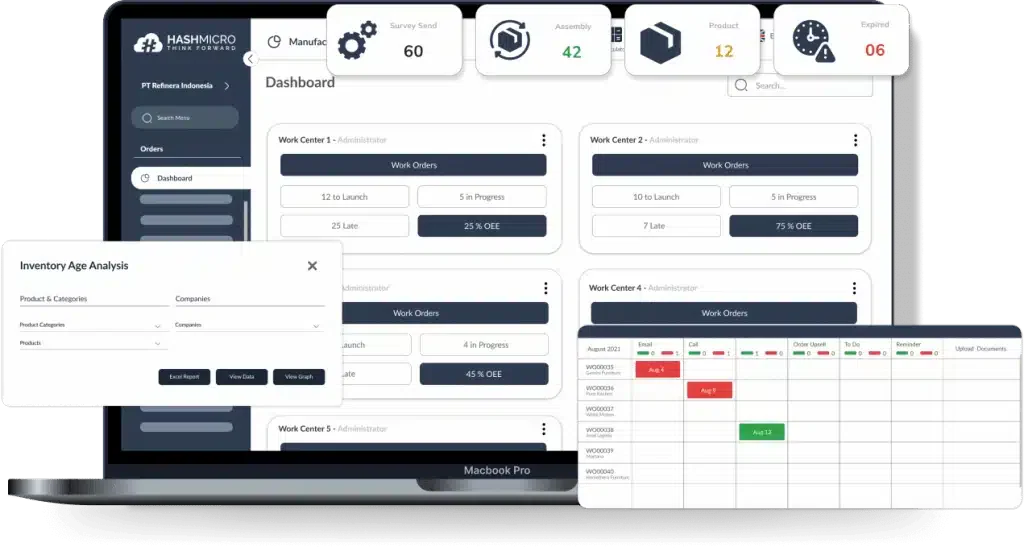
HashMicro’s Manufacturing Software enhances your Computer-Aided Manufacturing (CAM) processes with seamless integration and automation. It connects various systems, making production planning, raw material management, and machine monitoring more efficient. With strong integration capabilities, HashMicro’s software supports industries like automotive, electronics, and food manufacturing. It complements CAM by streamlining operations and ensuring real-time data flow across devices and software, improving productivity and reducing errors. Key Features:
ConclusionComputer-Aided Manufacturing (CAM) modernizes manufacturing by boosting efficiency and precision. Automating operations reduces errors, saves time, and improves quality, but choosing the right software is essential for optimal results. HashMicro’s manufacturing software provides an integrated solution that enhances production management, cost tracking, and real-time monitoring. With its flexibility and scalability, businesses can optimize their operations and stay ahead in a competitive market. To see how HashMicro’s software can elevate your manufacturing processes, book a free demo today and discover how it can streamline your workflow and boost efficiency. FAQ About Computer-Aided Manufacturing |