





Do you know that digital Enterprise Asset Management (EAM) platforms reduce 50% of downtime costs and 25% of maintenance costs? Amazing, right?
Implementing advanced technology is crucial to control your costs more effectively. Moreover, if your assets are well taken care of, they will have a longer lifespan and be more useful for your daily use.
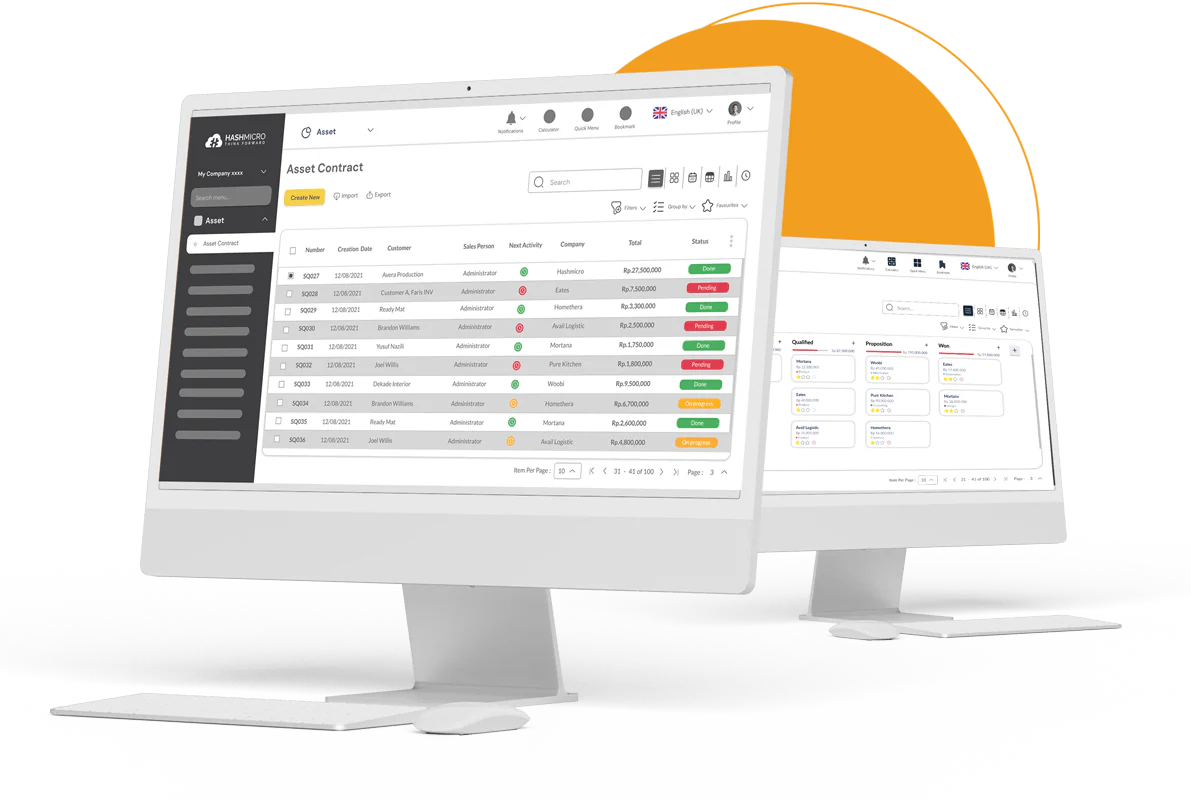
You might wonder what the perfect EAM software for your business is. Look no further and try out HashMicro’s EAM Software, as it’s a dependable tool for various kinds of businesses. Whether you’re running retail, manufacturing, F&B, or even real estate business, HashMicro has you covered.
But do you still want to know what Enterprise Asset Management is? Kaya, this article will texplain to you in detail, from its key benefits, essential features, to how different industries utilize EAM software. Let’s start!
Key Takeaways
What is EAM?Enterprise asset management (EAM) is a system that manages a company’s physical assets from procurement through their entire lifecycle. It tracks and maintains everything from industrial machines and production lines to vehicle fleets, covering capital planning, installation, performance, maintenance, and disposal. EAM’s main goal is to optimize the use of each asset throughout its entire life cycle, from planning and deployment to retirement and disposal. By doing this, businesses can reduce both capital expenditures (CapEx) and operational expenditures (OpEx). The components of EAM typically include asset maintenance, inventory management, work management, and financial management. These aspects work together to give a comprehensive view of all assets, which helps businesses make informed decisions and maintain efficient operations. With the integration of modern technology like the Internet of Things (IoT), EAM systems can now gather data from sensors and machines. Combined with analytics and artificial intelligence (AI), this data provides valuable insights that lead to better practices, more informed decisions, and efficient preventative maintenance. Hashy AI Fact 
Need to know!Maximize asset efficiency with Hashy AI. Track, maintain, and optimize assets with AI-powered insights for smarter decisions and lower costs. Get a free demo now! Get a Free Demo Now! Why is Enterprise Asset Management Important for Businesses?
Enterprise Asset Management (EAM) is crucial for organizations to track, assess, manage, and optimize their asset quality and reliability. Regardless of industry, many organizations are asset-intensive, relying on hundreds, thousands, or even millions of assets to operate efficiently. Assets can vary widely in type and size, from railroads, pipelines, and manufacturing equipment to transportation fleets and windmills. Essentially, any equipment needed to sustain production, services, and operations falls under the scope of EAM, which asset management systems plays a crucial role. This makes EAM essential for ensuring smooth operations and reducing downtime. By ensuring that each asset functions at its peak, organizations can enhance productivity, reduce costs, and achieve long-term sustainability. Asset tracking software plays a vital role in providing management of assets across various locations, ensuring seamless operations. Benefits of Enterprise Asset Management SoftwareImplementing enterprise asset management software transforms how organizations handle their assets, optimizing every stage of the asset lifecycle. Below are some of the enterprise asset management benefits for companies:
EAM helps maintenance teams better control complex environments, managing assets efficiently to support organizational goals. How does an EAM Software Work?
An Enterprise Asset Management (EAM) system uses a network of IoT-enabled sensors, GIS data, and GPS tracking attached to key assets in a facility to collect real-time data about their condition. Thanks to fully integrated EAM software, this has evolved from manual data entry to automated wireless tracking. By connecting their assets through a network powered by IoT and GPS, teams can monitor machinery performance from cradle to grave. This centralized approach, combined with GIS mapping, allows organizations to easily orchestrate their maintenance and production activities, from planning to execution and review. Enterprise asset management software is designed to prevent supply chain disturbances, unexpected downtime, and equipment failures by leveraging IoT-driven predictive maintenance and GPS-based asset tracking, ensuring that assets run at peak performance no matter what. Cloud storage ensures strong data security and access control, while GIS technology improves location-based asset management for better maintenance and resource use. Many EAM software solutions work hand-in-hand with ERP software and CMMS systems, amplifying their capabilities. At its core, an EAM system allows organizations to manage critical functions like capital planning, procurement, installation, and risk assessment. By streamlining performance-driven tasks with IoT automation and GPS tracking, businesses can confidently hit their operational targets. Key Features of Enterprise Asset Management Software
Effective EAM software offers a range of features designed to streamline asset management systems and maintenance processes. Below are some of the key features that highlight the capabilities and advantages of using EAM software: 1. Asset Lifecycle OptimizationEnterprise Asset Management (EAM) systems maximize asset value by managing and optimizing their entire lifecycle. A central database tracks asset condition, performance, and maintenance, enabling users to analyze lifecycle stages and extend asset lifespan. 2. Proactive Maintenance SchedulingEAM software provides a suite of tools to plan and schedule preventive maintenance, assign work orders, and manage maintenance schedules. Advanced systems offer intuitive graphical tools like Gantt charts, making visualizing and managing maintenance tasks easier. 3. Predictive Maintenance and Condition MonitoringBy integrating with IoT sensors and SCADA/PLC systems, EAM software can predict potential equipment failures, enabling timely interventions to prevent breakdowns and maintain continuous operations. 4. Work Order and Inventory ManagementEAM systems streamline work order creation, scheduling, and tracking, ensuring tasks are completed efficiently. They also optimize spare parts inventory by maintaining a database and triggering reorder alerts when stock is low. 5. Integrated Supply Chain and Financial ManagementEAM software connects asset management with supply chain processes, using IoT to optimize operations. It integrates with ERP, accounting, and purchasing systems to manage costs, analyze work order and downtime expenses, and plan asset refresh cycles. EAM software integrates asset management with supply chain processes, from sourcing to usage, leveraging IoT technologies to streamline the supply chain. It also integrates with ERP, enterprise accounting software, and purchasing software to manage costs, analyze work order expenses, operational costs, downtime costs, and plan for asset refresh cycles. 6. Data-Driven Decision Making and ReportingEAM systems, often AI-powered, provide comprehensive reporting and analytics tools to track asset health, maintenance KPIs, and operational insights, enabling informed decision-making and data-driven optimization. 7. Mobile Maintenance ManagementMobile EAM applications empower users to manage maintenance tasks on the go, with features like meter reading, electronic signatures, barcode scanning, and document access. Some apps even allow offline work, syncing changes once a connection is re-established. 8. Regulatory Compliance and Risk ManagementEAM software simplifies compliance with regulations through features like audit trails, e-signatures, and compliance dashboards. It also helps reduce risk through incident analysis, corrective action tracking, and process change management. The Difference between EAM and CMMSWhen it comes to managing assets, two terms often come up: Enterprise Asset Management (EAM) and Computerized Maintenance Management System (CMMS). While both are used interchangeably, they are not exactly the same thing. So, what’s the difference between EAM and CMMS? CMMS: a focus on maintenanceCMMS is a computerized system that helps businesses manage their maintenance activities. It’s primarily used to oversee repairs and maintenance when equipment is actively being used. With a CMMS, you can store information about your assets, schedule preventive maintenance, and track work orders. It’s a great tool for businesses with more straightforward asset management needs. EAM: a broader approach to asset managementEAM software, on the other hand, takes a more comprehensive approach to asset management. It’s not just about maintenance; it’s about managing the entire lifecycle of your assets, from procurement to decommissioning. EAM systems offer advanced features such as audit processes, asset tracking, and risk management, making them more suitable for larger businesses with complex asset performance management needs. Based on the explanations above, the key differences between EAM and CMMS can be summarized as such:
The Differences Between EAM vs. ERP1. Core Focus
2. Primary Function
3. Industry Suitability
4. Complementary Use:
Industries That Use Enterprise Asset Management Software
Enterprise Asset Management (EAM) is a useful tool that helps many different industries. EAM systems enhance efficiency and reduce operational costs across various sectors, including:
For example, Manila Electric Company (MERALCO) has implemented an EAM system to improve asset information management, reduce unplanned outages, and enhance operational efficiency. By using an EAM system, MERALCO aims to minimize unserved energy, free up personnel for other organizational responsibilities, and retire existing systems with a net book value of PHP 18,108,207. Also read: Understanding Enterprise Performance Management (EPM) The Role of Asset Collaboration in EAMCollaboration plays a vital role in enterprise asset management (EAM), optimizing asset performance, and streamlining maintenance processes. Asset collaboration involves bringing together different teams—maintenance, operations, procurement, and IT—to ensure that all aspects of asset management are aligned and efficient. By fostering a collaborative environment, businesses can leverage real-time data and insights to make informed decisions about asset lifecycle management, predict and prevent failures, and optimize maintenance schedules. In addition, collaboration between departments helps ensure that resources are effectively allocated and any asset-related issues are quickly addressed, minimizing downtime and reducing costs. How Asset Collaboration Improves EAM:
Incorporating collaboration into your EAM strategy is key to maintaining a seamless and efficient asset management process that improves operational efficiency and cuts costs. Evolution of EAMEnterprise Asset Management (EAM) has evolved with technological advancements and the need to maximize asset value. Initially focused on maintenance scheduling and asset tracking, these systems have become more sophisticated. EAM systems offering broader functionalities for asset lifecycle management. Key Milestones in the Evolution of EAM:
The future of Enterprise Asset Management lies in AI, machine learning, and advanced analytics, enhancing failure prediction and performance optimization. As businesses evolve, EAM will be key to operational excellence and cost reduction. Also read: Top Manufacturing Asset Management Software How to Choose the Most Suitable Enterprise Asset Management Software
Choosing the right Enterprise Asset Management (EAM) software can be a game-changer for your organization. But with so many options available, navigating the market and finding the perfect fit can be overwhelming. That’s why it’s essential to do your due diligence and compare the top enterprise asset management software vendors. Before you commit to an EAM software, ask yourself these 5 crucial questions:
By asking these questions and thoroughly comparing the best enterprise asset management software, you can find the perfect fit for your organization and drive real results. HashMicro Enterprise Asset Management is the best overall choice, with comprehensive features, robust support, and excellent value. With its user-friendly interface and scalable solutions, HashMicro integrates seamlessly into your business, boosting efficiency and cost savings. ConclusionEnterprise Asset Management (EAM) software is vital for numerous industries like manufacturing, transportation, healthcare, retail, facilities, and utilities. EAM manages assets, tracks product lifecycles, and optimizes maintenance, improving operational efficiency and control. When choosing the right EAM software, organizations must consider integration, scalability, support, and mobile access, which can be overwhelming. But HashMicro’s Enterprise Asset Management Software stands out, offering a tailored solution to meet each organization’s unique needs. What sets HashMicro apart is its commitment to providing a seamless implementation experience and ongoing support. With its flexible and scalable architecture, HashMicro’s EAM software adapts to businesses’ changing needs. Discover how HashMicro’s EAM software can maximize your operational efficiency and control. Try the free demo today and see firsthand the transformative benefits of optimized asset management!
FAQ about Enterprise Asset Management SoftwareWhat is an Enterprise Asset Management Systems?Enterprise asset management (EAM) involves managing and maintaining a company’s physical assets from start to finish. This includes planning, purchasing, installing, maintaining, ensuring compliance, managing risks, and retiring assets. How does ERP help in asset management?ERP software speeds up processes, reduces mistakes, and improves efficiency by eliminating the need for manual work and reducing paperwork. ERP software can easily adapt as businesses grow and change to meet new asset management needs. Is EAM a CMMS?EAM is usually seen as an enhanced version of CMMS, providing more detailed asset-targeting features. It includes all the functions of a CMMS and more. For instance, EAM systems traditionally offer an asset life cycle management module. What are the components of EAM?A comprehensive EAM system will include a CMMS component, as well as inventory management, purchasing management, document management, accounting, project management, multisite management, and performance management tools, all integrated into a single software platform. What is the best EAM software?The best EAM software is one that seamlessly combines advanced features with ease of use, and HashMicro’s Enterprise Asset Management software stands out in this regard. Designed to streamline asset maintenance and optimize lifecycle management, HashMicro offers powerful tools for preventive maintenance, asset tracking, and real-time monitoring. Its user-friendly interface and customizable features make it adaptable for businesses across industries, ensuring maximum productivity and cost efficiency. With HashMicro, you’re not just managing assets but investing in a smarter, more sustainable future for your business. What is the purpose of EAM?Enterprise asset management (EAM) refers to the tools, systems, and services used to manage and maintain a company’s assets and equipment. Its goal is to maximize asset performance and efficiency, extend its lifespan, and minimize operational costs, ensuring smoother and more productive operations. HashMicro follows strict editorial standards and uses primary sources such as regulations, industry guidance, and trusted publications to keep content accurate and relevant.       Chat Now : |