





A purchase requisition that’s manually handled can slow down your procurement process, causing delays and errors. Mga business owners at procurement managers sa Pilipinas often face inefficiencies, leading to missed opportunities and increased costs. This results in slower procurement cycles and higher operational risks.
A Zebra Technologies report shows that many businesses in the Asia-Pacific still use manual processes for procurement and inventory management. Only 16% of manufacturers globally have real-time visibility into production, highlighting the urgent need for automation to boost efficiency and cut costs.
Fortunately, automating your purchase requisition workflow can address these issues. With the right system, your business can speed up approvals, reduce human errors, and improve procurement efficiency. By switching to an automated process, you can save time and resources, ultimately driving business growth.
Companies across the Philippines have already seen the benefits of automating purchase requisition systems. Ingin mo bang malaman kung paano ka rin makikinabang? Keep reading to discover how automating this part of your procurement process can boost your operational efficiency.
Key Takeaways
A purchase requisition is an internal document that employees use to request goods or services. It includes details like product description, quantity, and relevant department or budget. The requisition is submitted for approval to the employee’s line manager and often the central procurement department. Once submitted, the requisition is reviewed and approved by relevant parties, such as the employee’s manager and the central procurement department. After approval, a purchase order system is used to create and send the purchase order to the vendor to fulfill the request. Purchase requisitions help streamline procurement processes, ensuring that purchases are carefully reviewed and within budget, reducing unnecessary expenses and improving financial control. The purchase requisition is an important step within a company’s procurement process. It provides employees or their managers with the opportunity to make the case for purchasing specific items or services, while ensuring that these purchases meet established criteria. This is a fundamental step toward minimizing risk for unauthorized spending, overspending, and fraud. It also gives visibility to future expenditures, with tighter business-budget control and a clear audit trail for all procurement activities. For example, if the marketing department requires laptops for field workers, instead of purchasing them outright, they must place a purchase requisition. This is in order for the purchase to be checked against the budgets for approval, as well as against the procurement policy of the company. Incorporating purchase requisitions into a well-designed purchasing process brings significant benefits to businesses. By formalizing purchasing requests, businesses ensure that the procurement process is transparent, efficient, and aligned with company goals. A purchase requisition system clarifies the process for employees by defining who can request items, what can be requested, and when it can be requested. It sets clear expectations, making the process smoother for employees, managers, and procurement teams alike. When used digitally, purchase requisitions improve transparency by tracking who is purchasing what and why. This digital approach brings visibility to the entire business as well as makes procurement accountable, eliminating errors or unauthorized purchasing. By streamlining procurement, a standardized purchase requisition process accelerates purchasing cycles. As part of a digital procurement workflow, it simplifies the overall process of acquiring goods and services, saving time and resources. The approval process is vital for cost control, ensuring that requisitions meet budget guidelines and reflect legitimate needs. Purchase requisitions are reviewed for accuracy and necessity, which helps prevent overspending and ensures purchases align with the company’s budget. Additionally, the purchase requisition process helps detect or deter fraud. By enforcing a well-structured system, businesses reduce the risk of unauthorized or fraudulent purchases, providing a safeguard for both employees and suppliers. A well-designed purchase requisition system also ensures that purchasing requests adhere to company guidelines and direct orders to approved vendors. This helps prevent mistakes or inconsistencies in procurement. Another key benefit is that it prevents duplicate orders. With a central procurement department overseeing requisitions, the system can easily identify duplicate requests for the same goods or services from different departments or employees. Purchase requisitions increase accountability by creating a clear record of what was requested, by whom, and for what purpose. In case of disputes or missing orders, this documentation can help resolve issues and ensure accuracy in procurement. Lastly, purchase requisitions provide valuable documentation for financial audits. Auditors rely on clear records of purchasing requests to ensure that proper vetting and approvals were made, supporting transparency and accountability in the procurement process. The procure-to-pay (P2P) process is vital for purchasing operations and begins with the purchase requisition. The quality of this initial step sets the tone for the entire workflow. Poor execution can lead to inefficiencies and errors throughout the procurement cycle. In any procurement process, the purchase requisition is where decisions are made about what to purchase, from which vendor, and how the expense will be allocated to the company’s budget. These decisions have a significant effect on business operations, making this stage highly critical. Since the process involves numerous parties, ranging from employees who make the requests to managers who approve them, and departments such as finance and legal, a well-organized and streamlined purchase requisition process is essential to ensure alignment among all stakeholders involved. A standardized purchase requisition process would reduce the likelihood of unauthorized purchases, overspending, and fraud. This budget transparency would help ensure that all requisitions are properly reviewed and approved, allowing companies to track their spending and plan accordingly. A purchase requisition sets the foundation for approval, tracking, and accountability throughout the procurement process. Let’s explore how the requisition is filled out and submitted for approval. When an employee needs a product or service, they typically fill out a purchase requisition form, either online or on paper. This form requires details such as a description of the goods or services requested, their quantities, estimated price, suggested vendor, and the reason for the purchase. Once completed, the employee submits the purchase requisition to the relevant department or person for approval. This initiates the review process, during which the request is assessed for alignment with the budget and business needs. The process ensures accountability and appropriate purchasing decisions. For example, a product manager at a tech startup would submit a purchase requisition for a new project management tool. The request would include the software’s features, the vendor, estimated costs, and how the tool would benefit the team’s productivity. The team leader would then review the requisition, the IT department to check compatibility, and the procurement department to ensure it meets budget guidelines. Each reviewer ensures the purchase is necessary and compliant with company policies. If any reviewer declines the requisition, the employee will receive feedback on the decision. If approved, a purchase order system is used to create and send the order to the vendor, who will fulfill the request. A purchase requisition and a purchase order are both key documents in the procurement process, but they serve different functions. The purchase requisition is an internal request for approval to acquire goods or services, while the purchase order is a formal request sent to the supplier to confirm the purchase. A purchase requisition is created when an employee identifies a need for a product or service. The request is submitted to management for approval before any purchase can be made. In contrast, a purchase order is issued once approval is granted, formalizing the purchase agreement with the supplier. The purchase requisition typically contains basic information such as the product description, quantity, price estimate, and the reason for the purchase. It serves as a request for permission and does not have contractual obligations. Meanwhile, a purchase order includes more detailed information, such as the purchase order number, agreed-upon price, and delivery terms, making it a legally binding contract. The approval of a purchase requisition involves multiple stakeholders, such as managers and department heads, who review the request. Once approved, a purchase order is created and sent to the vendor. This document signifies the company’s commitment to buy the specified goods or services. To further clarify these differences, here’s a detailed comparison of purchase requisitions and purchase orders: Purchase Order What it is Who creates it When it’s created Who receives it A purchase requisition should include all necessary details for the purchasing team to understand what needs to be purchased and why. Clear and complete information helps speed up the approval process. Below are the key elements typically included in a purchase requisition: This section includes the name of the employee who is submitting the purchase requisition. It helps identify the requester for any follow-up questions or clarifications. The purchase requisition should specify the department that will use the items and the delivery location for the goods. This ensures that the correct department receives the items in a timely manner. This section includes the date when the requisition was created and the expected delivery date of the items. It helps ensure that the requested items arrive when needed. A detailed description of the requested products or services should be provided. This includes item specifics like stock/part number, manufacturer, and model name to help the procurement group accurately identify the items for purchase. The quantity indicates the number of units needed for the purchase. This helps the procurement team determine the appropriate amount to order. The unit price section includes the estimated price for each item requested. This helps reviewers assess the total cost and budget implications of the requisition. This section provides the total estimated cost of all requested items, helping to give a clearer financial overview and assist in budget planning. This part outlines the reason for the purchase, such as a new hire, scheduled replacement, or equipment failure. Some companies may provide a list of business justification codes for easy selection. The purchase requisition should include the suggested supplier’s legal name, mailing address, and contact details (e.g., telephone and fax numbers) to facilitate further communication and orders. The purchase requisition workflow can vary across organizations, but the general steps remain consistent. These steps ensure that each purchase is necessary, budgeted, and properly authorized. Let’s walk through the typical workflow involved in creating a purchase requisition. The process begins when an employee or department identifies a requirement for a product or service. For instance, an office manager may need more office supplies, or the IT department might require new software. Once the need is identified, the employee fills out a purchase requisition form. This includes necessary details such as the product description, quantity, price, and justification for the purchase. The completed purchase requisition is reviewed by the appropriate manager or department head. This review ensures that the purchase aligns with the department’s budget and overall business needs. For larger or higher-value requisitions, additional approvals may be needed. Senior management or finance teams may review the requisition to ensure that the purchase aligns with company policies and the overall budget. The inventory department checks for existing stock before moving forward with the purchase. If the requested items are in stock, they are delivered to the employee. If not, the request is forwarded to the procurement department to order the items. The procurement department conducts a final check of the purchase requisition to ensure it meets business needs, purchasing guidelines, and budget constraints. If the requisition is complete and justified, it is approved; otherwise, it is returned for corrections. Once the purchase requisition is approved, it triggers the procure-to-pay process. A purchase order system is used to generate the official purchase order, which is then sent to the vendor. Once the vendor accepts the purchase order, it becomes a legally binding contract. While a primary goal of purchase requisition reviews is to control employee purchasing, the process mustn’t become a bottleneck. If the workflow is too slow or cumbersome, it can hinder business operations, impacting employees, suppliers, and the overall efficiency of the business. In a manual system, requesters and approvers often waste time searching for information or chasing down paper documents. This inefficiency can result in delays in processing requisitions and slow down the overall workflow, which negatively affects productivity. Manual processes can also make it challenging to track the status of requisitions and ensure everything is moving smoothly. Without proper visibility, it’s harder to spot duplicated requisitions or potential fraud, which increases the risk of errors or dishonesty in the procurement process. Cumbersome manual workflows lead to delays, which can slow the purchasing cycle. This ultimately hurts business performance, making it harder for the company to stay competitive or responsive to market needs. Automating the purchase requisition process eliminates manual steps and enhances oversight, providing better control over spending. Streamlining the workflow improves efficiency and reduces errors in procurement. With automation, employees can quickly enter their purchase requests using standardized templates. These requests are then routed to the appropriate reviewers, speeding up the entire process and making it easier for everyone involved. Digitizing the purchase requisition process reduces delays in review and approval times. The automation ensures a faster turnaround, minimizing bottlenecks that occur with manual processes and helping businesses maintain a smoother purchasing cycle. Automating the process increases transparency, providing insights into the organization’s spending. This makes it easier to identify unnecessary purchases or those that don’t comply with internal policies, ensuring better budget management and compliance. The facilities manager at an apartment complex notices significant damage to the electrical service panel, making it unsafe. He submits a purchase requisition through the company’s digital procurement system to request a replacement. The requisition is routed to the facilities director, who reviews the details to ensure the need for replacement is valid and that the cost aligns with the budget. Since the cost falls within the established limit, the requisition is approved without requiring further sign-off from higher management or the finance team. Next, the procurement team checks the company’s existing inventory for available stock. If no replacement panels are found in inventory, the requisition is forwarded to the purchasing department to initiate the buying process. The purchasing team reviews the request to ensure that it adheres to company purchasing policies and verifies the vendor’s reliability. Once confirmed, a purchase order system generates the order, and the new panel is ordered from the approved supplier to complete the purchase. Automating the purchase requisition workflow is often part of a broader push to streamline the entire procurement process. This involves assessing current purchasing processes, selecting suitable software, and customizing it to fit your organization’s needs. Start by reviewing each step in your current process to identify any bottlenecks or pain points. Document what is working well and what needs improvement. Define the ideal process you want to achieve and pinpoint areas for automation. Choose software that can automate your purchase requisition process from start to finish, including routing and review steps. The software should integrate with your existing enterprise systems, such as inventory management and finance software, to ensure smooth operations. Start with pre-designed templates and workflows provided by the software vendor. Customize these templates to match your organization’s needs, making it easier to manage the requisition process efficiently. Tailor the requisition forms, approval routing, and notifications to better fit your company’s structure. Customization helps ensure that the workflow aligns with your specific processes and business requirements. Look into the automation features available in the software. A basic solution could automatically populate requisition forms with necessary details, like the requester’s name and department. Advanced systems may automate compliance checks, route approvals based on specific conditions, and handle calculations to eliminate errors. Implementing automation can dramatically speed up your process and improve accuracy. Learn how HashMicro can automate your purchase requisitions, reduce errors, and improve efficiency. Explore the cost of implementing this solution for your business.
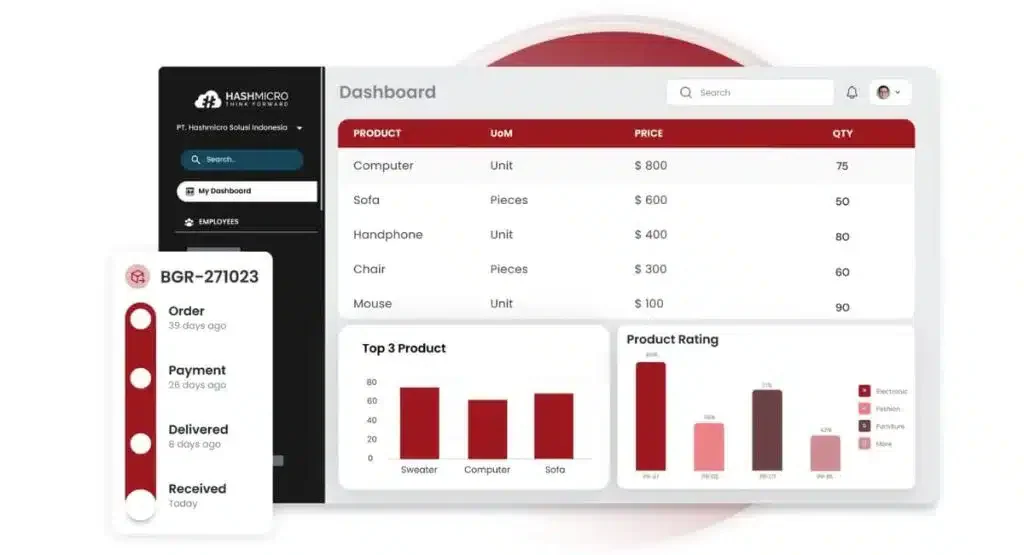
Choosing the right software for procurement can be a challenge, but with HashMicro’s Procurement System, that decision becomes simple and effective. Other than being known for its ERP solutions, HashMicro also offers a comprehensive suite of over 40 modules, including a top-rated procurement system in the Philippines. Our software can streamline your purchase requisition workflow, making your entire procurement process faster and more efficient. Here’s how HashMicro stands out: No matter the size of your business, HashMicro’s procurement software allows unlimited users, enabling your team to collaborate effortlessly without worrying about access restrictions. Our intuitive dashboard ensures that every member of your team, regardless of technical expertise, can navigate the system easily and focus on achieving business goals. Track expenses and savings in real time. HashMicro’s software provides instant reports to help you identify cost-saving opportunities and maintain a transparent budget. With automated vendor evaluations and ratings, you can ensure that you are working with reliable suppliers, saving you time on vendor management and reducing procurement risks. Unlike international providers, HashMicro offers responsive local support tailored to the unique needs of businesses in the Philippines. Our team is always available to assist you quickly and efficiently. From product purchases to rentals, HashMicro’s Procurement System provides flexible purchasing options to fit your business needs, making it easier to scale without unnecessary commitments. By leveraging HashMicro’s Procurement System, you’re not just automating your processes; you’re partnering with a software that adapts to your business, streamlines your procurement, and supports your growth. Automating your purchase requisition process is crucial for improving efficiency, reducing errors, and maintaining better control over your procurement activities. By integrating automation into your workflow, your business can streamline operations, improve collaboration, and stay on top of budget management. With HashMicro’s Procurement System, businesses in the Philippines can benefit from an all-in-one solution designed to optimize procurement processes. From simplifying approvals to enhancing vendor management, HashMicro offers the tools needed to take your procurement process to the next level. Ready to enhance your procurement workflow? Discover how HashMicro’s software can help you automate the purchase requisition process and more. Contact us today to schedule a free demo and explore our pricing options tailored to your business needs.
Yes, it’s possible, but not ideal. The purchase requisition (PR) is usually needed to request approval before a purchase order (PO) can be created. The purchase requisition (PR) is an internal document submitted for approval before creating a purchase order (PO). Once approved, a system is used to create and send the PO to the vendor for fulfillment. PR payment refers to payments made after the purchase requisition is approved. However, the payment happens after a purchase order is placed and goods/services are delivered. The finance department ensures that the requested purchase fits within the company’s budget and that it follows financial guidelines before the purchase is approved. A purchase requisition is vital in business budgeting as it reveals potential future expenses. By approving requisitions before purchases, businesses can forecast spending accurately and ensure alignment with financial goals. HashMicro follows strict editorial standards and uses primary sources such as regulations, industry guidance, and trusted publications to keep content accurate and relevant. Chat Now : |