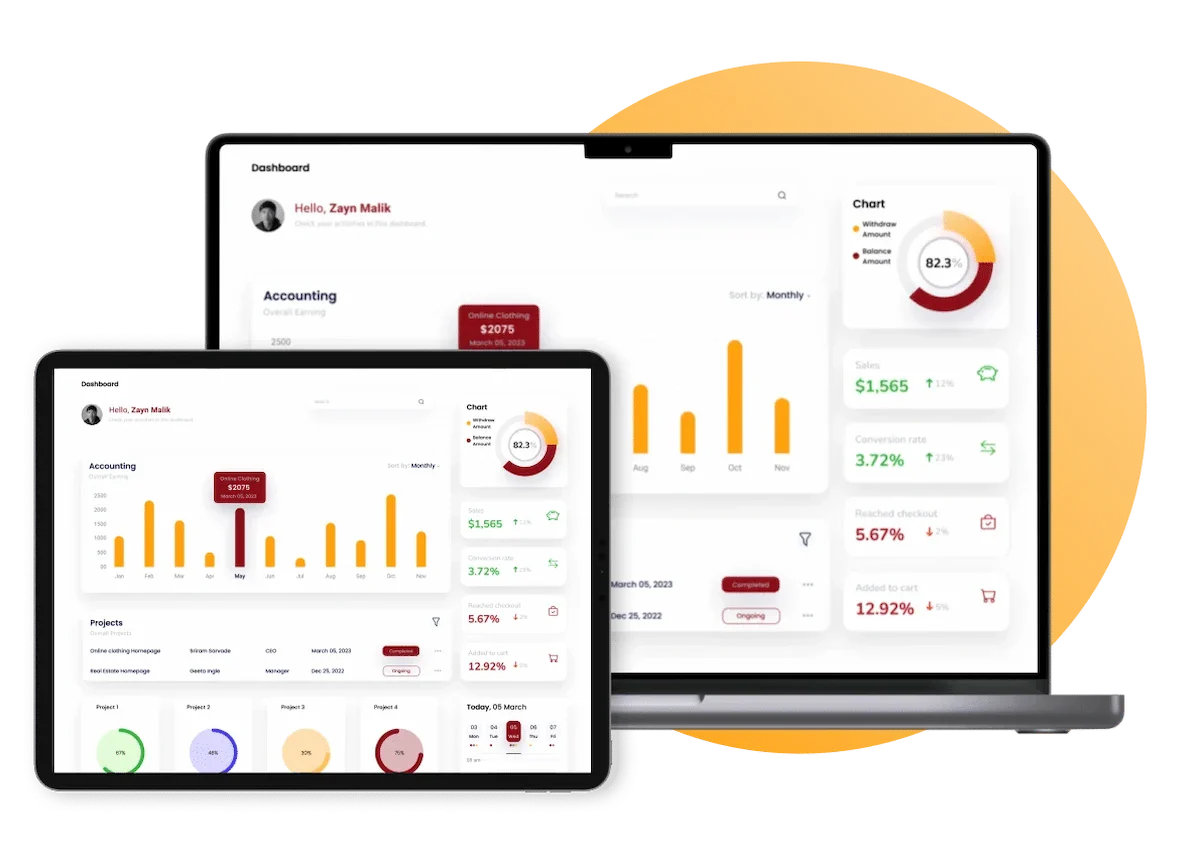






The CRM system highlights the challenges of maintaining an organization in a fast-paced business environment. Business professionals often find themselves interrupted by phone calls or emails, diverting their focus from current tasks.
Statistically, companies are expected to manage hundreds or even thousands of leads and monitor their sales team activities to devise the best business strategies. The volume of immediate inquiries can be overwhelming for businesses operating both online and offline stores.
Managing a to-do list, maintaining communication with leads and customers, handling key contacts, and completing tasks can seem more like a burdensome obligation than an engaging work activity. This is the scenario where Customer Relationship Management (CRM) systems prove invaluable.
This article will explore everything from the basic definitions and purposes of a CRM system to the array of tools available for effective customer relationship management. Whether you are the owner of a hybrid store, part of a growing company seeking to enhance CRM efficacy, or a sales manager, prepare to dive into the intriguing world of CRM and discover its transformative potential for your organization.
Key Takeaways
CRM DefinitionCRM refers to customer relationship management, that serves as a system for handling each of your organization’s interactions and relationship with existing and prospective customers. As technology advances and competition grows, adopting a strong CRM system has become essential for success. One key aspect of understanding CRM systems is recognizing that they are not just tools for customer relationship management but also business growth and success. Companies can streamline operations and improve efficiency by centralizing customer data and automating various tasks. Moreover, CRM systems can also help identify potential sales opportunities, target specific customer segments, and optimize marketing campaigns. In short, a CRM system gives businesses an in-depth view of their customers and offers the tools they need to optimize operations across sales and marketing, customer service with internet-based voice calling technology, and support. With growing market rivalry, a strong CRM system is a key difference that may help companies survive in today’s fast-paced economy. So, if you haven’t already established a CRM system, now is the time to bring your company to the next level. Who benefits from CRM?
After learning the definition of CRM, you may recognize that a CRM system has become an integral part of modern businesses. But who needs a CRM system in their business? Organizations and sectors of every scale utilize customer relationship management tools. They provide advantages to big corporations that require streamlined monitoring of client interactions in a centralized platform and seamless information exchange among divisions. They also support smaller firms that typically must achieve greater productivity with fewer resources, and emerging ventures aiming for agility and efficiency. Regardless of your sector, if your team interacts with clients and your staff depends on client-related data. What Makes a CRM System Essential For Your Company?In today’s fast-paced market, companies juggle countless tools and platforms, often nearly a thousand, yet only a fraction of these systems work seamlessly together. To stay competitive, your company must focus on customers and leverage the right technology. However, gathering timely, accurate, and actionable insights from sales, marketing, customer support, and social media can be challenging. A CRM system solves this by offering: A Unified Customer ViewCRM systems provide a clear, consolidated customer profile—a secure, customizable dashboard showing purchase history, order status, and support issues. This is crucial since 70% of customers expect representatives to know their past interactions, regardless of contact channel. Cost EfficiencyCentralizing data prevents lost information and missed follow-ups, reducing wasted effort and ensuring customer prioritization is data-driven. Without CRM, valuable contacts and notes risk disappearing if employees leave. CRM systems cut administrative tasks, freeing teams to focus on revenue. Team CollaborationCRM systems unify departments by sharing data. Marketers can manage campaigns with insights, sales teams track leads, and customer support operations access customer histories for personalized support. Boosting Efficiency Through AIIntegrating AI with CRM systems enhances personalization and automates repetitive tasks like writing emails or marketing content. AI-powered CRM tools help staff make better forecasts and act autonomously, increasing overall efficiency. Benefits of CRM SoftwareA CRM system provides numerous business advantages by enhancing organization, productivity, and customer satisfaction. Here are eleven key benefits of customer relationship management software: 1. Boosted Productivity for Sales TeamsA CRM system organizes customer data, helping sales teams prioritize leads and close deals faster. With centralized access to customer interactions, teams can efficiently track and manage the sales process. 2. Contact ManagementAt every stage of the customer journey, it’s essential for all team members to have access to the most up-to-date information. Whether it’s customer contact details, purchase history, meeting notes, or previous service issues, CRM software serves as a central repository for all company data.. 3. Actionable Analytics and DashboardsCRM systems offer customizable dashboards to analyze customer behaviours, sales trends, and marketing performance. These insights enable businesses to adapt strategies for better outcomes. 4. Automated Customer-Centric WorkflowsCRM software automations streamline repetitive tasks like sending follow-up emails or logging interactions. This allows teams to focus on creating personalized, customer-focused outreach efforts. 5. Proactive Customer ServiceWith detailed customer histories, CRMs empower service agents to anticipate needs and resolve issues quickly. Automation tools like chatbots further enhance service efficiency and customer satisfaction. 6. Simplified Team CollaborationCRM systems are a shared resource for all team members, ensuring access to up-to-date customer information. Features like collaborative notes and integrated communication tools improve teamwork. 7. Enhanced Productivity with AIAI-driven CRMs provide predictive insights, like identifying high-potential leads or anticipating service issues. These tools speed up decision-making and enhance overall efficiency. 8. Integration with Existing ToolsCRM software integrates seamlessly with apps like ERP, marketing tools, and supply chain systems. This ensures smooth workflows and better customer interactions across platforms. 9. Anywhere, Anytime AccessCloud-based CRM systems allow teams to access data from any location or device. This flexibility supports remote work and real-time updates for enhanced collaboration. 10. Scalability for Business GrowthCRMs grow with your business, offering the flexibility to add features or users as needed. This scalability ensures your CRM system adapts to evolving business needs. 11. Reliable Data SecurityModern CRMs prioritize data protection, safeguarding sensitive customer information. Built-in security features ensure compliance and trust, which are essential for customer-centric businesses. Investing in the right CRM system transforms how businesses manage customer relationships. By leveraging these benefits, companies can drive growth, improve efficiency, and deliver exceptional customer experiences. What are the primary functions of a CRM system?CRM software helps sales teams manage customer relationships by tracking and analyzing interactions with current and potential customers in real time, offering a clear view of the sales pipeline. It stores detailed records that enable personalized approaches, improving customer satisfaction. Additionally, CRM automates repetitive tasks like data entry and follow-ups, while gathering data from various touchpoints to provide insights into customer behavior and sales performance. When comparing ERP vs CRM, CRM focuses specifically on front-end sales and customer engagement, while ERP systems handle broader back-end operations such as finance, inventory, and supply chain management, making both systems complementary rather than interchangeable. Types of CRMCRM systems help businesses manage customer relationships effectively by serving different purposes:
Choosing the right CRM type can boost efficiency, improve customer relations, and support business objectives. CRM Key FeaturesA CRM system includes key components essential for peak performance. These core features enable businesses to build strong customer relationships and drive growth. Important elements include: 1. Contact ManagementThis feature stores contact information such as name, address, and social media accounts in a searchable database. 2. Interaction TrackingAdd notes and track interaction history to document conversations with specific leads. 3. Lead ManagementManage leads and sales opportunities, track information, and set the next activities. 4. Email IntegrationIntegrate the system with email for efficient communication. 5. Quotation/Proposal ManagementCreate and track the status of quotes or proposals for customers. 6. Sales Pipeline ManagementManage and visualize sales stages and the following actions. 7. Workflow AutomationAutomate sales tasks and processes for efficiency. Before knowing more about the features of the CRM system, you can start considering the price calculation of HashMicro CRM software by clicking the banner below.
In addition, advanced CRM software also provides features to promote efficiency during the sales process, such as:
These features are essential for improving work quality through better monitoring. Successful businessmen, including you in the Philippines, can track the performance of your employees thoroughly. AI in CRMIntegrating AI into CRM systems transforms how businesses manage customer relationships. AI-powered tools enhance CRM software by providing deeper insights into customer behavior, preferences, and needs, enabling personalized and effective interactions. The evolution of customer relationship management reflects the shift toward customer-centric strategies. While traditional CRM systems began as simple databases, they now incorporate advanced features like automated ticket routing, intelligent notifications, and AI-driven insights to meet rising customer expectations. Today, businesses can leverage AI-powered CRM tools from providers like Salesforce CRM (Einstein GPT) and Zoho CRM (Zia). These solutions offer innovations such as actionable meeting summaries and custom email templates, empowering businesses to deliver real-time, personalized experiences that foster stronger customer relationships. How to Choose The Best CRM SoftwareChoosing the best CRM software for your business in the Philippines requires careful consideration of your company’s unique demands and goals. For businesses with a loyalty program, it’s essential to select a CRM that offers tools to build lasting customer relationships through personalized rewards and engagement strategies. Here’s a quick guide to help you make an informed decision: 1. Identify your business goalsDetermine what you want to accomplish with a CRM system. This could involve enhancing client relationships, boosting sales, or streamlining communication. Think about your company’s size, the complexity of your sales cycle, and the level of client involvement. This will help you identify the characteristics you require. 2. Review the features and toolsLook for key features such as salespeople management, interaction tracking, lead management software, and reporting. Consider the ease of use and customization choices. Check if the CRM integrates with your existing tools and software, such as inventory, human resource, and accounting software. This can save you time and reduce complexity. 3. Try free demo or free trialsSome CRM system providers offer free trials. You can take advantage of this before purchasing their product. Through the trial, you will get to know the system’s user experience and explore more about the features that can support your company’s needs. How much does a CRM charge?There are numerous ways that CRM software can significantly influence your organization. However, that doesn’t imply the price has to be high. Various CRM pricing plans exist to suit every kind of company. CRMs can be tailored according to the products and services you require, the scale of your business, your sector, and the particular demands across all departments of a firm. Whether you operate a mid-sized company or a large corporation, getting started is hassle-free. HashMicro as the Best Solution for Your Business
Known for its efficiency and innovative approach, HashMicro excels in customer relationship management (CRM). Its straightforward and powerful tools make it the ideal choice for businesses looking to improve their sales processes. HashMicro’s CRM system does more than just manage contacts; it strengthens relationships that lead to business growth and success. The system simplifies the sales process by automating tasks, making it easy to turn potential leads into loyal customers. Designed to meet specific business needs, the HashMicro CRM offers additional features that enhance its functionality, such as:
These CRM system benefits are exclusive to HashMicro. Opting for HashMicro signifies choosing a path to success supported by a CRM system that recognizes the importance of each client. As part of its support for your business, HashMicro provides a free demo. The CRM system is available for a trial at no cost and with convenience. You can also connect with our expert team through the chat feature on this page to learn more about HashMicro’s features. ConclusionCustomer Relationship Management (CRM) is a pivotal technology tailored to enhance a company’s interactions with its existing and prospective customers. An effective CRM system is crucial for nurturing business growth by optimizing customer relationships. A comprehensive CRM system encompasses various essential components and tools. Despite numerous software options, only some provide a complete CRM solution. In contrast, HashMicro is a premier sales CRM provider in Southeast Asia. It invites businesses to explore its offerings through a free demo. Companies in the Philippines are encouraged to seize this opportunity or connect with HashMicro to learn about systems that can significantly improve their operational efficiency.
FAQ About CRMWhat is CRM tool used for?A CRM tool is used to manage and improve customer relationships by organizing interactions, tracking customer data, and automating tasks. It helps businesses streamline sales, marketing, and customer service processes for better efficiency and customer satisfaction. What is the purpose of a CRM?The purpose of a CRM system is to centralize customer information, enhance communication, and build stronger customer relationships. It enables businesses to deliver personalized experiences, improve retention, and drive sales growth. What is cloud-based CRM software?Cloud-based CRM software is a system for managing customer relationships that is hosted on remote servers. Unlike traditional on-premise CRMs, cloud CRMs like HashMicro allow users to access customer data and manage interactions from any internet-connected device, offering greater flexibility and easy integration with other tools. What are the benefits of CRM?A CRM system offers benefits like improved productivity, actionable insights through data analysis, and enhanced customer service. It also supports better collaboration across teams, streamlines workflows, and provides scalability for business growth. My professional journey revolves around optimizing customer data to improve relationships and sales performance. I have a deep understanding of CRM systems and their role in building long-term trust between businesses and clients. HashMicro follows strict editorial standards and uses primary sources such as regulations, industry guidance, and trusted publications to keep content accurate and relevant.       Chat Now : |