






A successful building project begins with a well-organized construction site. It’s more than just a place for materials and machinery, it’s a busy environment where planning, safety, and teamwork must come together. Every day brings challenges, from unpredictable weather to supply delays and coordinating skilled trades.
Managing a construction site well means keeping all moving parts in sync. Proper logistics, scheduling, and workforce coordination are key to preventing costly delays, budget overruns, and safety issues. Even small mistakes can have big consequences for the project and the team.
A strong construction site management strategy connects the plans on paper to the reality on the ground. From pouring concrete to installing infrastructure, every task must be done efficiently and safely. This guide will explore essential steps, common challenges, and best practices to keep your site productive and secure.
Key Takeaways
Learn the definition and core concepts of managing a construction site effectively.
Explore the essential activities that keep a construction project on track.
Discover the step-by-step process for establishing and operating a site.
Identify and avoid frequent errors in site management.
What Is Construction Site Management?

Construction site management is the hands-on process of turning building plans into reality. It goes beyond office-based project management by coordinating workers, machinery, and materials every day. A skilled site manager keeps the project on schedule, within budget, and up to code, handling the practical challenges that arise on site.
Good site management also means managing risks and resources efficiently. Teams must ensure materials arrive on time, maintain safety protocols, and meet environmental standards. By keeping operations smooth and organized, a construction site can stay productive, safe, and on track from start to finish.
Core Construction Site Management Activities
Managing a construction site involves juggling many essential tasks at once. These daily activities keep the project running smoothly and on schedule. Mastering them is key for any construction professional who wants to deliver successful results.
1. Site Analysis and Planning
Before construction begins, a thorough site analysis and planning are essential. This involves studying the land’s topography, soil conditions, and environmental factors to guide the foundation and layout.
Planning turns these findings into a practical strategy, including site layouts, safe access routes, and optimal locations for equipment and storage. Environmental considerations like water runoff, dust control, and waste management are also planned to prevent disruptions once work starts.
2. Scheduling and Resource Management
Time is a critical resource on any construction site, making scheduling and resource management vital. A detailed schedule, often supported by platforms for construction project, outlines task sequences, durations, and dependencies to keep the project on track.
Resource management ensures the right workers, equipment, and materials are available when needed. Coordinating procurement, optimizing workforce deployment, and monitoring machinery usage help prevent delays and keep costs under control.
3. Safety and Compliance Management
Safety is the top priority on every construction site. Managers identify risks, enforce safety protocols, and make sure all personnel use proper protective equipment.
Compliance extends beyond worker safety to building codes, zoning, and environmental regulations. Regular audits, inspections, and toolbox talks help prevent accidents and protect the project from legal or financial issues.
4. Quality Control and Inspections
Quality control ensures that every structure meets the contract specifications and industry standards. This includes verifying materials, workmanship, and installations throughout the project.
Inspections like concrete strength tests, steel weld checks, and formwork alignment prevent defects from turning into costly issues. Any problems are documented, corrected, and re-inspected to maintain high standards from start to finish.
5. Documentation and Reporting
Construction sites generate huge amounts of data daily, making accurate documentation essential. Daily logs track weather, worker activity, equipment use, and material deliveries to maintain transparency and accountability.
Other important documents include RFIs, submittals, change orders, and photographic records. Modern construction site management tools help site managers share real-time updates with all stakeholders, keeping the project organized and well-documented.

How to Set Up and Run a Construction Site
Turning an empty plot into a fully functional construction site takes careful planning and organization. A well-set-up site keeps work running smoothly, avoids delays, and ensures safety. The following steps highlight the key actions needed to get a construction site up and running efficiently.
Step 1 — Conduct a Site Assessment
Before construction begins, a detailed site assessment is essential. This includes reviewing land surveys, mapping property boundaries, and identifying underground utilities to prevent safety hazards and costly delays.
The assessment also examines the surrounding environment, including adjacent buildings, traffic patterns, and local regulations. Understanding zoning rules, noise limits, and permitted working hours ensures that construction activities remain safe and fully compliant.
Step 2 — Establish Site Infrastructure and Logistics
Once the site is assessed, the next step is setting up the infrastructure to support construction. This includes securing the perimeter with fencing, installing clear signage, and creating temporary offices, first aid stations, and welfare facilities for the workforce.
Temporary utilities like power and water must be connected, and areas for material storage, waste management, and vehicle parking need to be designated. Organizing the layout to separate pedestrian paths from heavy machinery routes improves both safety and efficiency.
Step 3 — Brief and Coordinate All Site Personnel
A construction site runs smoothly when everyone knows their role. Site induction programs introduce all personnel—including subcontractors and visitors- to site hazards, safety procedures, emergency plans, and PPE requirements.
Clear communication and defined reporting lines are established, and coordination meetings help trades work together without clashes. Early alignment reduces conflicts, promotes teamwork, and keeps the project focused on daily objectives.
Step 4 — Monitor Daily Operations and Progress
Once operations begin, site managers continuously monitor work, quality, and safety. Daily walk arounds check that construction matches the plans, while progress is measured against the schedule to identify delays early.
Procurement and deliveries are managed closely, ensuring materials arrive safely, are inspected, and stored correctly. Daily briefings with trade supervisors help align tasks, highlight hazards, and keep everyone moving toward the same milestones.
Step 5 — Close Out and Hand Over the Site
As the project nears completion, the focus shifts to finishing work and quality assurance. Inspections generate a snagging list of defects or incomplete tasks that trades must resolve before the project is considered complete.
Demobilization begins as temporary facilities and materials are removed, and the site is restored. The final handover includes the completed building, as-built drawings, warranties, compliance certificates, and operation manuals, marking the successful conclusion of effective site management.
Common Construction Site Management Mistakes
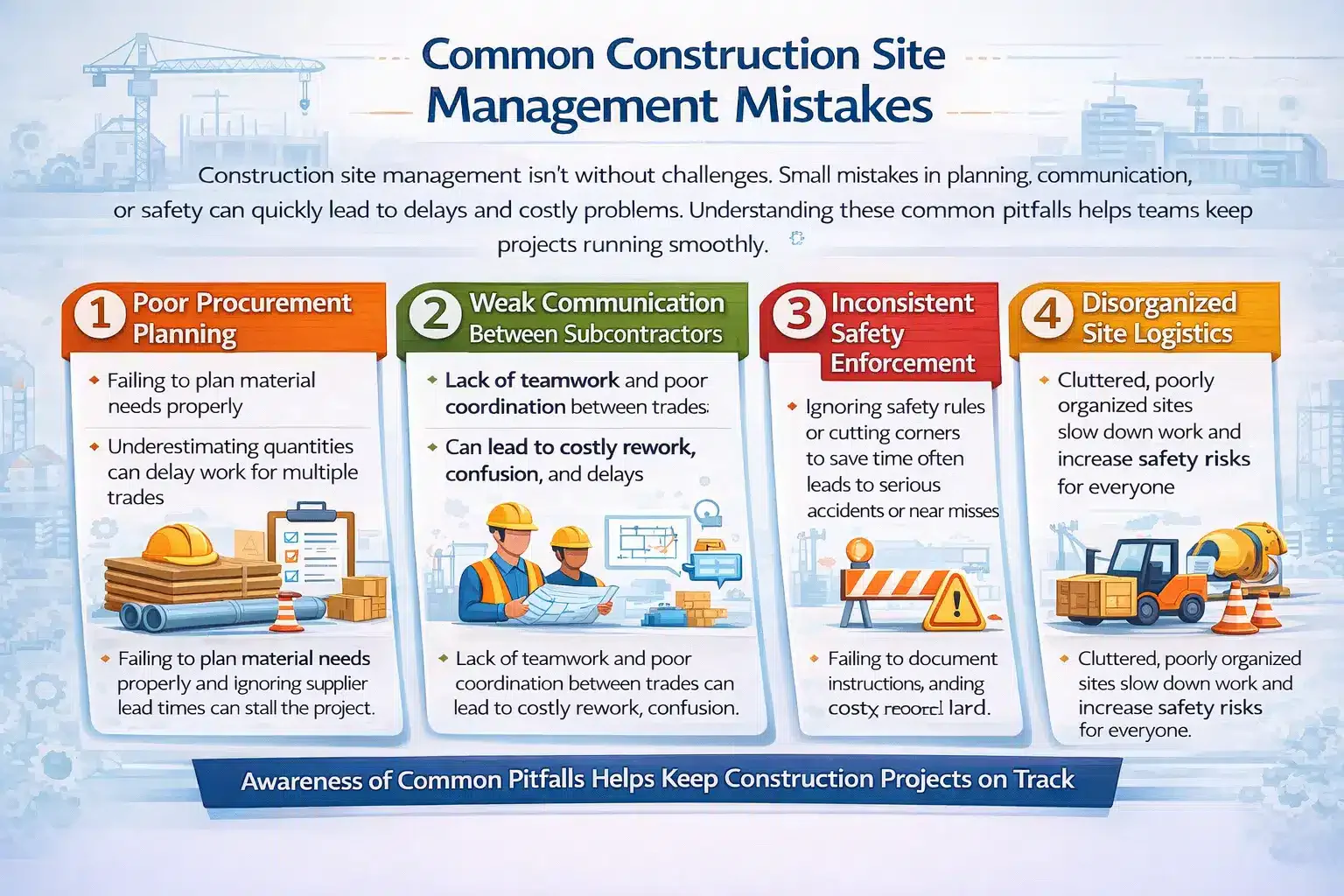
Construction site management isn’t without challenges. Small mistakes in planning, communication, or safety can quickly lead to delays and costly problems. Understanding these common pitfalls helps teams keep projects running smoothly.
-
Poor Procurement Planning
Failing to plan material needs properly can quickly stall a construction site. When managers underestimate quantities or ignore supplier lead times, critical materials may not arrive on time. This delay often affects multiple trades and disrupts the entire project schedule.
-
Weak Communication Between Subcontractors
Construction work depends on strong coordination between different trades. When subcontractors don’t communicate updates or design changes, it can lead to clashes, costly rework, and confusion on site. Regular coordination meetings help keep everyone aligned.
-
Inconsistent Safety Enforcement
Ignoring safety rules, even occasionally, can create serious risks. Tight deadlines sometimes tempt teams to cut corners, but this often leads to accidents or near misses. Site managers must consistently enforce safety protocols and lead by example.
-
Poor Documentation and Record Keeping
Construction sites generate a large amount of information every day. When managers fail to document instructions, changes, or site activities, it becomes difficult to resolve disputes later. Clear records help protect the project and everyone involved.
-
Disorganized Site Logistics
Poor planning of storage areas, equipment movement, and delivery zones can quickly create chaos on site. Cluttered spaces slow down work, increase safety risks, and reduce productivity. A well-organized layout keeps operations efficient and safe.
Best Practices for Construction Site Management
Strong construction site management goes beyond simply keeping work on schedule. The most successful teams rely on clear planning, modern tools, and AI usage in construction to improve accuracy and efficiency on site. These best practices help projects run more smoothly, stay safe, and deliver high-quality results.