5. DocuSign CLM
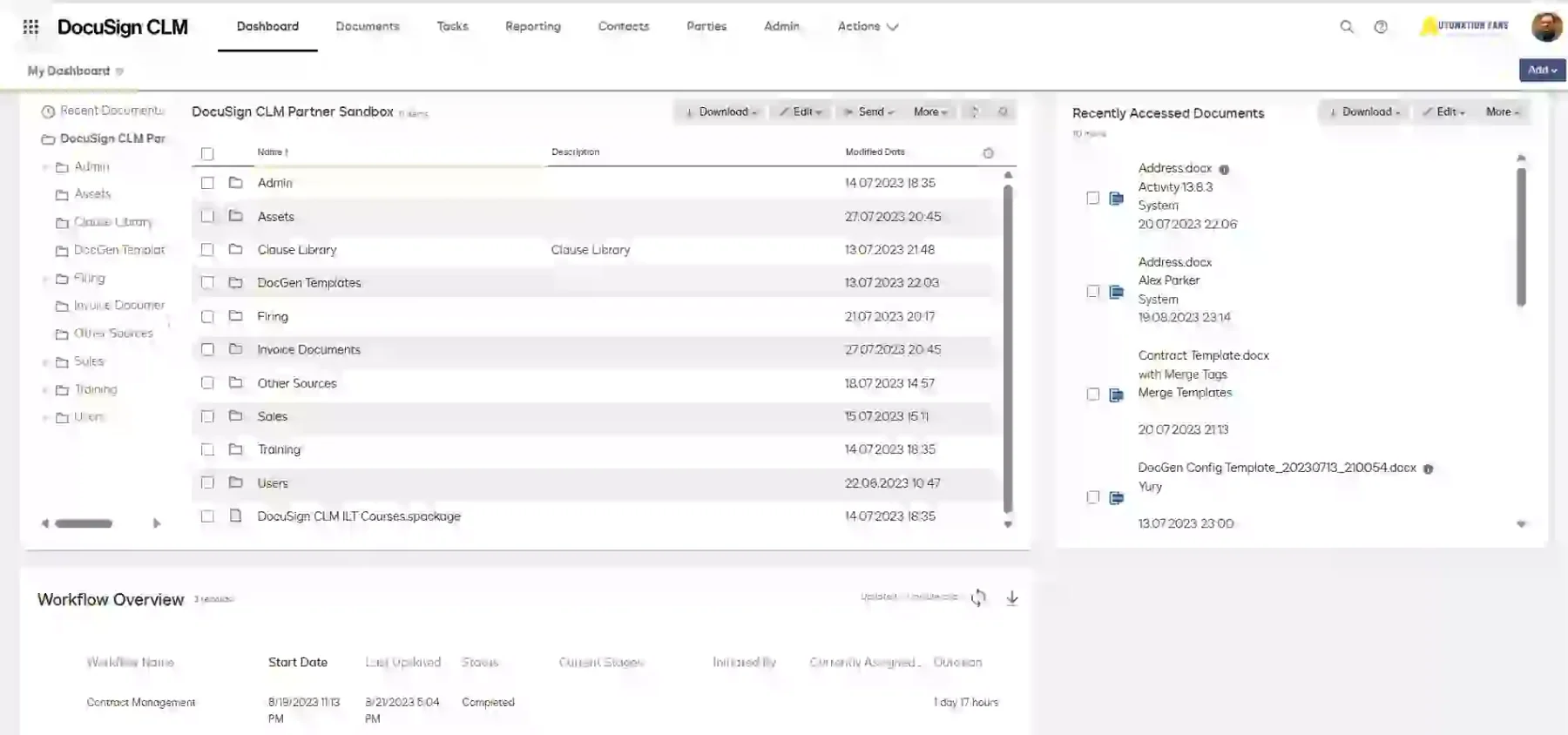
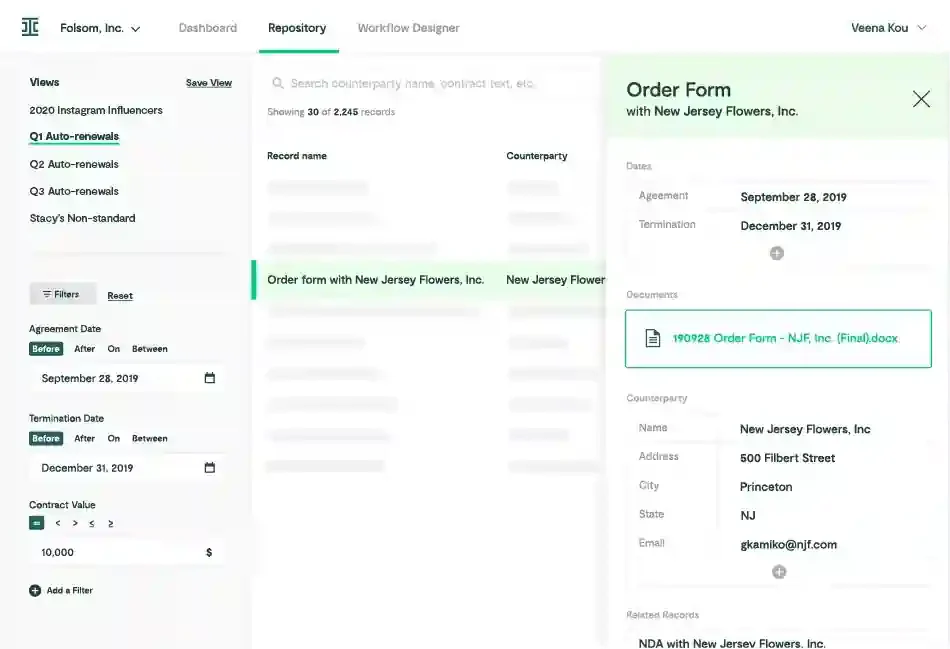
DocuSign CLM suits businesses already invested in the DocuSign ecosystem. It integrates the signing process directly with post-execution contract data management, keeping both in a single environment.
For Australian businesses, DocuSign’s long-standing regional presence means it understands local electronic transaction law.
It also offers local data residency options, which is a key requirement for regulated industries such as government and financial services.
Best for: Regulated industries and businesses already using DocuSign eSignature that need signing and post-execution contract management in one connected environment.
Pros
|
Cons
|
| ✓ Seamless connection between eSignature and post-execution contract management. |
× The CLM module is significantly more expensive than the eSignature tool alone. |
| ✓ Local data residency options available for regulated industries. |
× Customisation can require specialist technical resources to configure. |
| ✓ Long-standing regional presence and understanding of Australian electronic transaction law. |
× Support quality can vary depending on contract tier and region. |
Pricing: Contact DocuSign for a custom CLM quote. Pricing varies by modules and user count.
6. PandaDoc
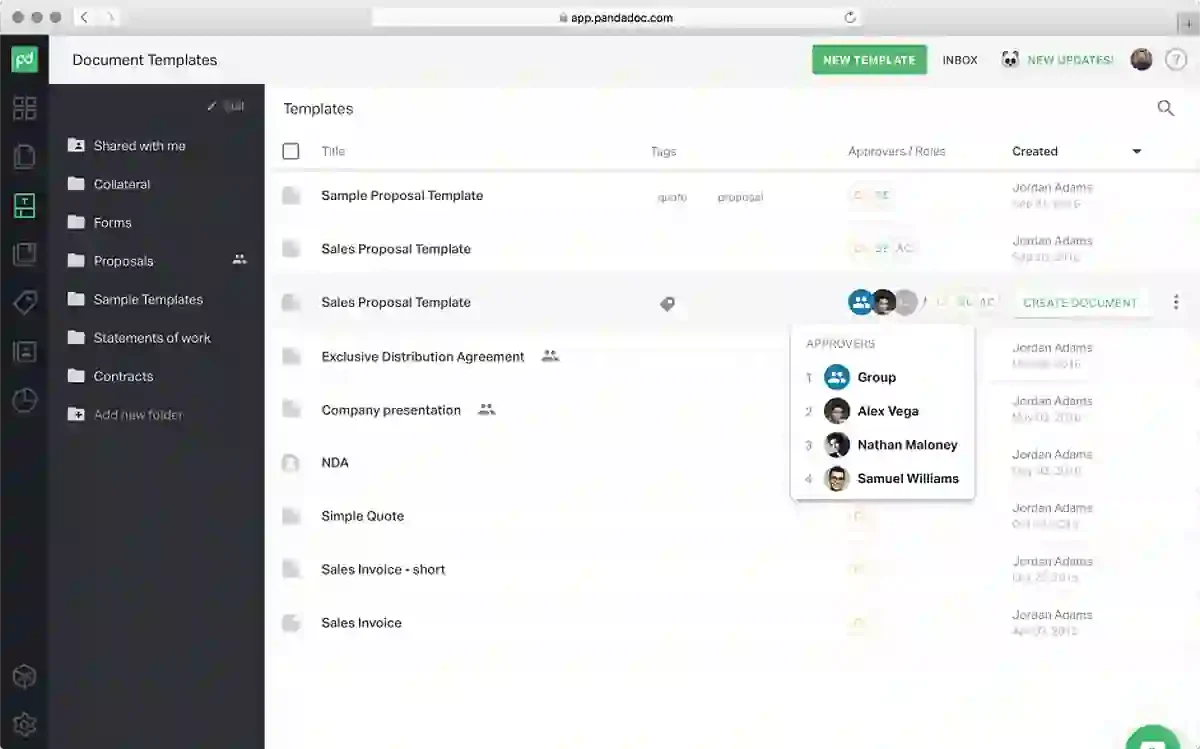
PandaDoc is favoured by sales and marketing teams across Australia. It focuses on the front end of the contract lifecycle, enabling teams to create professional proposals that convert directly into agreements.
Its CRM integrations with Salesforce and HubSpot are well regarded. While it lacks some of the deep post-signature management features, its speed and ease of use make it effective for B2B service providers.
Best for: B2B sales and marketing teams that need to produce professional proposals quickly and convert them directly into signed agreements.
Pros
|
Cons
|
| ✓ Fastest proposal-to-signed-agreement workflow available in its price range. |
× Post-signature contract management is limited compared to full CLM platforms. |
| ✓ Strong CRM integrations with Salesforce and HubSpot for sales-led teams. |
× Not suited for complex multi-party or highly regulated contracts. |
| ✓ Transparent and accessible pricing suitable for smaller teams and growing businesses. |
× Advanced analytics and reporting require higher-tier plans. |
Pricing: Business plan from approximately $75 AUD per user per month. Enterprise pricing on request.
7. Gatekeeper HQ
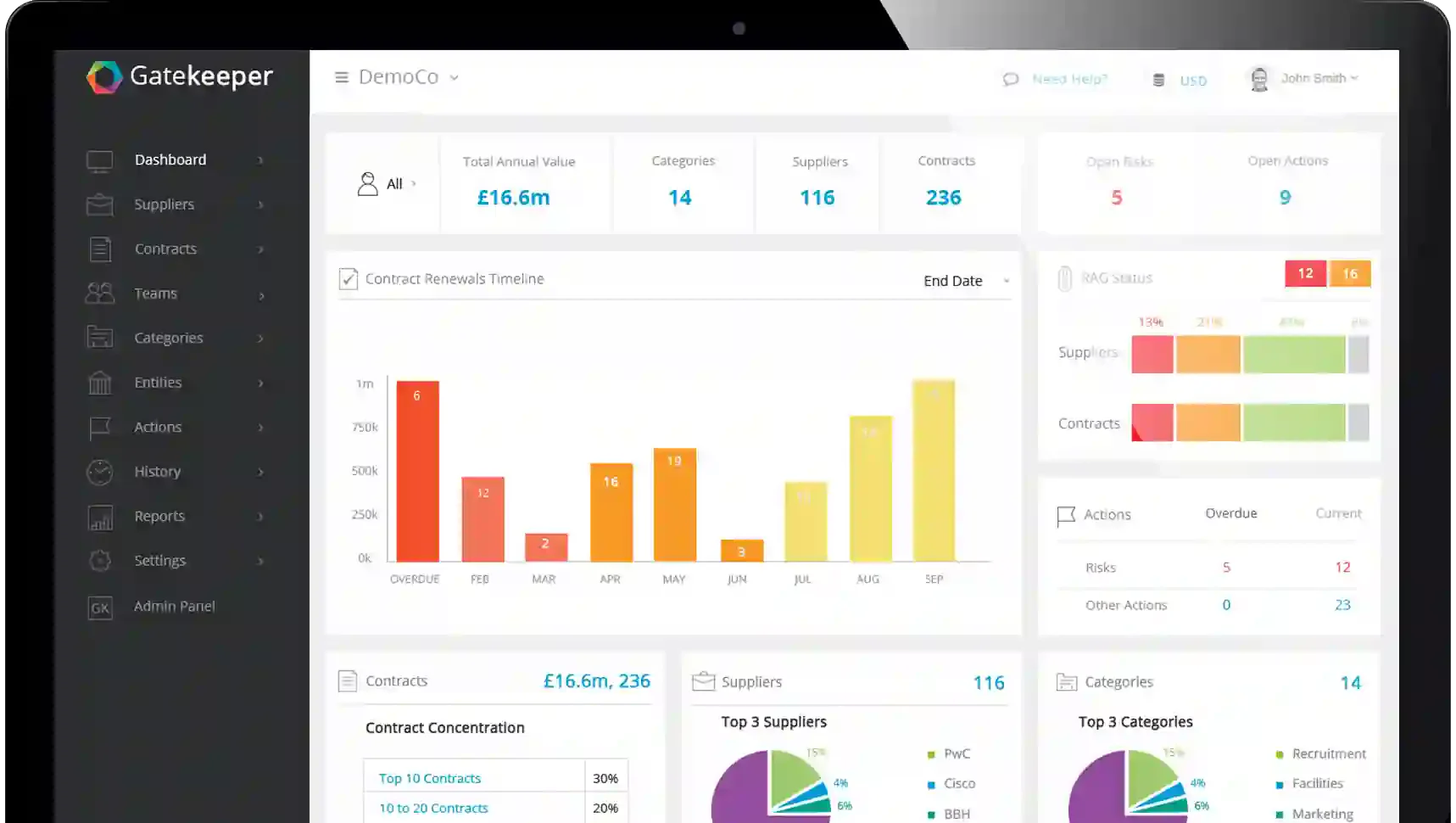
Gatekeeper HQ takes a vendor-centric approach to contract management. It manages the full lifecycle of a supplier relationship, from onboarding and risk assessment through to renewal.
For Australian businesses, its ability to track supplier compliance data alongside the contract record is a significant advantage.
Modern Slavery statements, insurance certificates, and ESG compliance data are managed in one place, making it well-suited for procurement teams with growing reporting obligations.
Best for: Procurement teams that need to manage vendor contracts alongside supplier compliance data, including Modern Slavery statements and ESG certificates in one place.
Pros
|
Cons
|
| ✓ Manages supplier compliance data alongside the contract record in one place. |
× Less suitable for businesses with complex legal drafting or authoring needs. |
| ✓ Strong fit for Modern Slavery and ESG reporting obligations facing Australian procurement teams. |
× Reporting customisation can require significant configuration effort. |
| ✓ Clear visibility across the full vendor lifecycle from onboarding to renewal. |
× Pricing on request only, which limits upfront budget planning. |
Pricing: Contact Gatekeeper HQ for a custom quote based on contract volume and user count.
8. WebCM
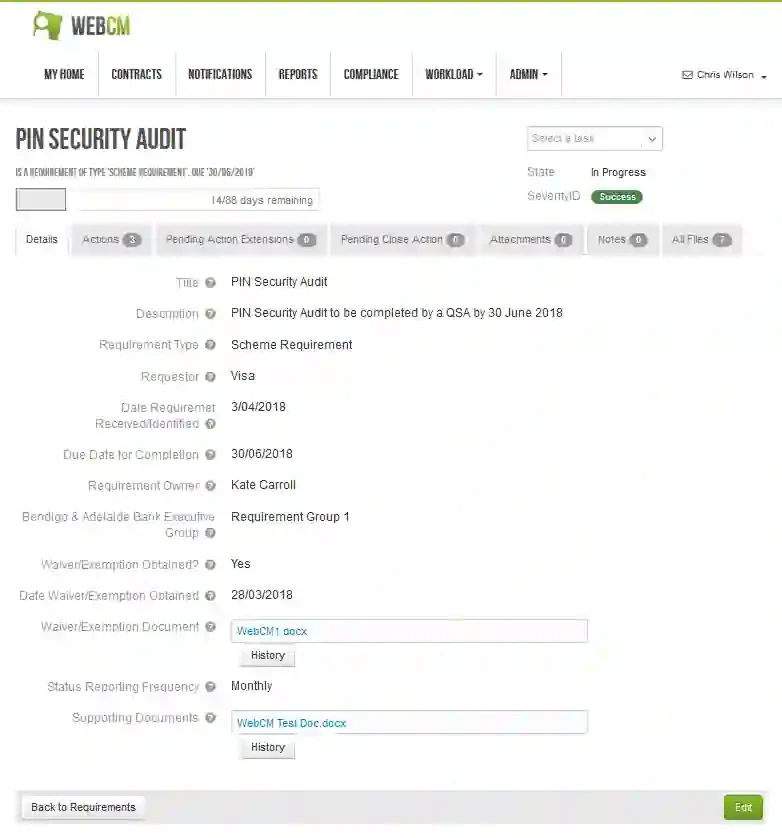
WebCM is one of the few platforms on this list that is genuinely Australian-owned and operated. This gives it a distinct advantage in terms of data sovereignty and local support responsiveness.
The platform is designed specifically for Australian government agencies and local councils. It meets the strict record-keeping requirements of the Australian public sector and is built to align with Australian standards.
For businesses that prioritise local ownership and public sector compliance, WebCM is a top contender.
Best for: Australian government agencies and local councils that require Australian-hosted, public-sector-compliant contract management with strict record-keeping.
Pros
|
Cons
|
| ✓ 100% Australian-owned and hosted, meeting data sovereignty requirements fully. |
× Limited suitability for private sector or commercial businesses. |
| ✓ Built specifically for public sector record-keeping and Australian government standards. |
× Feature set is narrower than global enterprise CLM platforms. |
| ✓ Local support team operates in Australian time zones without overseas handoffs. |
× Less emphasis on AI-driven contract intelligence and automation features. |
Pricing: Contact WebCM for a custom quote tailored to agency size and contract volume.
9. Agiloft
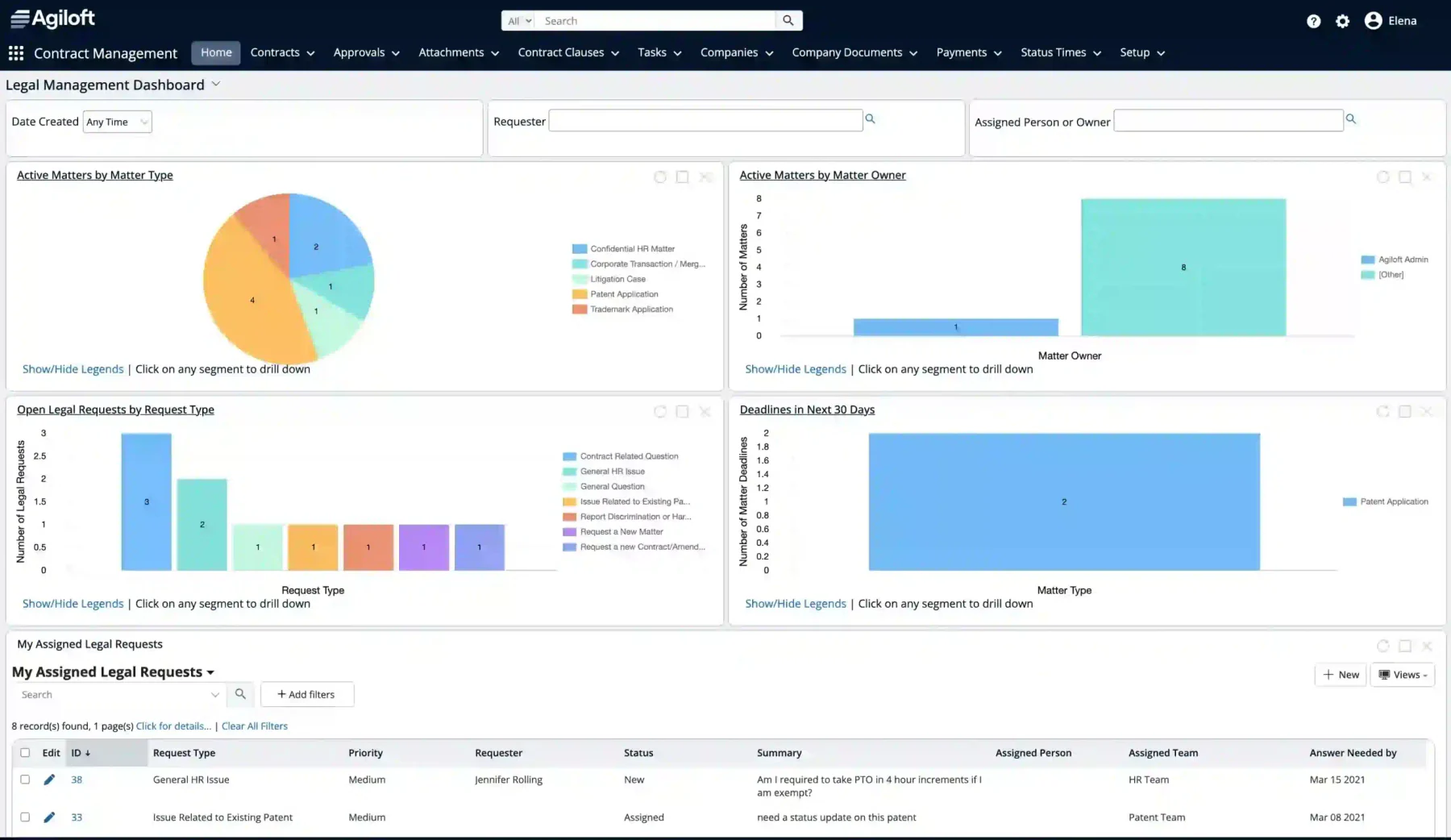
Agiloft is built on a no-code configuration platform that allows businesses to build custom contract workflows without developer resources. This flexibility suits Australian businesses with unique processes.
It handles complex royalty agreements in the mining sector, specialised research contracts in universities, and a wide range of other non-standard use cases.
Its integration capabilities also allow it to sit at the centre of a complex corporate IT stack, connecting with ERP and CRM systems as required.
Best for: Businesses with complex, non-standard contract workflows such as mining royalty agreements or university research contracts requiring deep customisation without developer resources.
Pros
|
Cons
|
| ✓ No-code configuration enables deep customisation without developer resources. |
× The complexity of configuration can extend initial setup and go-live timelines. |
| ✓ Handles complex, non-standard contract types across diverse industries, including mining and research. |
× User interface is functional but less modern than newer cloud-native platforms. |
| ✓ Strong integration capabilities with ERP and CRM systems across a complex IT stack. |
× Requires dedicated admin resources to maintain and update workflows over time. |
Pricing: Contact Agiloft for a custom quote. Pricing scales with the number of users and modules selected.
10. ContractWorks
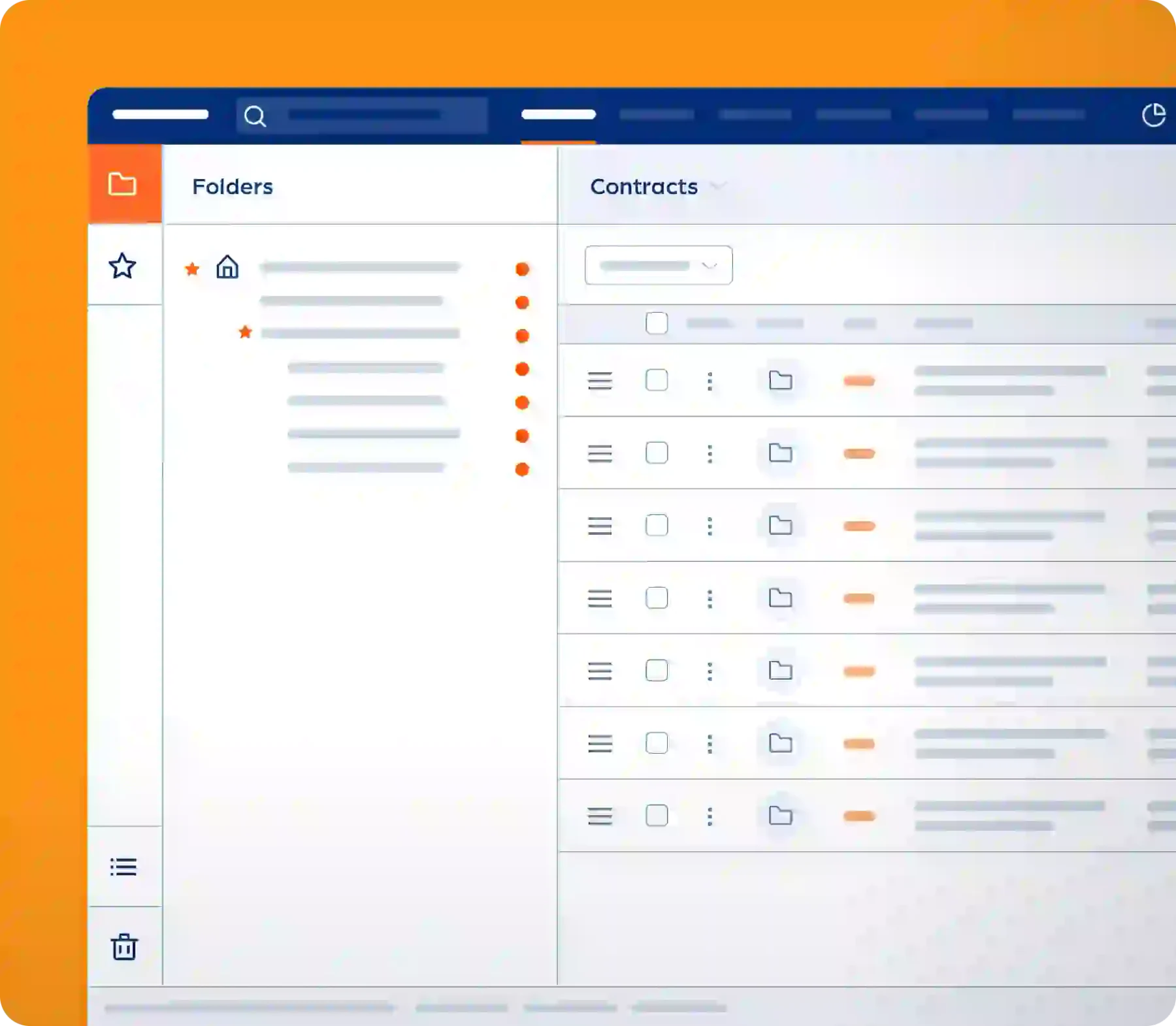
ContractWorks is an effective entry point for businesses beginning their CLM journey. It focuses on the repository function, offering high-speed OCR and AI-tagging that makes every word in every contract searchable.
It is valued for its simplicity and fast implementation time. Australian SMEs and legal firms moving away from shared network drives find it a practical first step toward structured contract management.
Best for: Australian SMEs and legal firms beginning their CLM journey that need a simple, fast-to-implement contract repository with strong AI-powered search.
Pros
|
Cons
|
| ✓ Fast implementation with minimal setup, suitable for teams without technical support. |
× Limited workflow automation compared to full CLM platforms. |
| ✓ High-speed OCR and AI-tagging make every word in every contract searchable instantly. |
× Not designed to scale to high-volume enterprise contract operations. |
| ✓ Simple, accessible interface suitable for non-legal users across the business. |
× Reporting and analytics are more basic than mid-range competitors. |
Pricing: Starter plan from approximately $1,100 AUD per month for up to two users. Higher tiers available on request.
Quick Comparison Table
How Much Does Contract Management Software Cost in Australia?
Pricing for contract management software in Australia depends on the number of users, contract volume, and the level of automation required. Most providers now operate on a SaaS model with annual subscriptions.
Entry-level repository systems typically cost between $1,000 and $5,000 AUD per year. Pricing at this tier is generally based on seat count or document volume.
Mid-range automation tools such as Juro or PandaDoc typically range from $5,000 to $20,000 AUD per year, depending on the number of users who need template creation and editing access.
Enterprise CLM platforms such as Ironclad and DocuSign CLM represent a larger investment. Implementation costs can range from $20,000 to $100,000 AUD, with annual subscription fees often exceeding $50,000 AUD.
For large businesses, the ROI is found in the hours saved on manual review and the mitigation of high-value contractual risk. They should also account for currency exposure if the software is billed in USD.
Conclusion
For Australian businesses, the choice must account for local compliance requirements. The laws and legislation all shape a CLM platform capabilities. The 2026 market offers a purpose-built solution for every business.
By centralising contract data and automating the lifecycle, businesses transform their contracts from static legal documents into active assets that support faster, safer, and more confident growth.
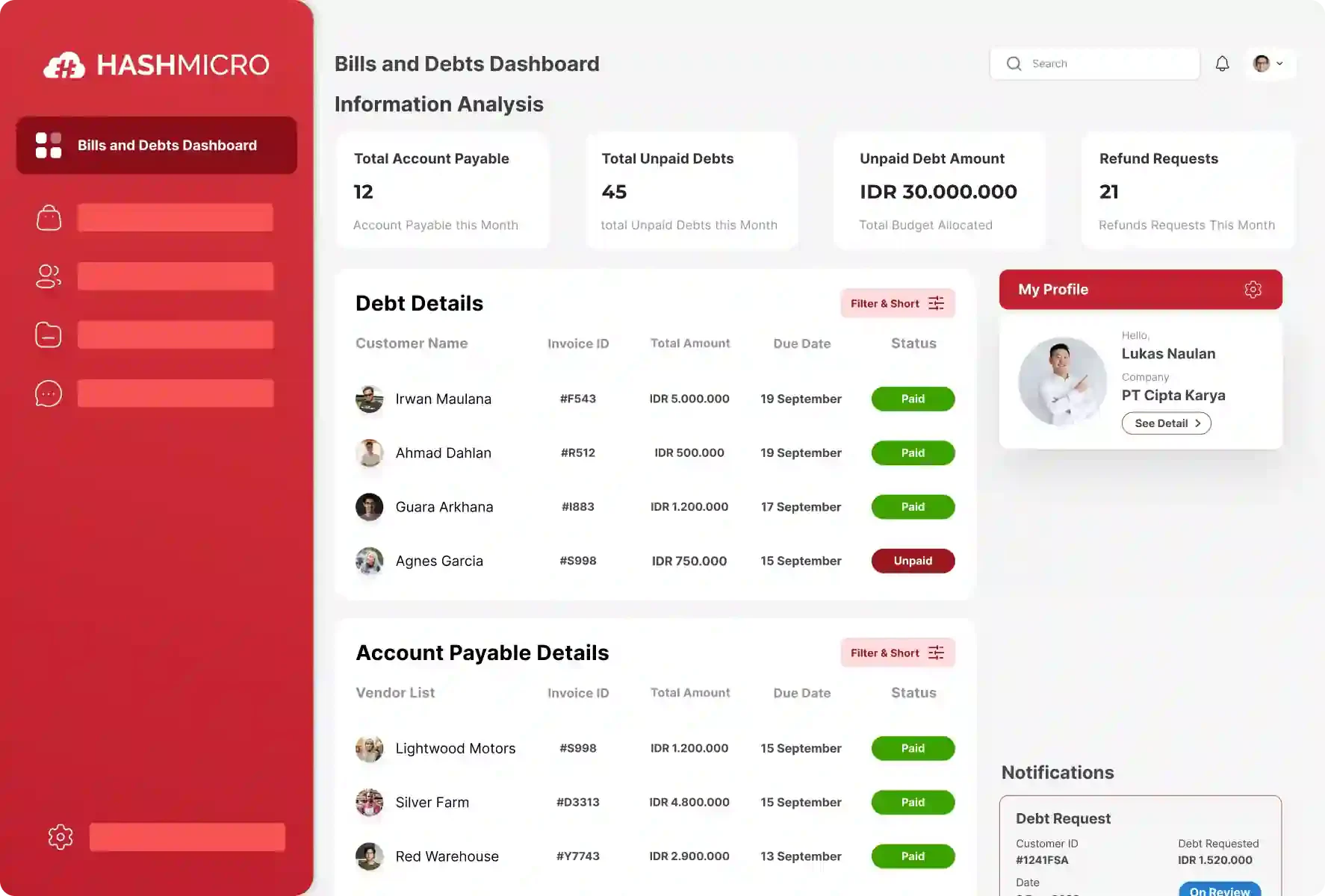
If you want to gain further insight regarding contract management software, then you can book a free consultation with us and learn what is best for your company.
Frequently Asked Questions
Does contract management software help with Commonwealth Procurement Rules compliance?
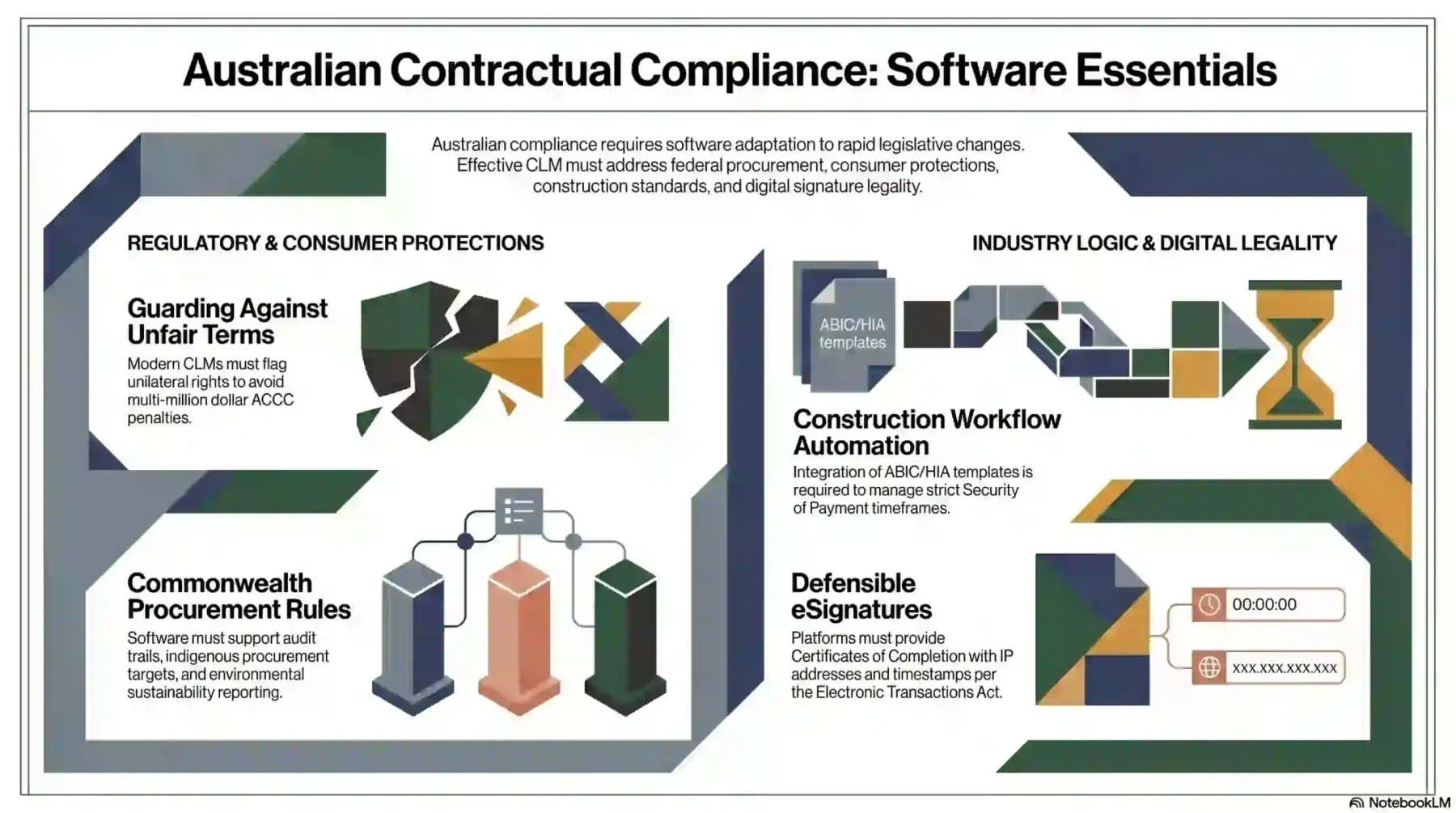
Yes. Contract management software supports CPR compliance by automating documentation, maintaining full audit trails, and structuring approval workflows to meet procurement reporting obligations.
Clause libraries, milestone tracking, and digital signing certificates directly address the transparency and value-for-money requirements the CPRs mandate.
Can contract management software integrate with Xero or MYOB?
Many platforms support native or API-based connections with Xero and MYOB, allowing contract milestones, payment terms, and billing triggers to flow into your accounting system without manual re-entry.
This keeps legal and finance data in sync across the contract lifecycle, from execution through to final payment.
What is the best contract management software for construction companies in Australia?
Procore is the leading choice for Australian construction businesses, with purpose-built support for ABIC and HIA contract formats, progress claims, variations, and subcontract management.
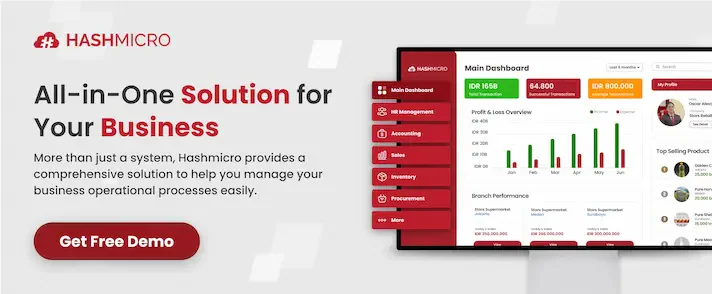
For firms that need contract management connected to broader ERP and finance workflows, HashMicro is a strong alternative for project-heavy operations.