






Purchase Price Variance (PPV): Meaning, Formula, and Causes

Purchase Price Variance (PPV): Meaning, Formula, and Causes

Purchase Price Variance (PPV): Meaning, Formula, and Causes

Purchase costs can change quickly due to supplier pricing, market conditions, freight costs, and currency movements. These fluctuations often create differences between expected procurement budgets and actual purchasing expenses.

Purchase Price Variance (PPV) helps businesses measure the gap between standard costs and actual purchase prices during procurement activities. Finance and procurement teams use PPV to monitor cost control, supplier performance, and purchasing efficiency.

Key Takeaways

Understand how Purchase Price Variance (PPV) measures the gap between standard procurement costs and actual purchase prices.

Master the PPV formula, favourable and unfavourable variance classification, and practical procurement examples.

Discover how supplier pricing, currency movements, commodity volatility, and purchasing behaviour affect procurement variance.

Learn how PPV affects procurement visibility, standard costing, budgeting accuracy, and financial reporting workflows.

What Is Purchase Price Variance (PPV)?

Purchase Price Variance (PPV) is a procurement and accounting metric used to measure the difference between the standard cost of an item and the actual price paid during purchasing.

Businesses use PPV to monitor procurement performance, supplier pricing changes, and purchasing cost fluctuations across operational categories.

A favourable PPV occurs when actual prices are lower than expected, while an unfavourable PPV happens when purchasing costs exceed standard pricing.

How to Calculate PPV

PPV is calculated by comparing the standard purchase price against the actual price paid, then multiplying the difference by the purchased quantity.

1. The PPV formula explained

Purchase Price Variance uses a standard formula to measure the financial impact of procurement price changes.

PPV = (Standard Price − Actual Price) × Actual QuantityPPV = (Standard \ Price – Actual \ Price) : times Actual : Quantity

  • SP (Standard Price): The planned or budgeted unit cost set before purchasing begins.
  • AP (Actual Price): The real unit price paid to the supplier during procurement.
  • AQ (Actual Quantity): The total quantity purchased during the transaction or reporting period.

2. Favourable vs unfavourable PPV

PPV results are generally classified as either favourable or unfavourable depending on whether the actual purchase price is lower or higher than the standard cost.

PPV type Condition Impact
Favourable PPV Actual price is lower than standard cost Reduces purchasing costs and improves margins
Unfavourable PPV Actual price is higher than standard cost Increases procurement costs and reduces margins

3. PPV calculation example

  • A procurement team sets the standard cost of a component at AUD $15 per unit.
  • The supplier later increases the actual purchase price to AUD $17 per unit.
  • The business purchases 2,000 units during the reporting period.
  • PPV = ($15 − $17) × 2,000 = -AUD $4,000, resulting in an unfavourable variance.

Main Causes of Purchase Price Variance

Main Causes of Purchase Price Variance

Several internal and external factors can cause procurement prices to differ from standard costs during purchasing activities.

1. Supplier price changes and contract escalations

Supplier pricing may increase due to inflation, freight costs, labour expenses, or raw material shortages. Contract escalation clauses can also adjust pricing automatically during volatile periods.

2. Supply and demand fluctuations

Changes in global supply and demand can quickly affect procurement pricing across materials, commodities, and finished goods. Supply shortages commonly increase purchasing costs.

3. Currency exchange rate movements

Businesses importing from overseas suppliers are highly exposed to currency volatility. A weaker Australian dollar can increase actual purchasing costs and create unfavourable PPV.

4. Off-contract purchasing and maverick spend

Purchasing outside approved supplier agreements often results in higher spot pricing than negotiated contract rates. This increases procurement costs and reduces purchasing control.

5. Volume discounts and tiered pricing

Suppliers often provide lower pricing for larger order volumes. Businesses purchasing below agreed thresholds may lose discounts and pay higher unit costs.

How PPV Affects Financial Reporting and Procurement

PPV affects both procurement performance analysis and financial reporting visibility across purchasing operations.

1. PPV in standard costing and the general ledger

Businesses using standard costing systems typically record PPV separately within the general ledger. This helps finance teams monitor procurement cost differences against planned budgets.

2. How finance and procurement teams interpret PPV

Procurement teams often view PPV as a supplier pricing and negotiation metric, while finance teams focus on margin impact, budgeting accuracy, and cost control performance.

3. Why favourable PPV does not always mean lower total cost

Lower purchase prices do not always reduce total procurement costs. Cheaper suppliers may create higher freight costs, quality issues, delays, or operational inefficiencies elsewhere.

PPV as a Procurement KPI

PPV is commonly used as a procurement KPI to measure purchasing performance and cost management efficiency.

1. What PPV can and cannot measure

  • PPV measures purchase price changes against standard costs.
  • PPV does not measure supplier quality, delivery reliability, or total operational cost impact.

2. Complementary metrics alongside PPV

  • Supplier lead times help evaluate delivery consistency.
  • Total cost of ownership (TCO) provides broader procurement cost visibility.
  • Supplier defect rates help measure quality performance beyond pricing.

3. Common PPV reporting limitations

  • Standard costs may become outdated during volatile markets.
  • Currency fluctuations can distort procurement performance analysis.
  • Favourable PPV may hide quality or logistics-related cost increases.

How Exchange Rates and Commodity Prices Affect PPV

External market conditions can significantly influence procurement pricing and purchasing variance across supply chains.

1. Currency volatility for Australian importers

Australian importers are heavily exposed to AUD exchange rate movements when purchasing overseas goods. Tracking total import expenses helps businesses understand how exchange rates, freight, duties, and supplier pricing affect actual procurement costs.

2. Commodity-driven procurement variance

Procurement teams often view PPV as a supplier pricing and negotiation metric, while finance teams focus on margin impact, budgeting accuracy, cost control performance, and the accuracy of vendor payment documents used to verify purchase costs.

3. Hedging and contract strategies

Businesses often use hedging strategies, fixed-price agreements, or long-term supplier contracts to reduce exposure to pricing volatility and procurement variance.

PPV Across Industries in Australia

PPV affects industries differently depending on supplier exposure, commodity pricing, and procurement complexity.

1. Manufacturing and electronics

Manufacturers and electronics businesses closely monitor PPV due to fluctuating raw material and component prices. Semiconductor shortages and freight costs can significantly affect procurement spending.

Many businesses also track PPV across suppliers, factories, and production categories to improve cost visibility and purchasing decisions.

2. Construction and infrastructure

Construction businesses face frequent PPV fluctuations from steel, concrete, fuel, timber, and subcontractor pricing changes. Large infrastructure projects are especially exposed to long-term commodity volatility.

Procurement teams often use supplier contracts and staged purchasing strategies to reduce exposure to sudden cost increases.

3. Retail and wholesale distribution

Retailers and wholesalers experience PPV through inventory purchasing, import costs, supplier pricing changes, and seasonal demand fluctuations. Currency volatility also affects imported product margins.

Businesses commonly monitor PPV across product categories and supplier groups to improve pricing control and purchasing accuracy.

Common Mistakes When Tracking PPV

Poor PPV analysis can create misleading procurement insights and inaccurate cost reporting.

1. Updating standard costs too infrequently

Outdated standard costs reduce PPV accuracy during volatile market conditions. Businesses should review pricing assumptions regularly to maintain realistic procurement benchmarks.

2. Treating all unfavourable PPV as procurement failure

Unfavourable PPV is not always caused by poor supplier negotiations. Currency movements, commodity shortages, and freight disruptions can also increase purchasing costs.

3. Ignoring currency and market conditions

External market conditions heavily influence procurement pricing across global supply chains. Ignoring these factors can distort procurement performance analysis.

4. Focusing only on purchase price instead of total cost

Lower supplier pricing may still create higher operational costs through delays, defects, freight expenses, or quality issues. Total cost visibility is equally important during procurement analysis.

Best Practices for Managing Purchase Price Variance

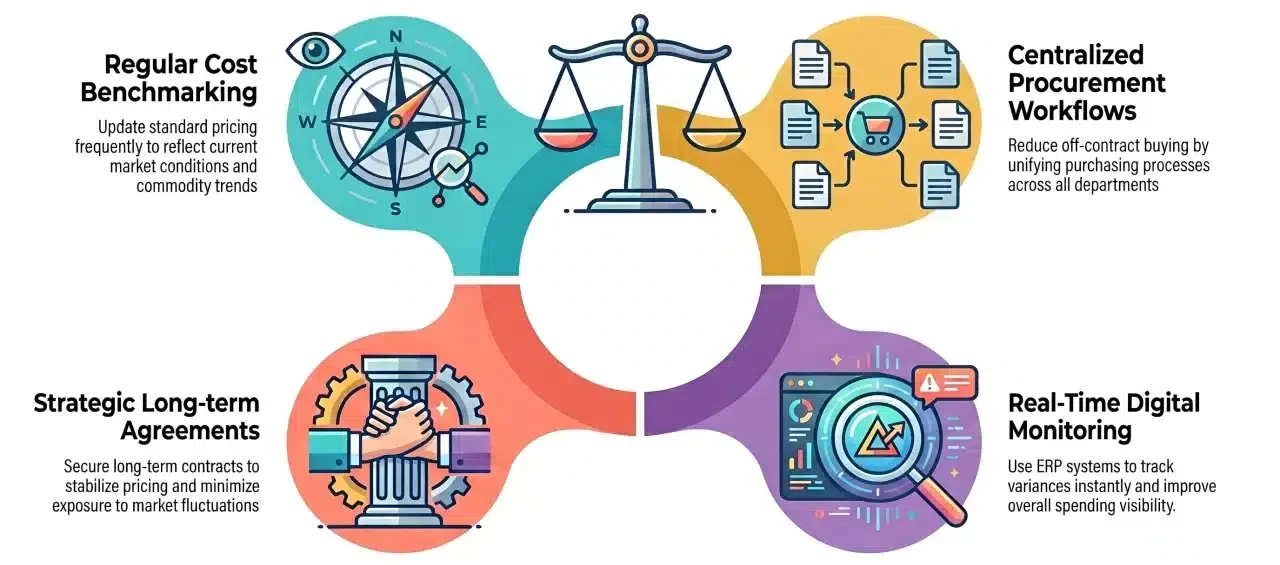
best practices for managing purchase price variance

Structured procurement controls help businesses manage PPV more consistently across purchasing operations.

1. Review standard costs regularly

Businesses should update standard pricing regularly to reflect market conditions, supplier changes, and commodity trends. Accurate benchmarks improve PPV reporting reliability.

Conclusion

Purchase Price Variance helps businesses measure how actual procurement costs differ from planned purchasing expectations. Strong PPV analysis also improves supplier visibility, budgeting accuracy, and procurement control.

As market volatility and supplier pricing pressures increase, many businesses use ERP and procurement systems to monitor PPV more accurately across purchasing operations.

If you want to improve procurement visibility and purchasing cost control, you can request a free consultation to explore suitable procurement and ERP solutions.

Procurement

Frequently Asked Question

There is no universal benchmark for a good PPV percentage because acceptable variance depends on industry conditions, commodity exposure, supplier contracts, and procurement strategy. Many businesses focus more on consistent variance control and trend monitoring over time.

No. A negative or favourable PPV may reduce purchase prices, but it does not always lower total procurement cost. Lower-cost suppliers may still create quality issues, delays, freight increases, or operational inefficiencies.

Businesses commonly review standard costs monthly or quarterly depending on procurement volatility, commodity exposure, and supplier pricing changes. Highly volatile industries may require more frequent updates.

AUD exchange rate movements directly affect procurement costs for imported goods and overseas supplier contracts. A weaker Australian dollar generally increases purchasing costs and creates unfavourable PPV for importers.

PPV measures the difference between standard and actual purchase prices, while cost avoidance refers to procurement actions that prevent future cost increases through negotiations, sourcing strategies, or operational improvements.


Jasper Colefax

Business Systems Analyst

I’m a full-time business systems analyst and a part-time writer focused on procurement and supply chain management. In my day-to-day work, I help teams map purchasing workflows, clarify approval rules, and connect supplier and inventory data so decisions don’t rely on guesswork.

Luke operates with a control-first mindset and a strong standard for precision, especially when decisions depend on numbers. His analytical foundation supports a finance leader who is structured, consistent, and careful about operational and reporting integrity.

HashMicro follows strict editorial standards and uses primary sources such as regulations, industry guidance, and trusted publications to keep content accurate and relevant.