






Key Takeaways
Understand how order confirmations help businesses verify transaction details before fulfilment begins.
Explore how confirmation workflows improve transaction accuracy, customer communication, and operational visibility.
Learn which essential details should appear in every professional order confirmation document.
Discover how purchase orders, confirmations, and invoices support different stages of the transaction cycle.

What Is Order Confirmation?
Order confirmation is a formal acknowledgement that a business has received and accepted a customer order. It confirms important transaction details before goods or services are delivered.
The document usually includes product details, quantities, pricing, payment terms, delivery timelines, and order references. Businesses commonly send confirmations through email, ecommerce platforms, ERP systems, or procurement software.
Order confirmations help buyers and sellers verify the same transaction details before fulfilment begins. Digital workflows also improve order accuracy and reduce manual processing delays.
Why Order Confirmation Matters for Businesses
Order confirmations help businesses improve transaction accuracy, customer communication, and operational visibility before fulfilment activities begin.
1. Building trust with buyers
Clear order confirmations reassure buyers that their order has been received and processed correctly. Accurate confirmations also help businesses maintain more professional and reliable customer communication.
2. Reducing disputes and errors
Order confirmations help businesses identify pricing issues, quantity mismatches, or incorrect delivery details before fulfilment begins. This reduces operational errors, customer disputes, and unnecessary order corrections.
3. Supporting financial and operational planning
Confirmed order data helps finance, procurement, and operations teams track upcoming revenue, inventory requirements, and delivery schedules more accurately.
This improves planning visibility and supports teams managing purchasing activities across finance, procurement, and fulfilment.
Key Elements of an Order Confirmation
Order confirmations should contain clear transaction details so buyers and sellers can verify the same information before fulfilment or delivery begins.
1. Order reference number and confirmation date
- Unique order reference or confirmation number for transaction tracking.
- Confirmation issue date to document when the order was accepted.
- Customer or account reference where applicable.
2. Product or service details
- Product names, SKUs, or service descriptions.
- Ordered quantities and unit measurements.
- Any custom specifications or special requests.
3. Pricing, payment terms, and delivery details
- Agreed pricing, discounts, taxes, and total order value.
- Payment methods, due dates, or credit terms.
- Expected delivery, shipping, or service completion timelines.
4. Terms and conditions
- Return, cancellation, or refund policies.
- Warranty or service coverage information.
- Any contractual terms linked to the transaction.
Order Confirmation vs Purchase Order vs Invoice

Order confirmations, purchase orders, and invoices support different stages of the transaction cycle. Each document serves a separate purpose for buyers, sellers, finance teams, and procurement processes.
1. When each document is issued
- A buyer issues a purchase order to request or approve a transaction.
- The seller sends an order confirmation after reviewing and accepting the order details.
- An invoice is issued after goods are delivered or services are completed for payment collection.
2. How they work together in the order cycle
Purchase orders, order confirmations, and invoices work together to support transaction accuracy from sourcing through payment stages. Each document helps businesses verify pricing, quantities, delivery terms, and payment obligations before processing payments.
Many businesses also use three-way matching to compare purchase orders, order confirmations, and invoices before approving transactions. This helps reduce payment errors, mismatched records, and procurement disputes.
How to Write an Order Confirmation
A clear order confirmation helps businesses verify transaction details, reduce fulfilment errors, and maintain consistent communication with buyers.
1. Include all required transaction details
Order confirmations should include product details, quantities, pricing, payment terms, delivery information, and order references so both parties can verify the same transaction data.
2. Match terms from the original order
Businesses should confirm that pricing, quantities, delivery timelines, and agreed conditions match the original customer order or purchase request before sending confirmations.
3. Send confirmations promptly
Order confirmations should be issued as quickly as possible after receiving an order to minimise delays, reduce uncertainty, and support faster fulfilment processes.
4. Use clear and professional language
Businesses should use simple and professional wording to avoid confusion around payment terms, delivery details, or product specifications during the transaction process.
Order Confirmation Emails for Australian e-Commerce Businesses
Order confirmation emails help ecommerce businesses verify transactions, reassure customers, and provide clear fulfilment information immediately after checkout.
1. What to include in an order confirmation email
- Order number and confirmation date for transaction tracking.
- Purchased products, quantities, and pricing details.
- Payment confirmation and selected payment method.
- Shipping address and estimated delivery timeline.
- Customer support or contact information for order enquiries.
2. Timing and delivery best practices
Businesses should send order confirmation emails immediately after payment or checkout completion. Fast confirmation delivery helps improve customer confidence and reduce support enquiries.
Businesses should also ensure confirmation emails are mobile-friendly, easy to read, and accessible across different email platforms and devices.
3. Using automation to scale confirmations
Automated confirmation workflows help ecommerce businesses process large order volumes more consistently and reduce manual administration. Integrated ecommerce, ERP, and order management systems also improve transaction visibility across fulfilment operations.
Automation further helps businesses minimise processing delays, reduce confirmation errors, and maintain more reliable customer communication as order volumes grow.
Order Confirmation and Australian Consumer Law
Australian businesses should ensure order confirmations clearly reflect agreed transaction details, pricing, and delivery terms to support transparent customer communication and reduce transaction disputes.
1. Legal obligations when confirming an order
Businesses should provide accurate order information and avoid misleading pricing, availability, or delivery claims when confirming transactions. Clear confirmation records also help support customer communication and dispute resolution processes.
2. Handling discrepancies between orders and confirmations
If confirmation details differ from the original order, businesses should resolve discrepancies before fulfilment begins. Prompt communication helps reduce disputes, cancellations, and incorrect deliveries.
3. Record-keeping requirements
Businesses should retain order confirmations, invoices, and related transaction records for financial tracking, customer service, and compliance purposes. Digital record management also improves document accessibility and audit readiness.
Common Challenges in Managing Order Confirmations
Managing large volumes of orders can create processing delays, inconsistent records, and limited transaction visibility without structured confirmation workflows.
1. Manual processing delays and errors
Manual confirmation processes increase the risk of delayed responses, incorrect data entry, and fulfilment mistakes. These issues often become more visible during high order periods.
2. Mismatched order information
Differences between customer orders, confirmations, and fulfilment records can create disputes and operational delays. Businesses should verify transaction details before confirming orders.
3. Limited visibility across high-volume orders
Businesses handling large transaction volumes often need dedicated software for order visibility to monitor confirmation status, fulfilment progress, and order changes across multiple systems or sales channels.
Order Confirmation Across Industries in Australia
Different industries use order confirmations to support transaction accuracy, operational coordination, and customer communication across daily business activities.
1. Retail and ecommerce
Retail and ecommerce businesses use order confirmations to verify customer purchases, payment status, shipping details, and delivery timelines. Automated confirmations also help reduce customer support enquiries during fulfilment.
High-volume ecommerce operations often integrate confirmations directly with inventory, payment, and delivery systems to improve order visibility across multiple sales channels.
2. Manufacturing and wholesale distribution
Manufacturing and wholesale businesses use order confirmations to verify product specifications, quantities, pricing agreements, and delivery schedules before production or shipment begins. Accurate confirmations help reduce supply chain disruptions and fulfilment errors.
These businesses also use an integrated purchasing oversight system to coordinate procurement, inventory allocation, and customer delivery planning across larger transaction volumes.
3. SaaS and digital services
SaaS and digital service providers use order confirmations to verify subscriptions, service activation details, billing terms, and contract periods. Digital confirmations also help businesses maintain clearer customer onboarding processes.
Automated confirmation workflows further support recurring billing management and subscription tracking across growing customer accounts.
Common Mistakes in Order Confirmation
Poor confirmation processes can create fulfilment delays, customer disputes, and inconsistent transaction records across business operations.
1. Sending incomplete confirmations
Incomplete confirmations may exclude important details such as quantities, pricing, delivery timelines, or payment terms. Missing information can create confusion during fulfilment and customer communication.
2. Failing to verify discrepancies
Businesses should review mismatched pricing, quantities, or delivery details before confirming transactions. Ignoring discrepancies increases the risk of disputes and incorrect fulfilment.
3. Poor record retention
Missing confirmation records can make it difficult to track transactions, resolve customer issues, or support compliance requirements. Digital record management improves document visibility and accessibility.
4. Delayed confirmations
Late confirmations may create uncertainty for buyers and disrupt fulfilment planning. Prompt confirmations help businesses maintain faster and more reliable order processing.
Best Practices for Order Confirmation Management
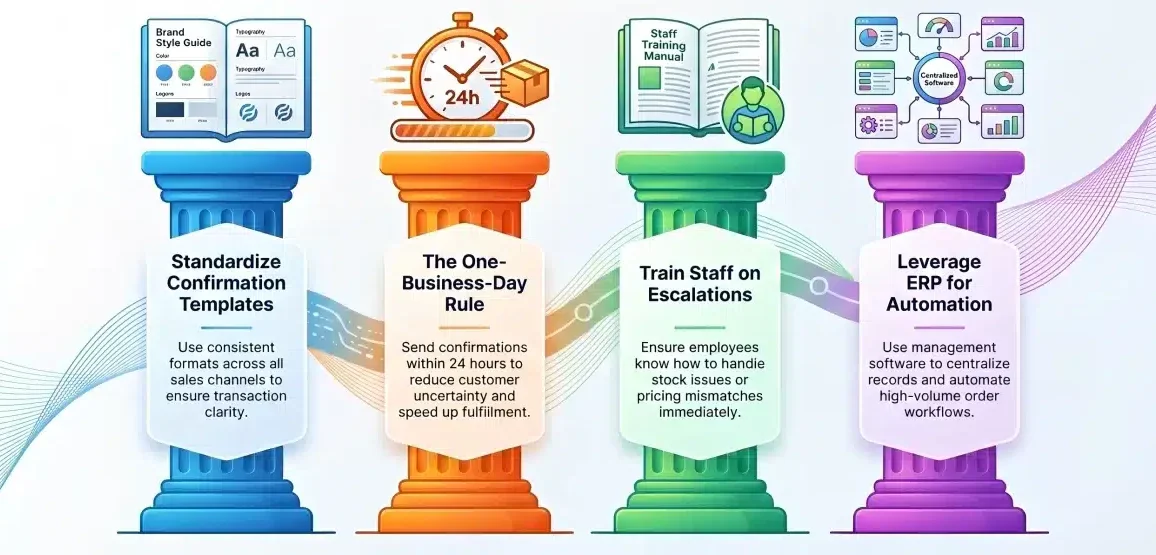
Structured confirmation workflows help businesses improve transaction accuracy, fulfilment coordination, and operational visibility across sales processes.
1. Standardise confirmation templates
Businesses should use consistent confirmation formats across sales channels to improve transaction clarity and reduce processing inconsistencies.
2. Confirm orders within one business day
Sending confirmations within the same business day helps reduce customer uncertainty and supports faster fulfilment coordination.
3. Train staff on escalation procedures
Employees should understand how to handle pricing mismatches, unavailable stock, or incorrect order details before confirmations are issued.
4, Use ERP software for automation
An automated order tracking platform or ERP helps businesses automate confirmation workflows, centralise transaction records, and improve visibility across high-volume orders.