






Key Takeaways
A subcontractor invoice is a formal billing document used to request payment for labour, services, or materials under a contract.
Subcontractor, tax, and standard invoices serve different purposes depending on GST registration and billing requirements.
A properly structured subcontractor invoice helps reduce payment delays, disputes, and compliance issues across projects.
Different subcontractor invoice formats support various billing arrangements, including progress claims and retention payments.
What is a Subcontractor Invoice?
A subcontractor invoice is issued by a subcontractor to a main contractor to request payment for completed work or supplied materials. Unlike employees, subcontractors are responsible for billing their own services, making invoicing a critical part of their operations.
Beyond requesting payment, this document serves as a formal record of the transaction. It outlines what work was performed, when it was completed, and how much is owed, ensuring both parties have a clear reference for financial and legal purposes.
How a Subcontractor Invoice Works in Practice
In daily operations, a subcontractor invoice follows the progress of work on a project. Once a task, milestone, or billing period is completed, the subcontractor prepares an invoice based on agreed rates, materials used, and contract terms.
The main contractor then reviews the invoice against project records, such as purchase orders or subcontract agreements.
If all details are accurate and compliant, the invoice moves through approval and payment, often through a construction management software platform, linking operational work directly to cash flow.
Subcontractor Invoice vs Tax Invoice vs Standard Invoice: Key Differences
Although the terms are often used interchangeably, they serve different purposes depending on tax status and business setup.
A standard invoice is used by businesses that are not registered for GST. This standard business invoice document outlines completed work and the amount due, but does not include any tax component.
A tax invoice is required for GST-registered businesses and must include specific tax details, such as the GST amount and required identification fields. This allows the payer to claim tax credits.
A subcontractor invoice is not a separate legal type, but rather a context. It refers to any invoice issued by a subcontractor, which can either be a standard invoice or a tax invoice depending on GST registration.
The table below summarises the key differences between invoice types to help you choose the correct format based on your business setup.
What to Include in a Subcontractor Invoice
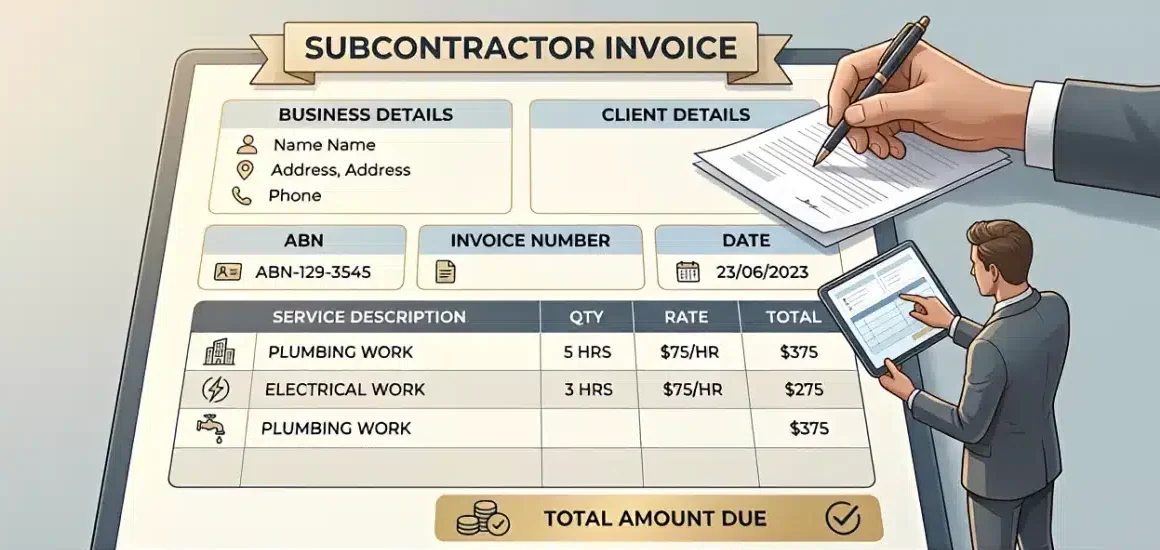
A subcontractor invoice must include specific details to ensure it can be verified, approved, and processed without delays. Missing or incomplete information often leads to rejected invoices or extended payment cycles.
To avoid this, each invoice should clearly present business identity, work details, and tax-related information in a structured format that aligns with compliance requirements.
1. ABN and business identity
Your business identity must be clearly stated on every subcontractor invoice. This includes your registered business name, contact details, and Australian Business Number (ABN).
- Full business name or trading name
- ABN displayed clearly
- Contact details (address, phone, email)
Without a valid ABN, the payer may be required to withhold a portion of the payment, which can directly affect your cash flow.
2. Tax invoice requirements
If you are registered for GST, your invoice must be issued as a GST-compliant tax invoice. This ensures the document is valid for tax reporting and allows the contractor to claim GST credits.
- Include the words “Tax Invoice” clearly
- Show GST amount or indicate if GST is included
- Ensure compliance with tax authority requirements
If you are not registered for GST, the invoice should not include any tax references.
3. Required invoice fields
A subcontractor invoice must include key details that clearly describe the transaction. These fields ensure the invoice can be processed without delays.
Essential fields include:
- Invoice number and issue date
- Description of services or materials
- Quantity, unit price, and total amount
- GST amount (if applicable)
- Total payable amount
Clear and complete information helps prevent disputes and speeds up approval.
4. Large invoice requirements
For higher-value invoices, additional details are required to meet compliance standards. This typically applies when the invoice exceeds a certain threshold.
- Include the buyer’s business name or ABN
- Ensure all tax-related fields are complete
- Provide detailed breakdowns for transparency
Including these details upfront reduces the risk of rejection or payment delays.
Types of Subcontractor Invoices
Different types of subcontractor invoices are used depending on project structure, tax status, and payment arrangement. Choosing the right format is easier with a system for contractors that manages billing across multiple jobs.
1. Standard subcontractor invoice
This is the most commonly used format for billing completed work. It includes labour, materials, and total cost, making it suitable for short-term or one-off jobs.
2. Non-GST invoice
Used by subcontractors who are not registered for GST. This invoice excludes any tax component and should clearly indicate that no GST is charged.
3. Progress claim invoice
Designed for ongoing projects, this invoice allows subcontractors to bill based on work completed over time. It helps maintain consistent cash flow throughout long-term contracts.
4. Invoice with retention
This format accounts for retention amounts held back by the contractor. It shows both the total value of work and the portion withheld until project completion.
5. Recipient-created tax invoice
In this arrangement, the contractor issues the invoice on behalf of the subcontractor. It is commonly used when the contractor controls the billing data and both parties agree to this method.
How to Create a Subcontractor Invoice
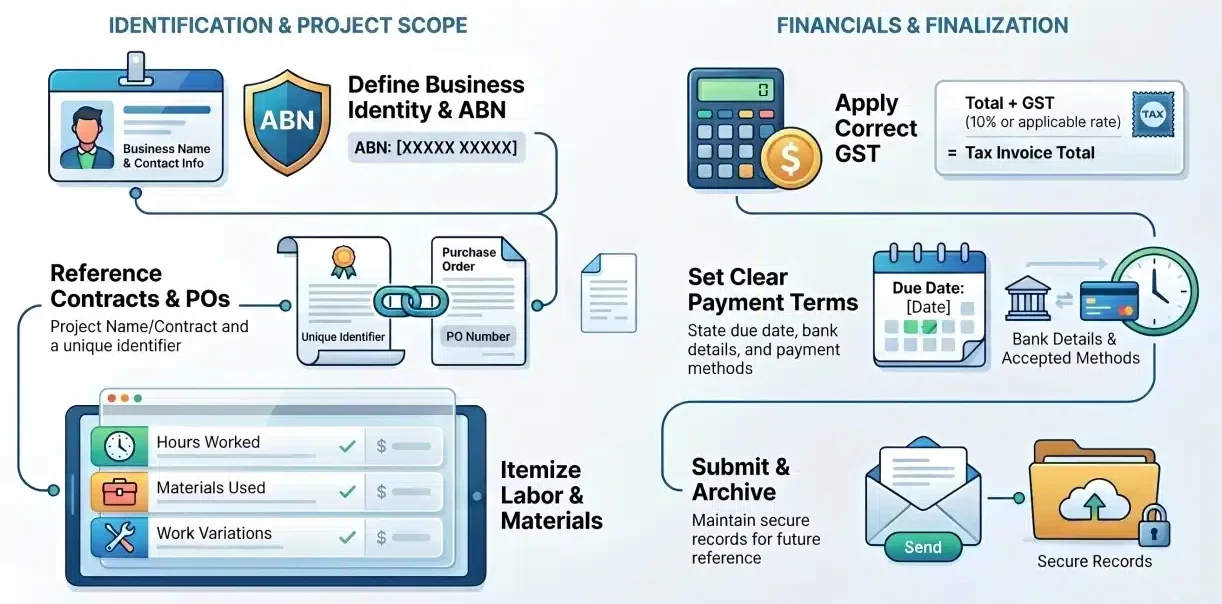
Creating a subcontractor invoice requires more than listing charges. It needs to align with contract terms, tax rules, and project documentation. Many businesses use construction management guide tools to standardise this process and reduce admin errors.
1. Add business details and ABN
Start by including your business name, contact information, and ABN. This identifies the invoice source and ensures compliance with tax requirements.
2. Include project and contract references
Reference the subcontract agreement, purchase order, or project name. This helps the contractor match the invoice with approved work.
3. Itemise labour and materials
Break down all charges clearly, including labour hours, materials used, and any variations. This improves transparency and reduces disputes.
4. Apply GST correctly
Calculate and display GST where applicable. Ensure the invoice format meets tax invoice requirements if you are registered for GST.
5. Add payment terms
State the payment due date, accepted payment methods, and bank details. Clear terms help avoid delays and confusion.
6. Send and store records
Send the invoice promptly after completing work and keep records securely. Maintaining records supports compliance and future reference.

Download Free Subcontractor Invoice Templates
Creating invoices manually can lead to inconsistent formats and missing details. Using structured templates helps standardise how subcontractor invoices are prepared, making them easier to review, approve, and process.
The templates below are designed to support different subcontracting scenarios. Each format can be adapted for spreadsheets or integrated into invoicing systems.
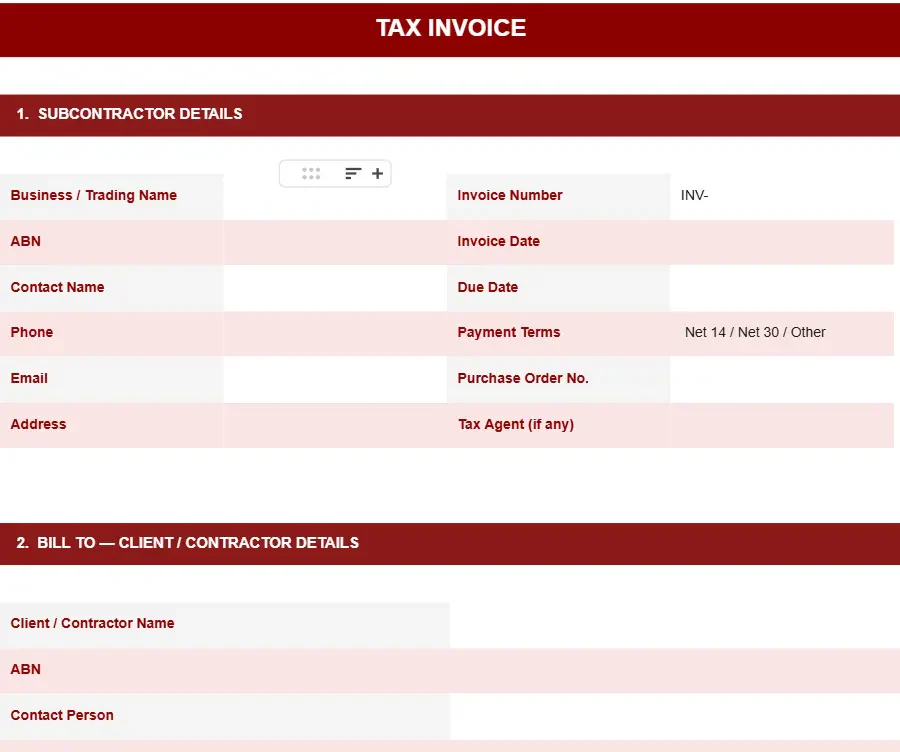
1. Standard subcontractor tax invoice template
Covers essential invoice fields including business details, ABN, GST, and total charges, making it suitable for general subcontracting work.
STANDARD SUBCONTRACTOR TAX INVOICE TEMPLATE
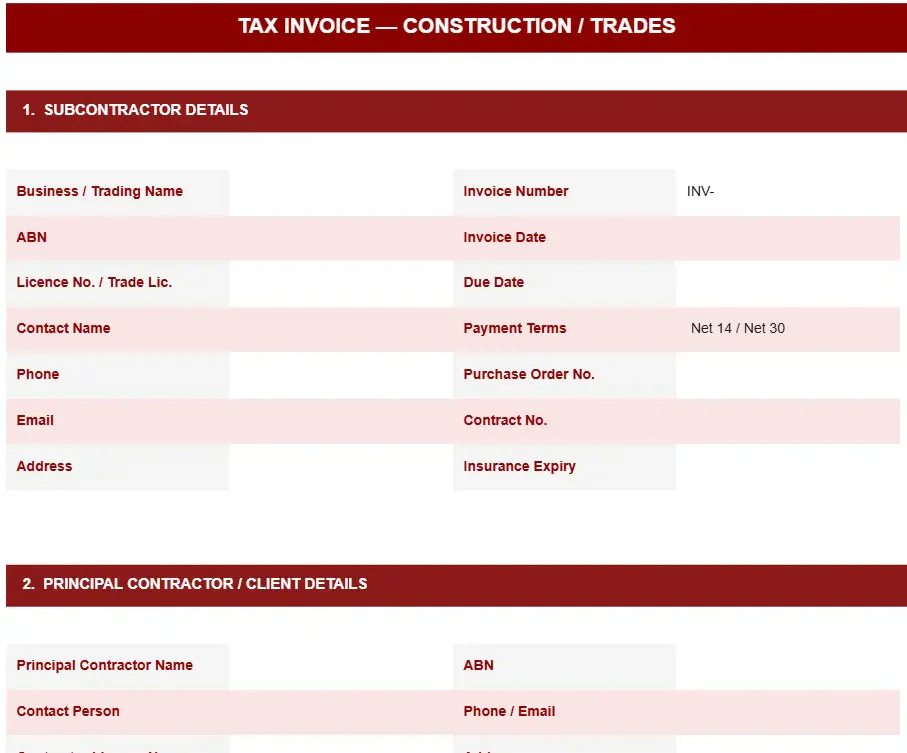
2. Construction or trades subcontractor invoice template
Includes project name, site details, and purchase order references to align with construction project billing requirements.
CONSTRUCTION OR TRADES SUBCONTARCTOR INVOICE TEMPLATE
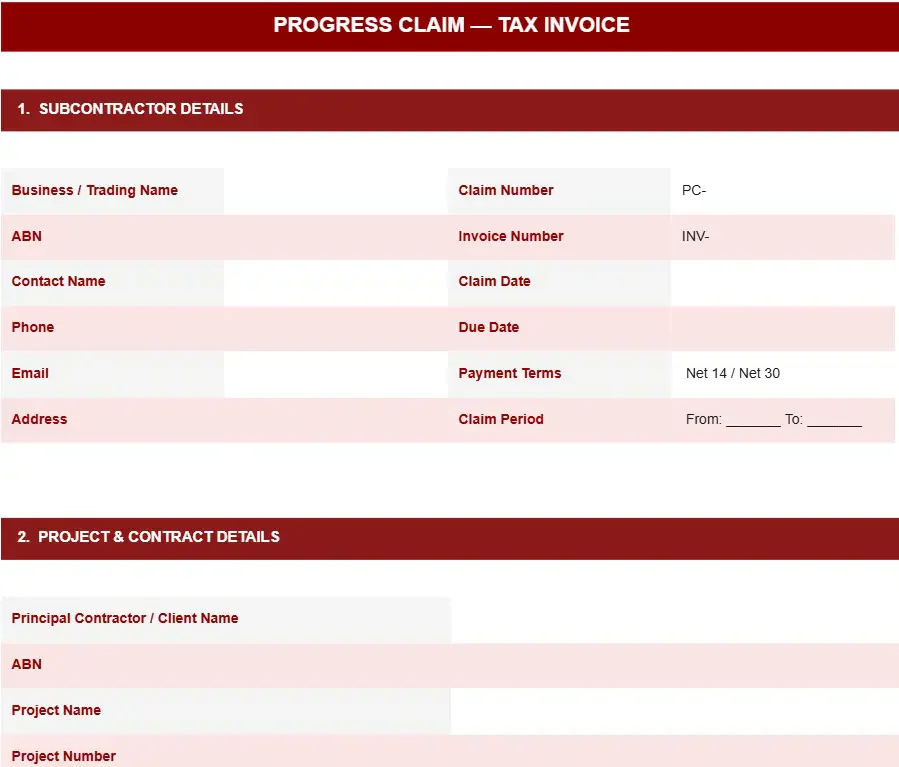
3. Progress claim invoice template
Tracks staged payments, including previous claims, current progress, and remaining balance for long-term projects.
PROGRESS CLAIM INVOICE TEMPLATE
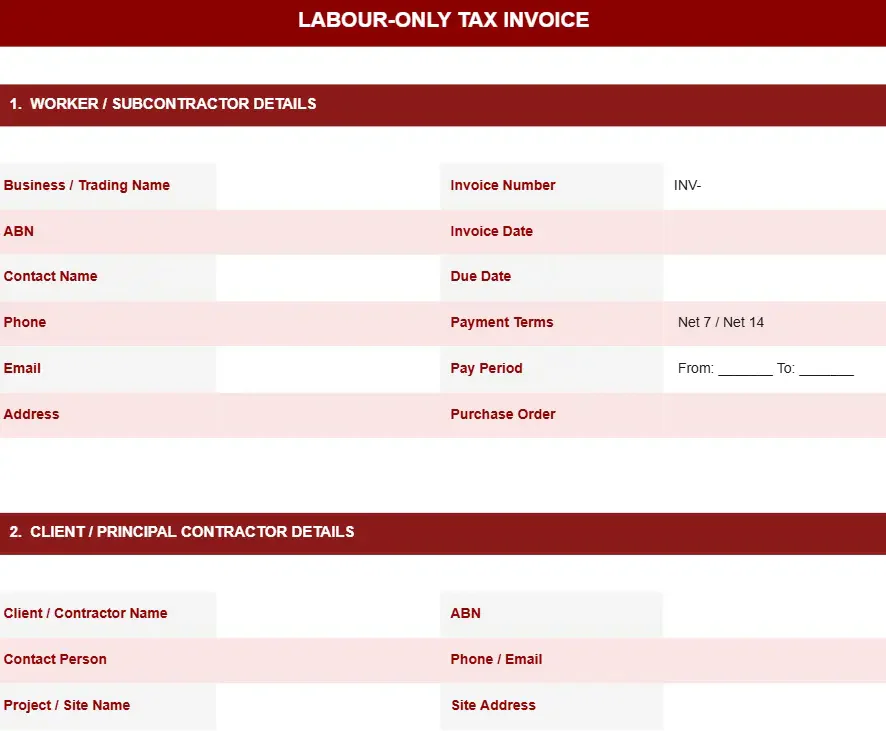
4. Labour-only subcontractor invoice template
Focuses on hours worked, rates, and total labour cost, ideal for subcontractors billing based on time.
LABOUR-ONLY SUBCONTRACTOR INVOICE TEMPLATE
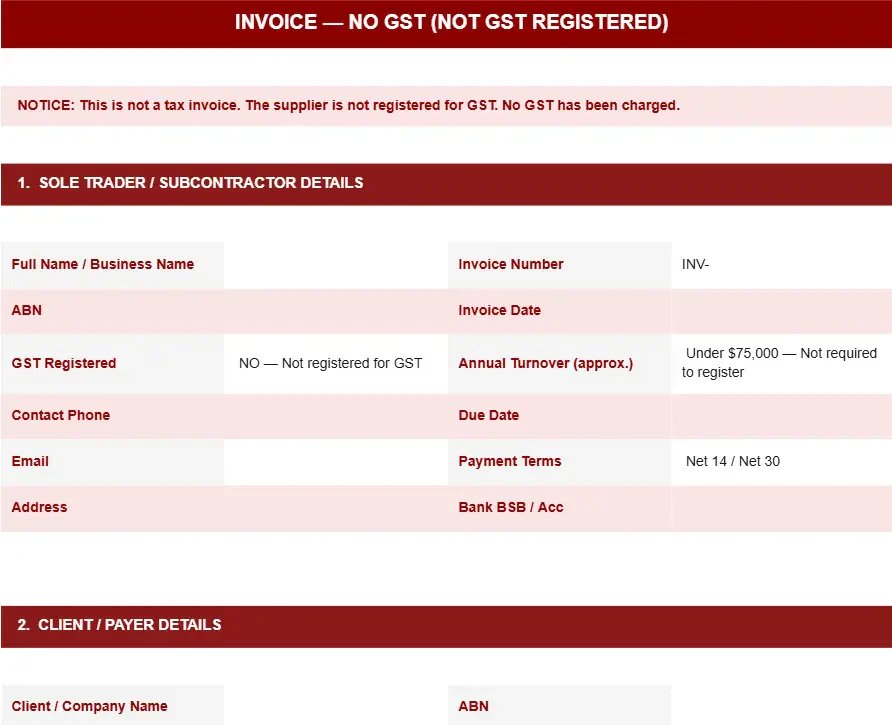
5. Sole trader non-GST invoice template
Designed for subcontractors not registered for GST, clearly indicating that no tax is applied.
SOLE TRADER NON-GST INVOICE TEMPLATE
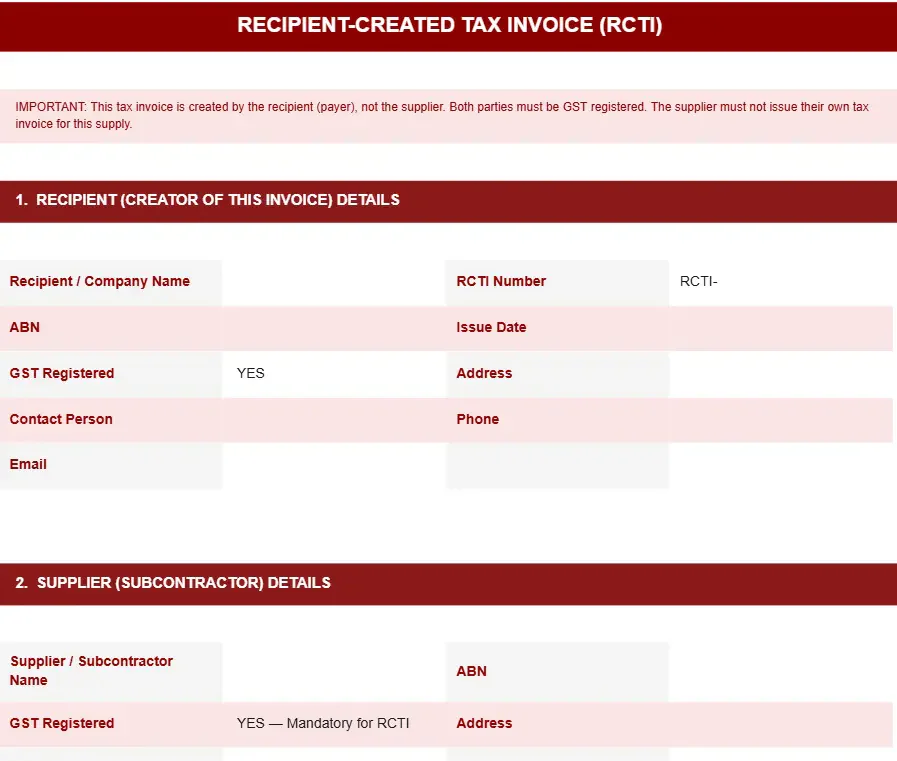
6. Recipient-created tax invoice template
Supports situations where the contractor issues invoices on behalf of the subcontractor, ensuring proper documentation and tracking.
RECIPIENT-CREATED TAX INVOICE TEMPLATE
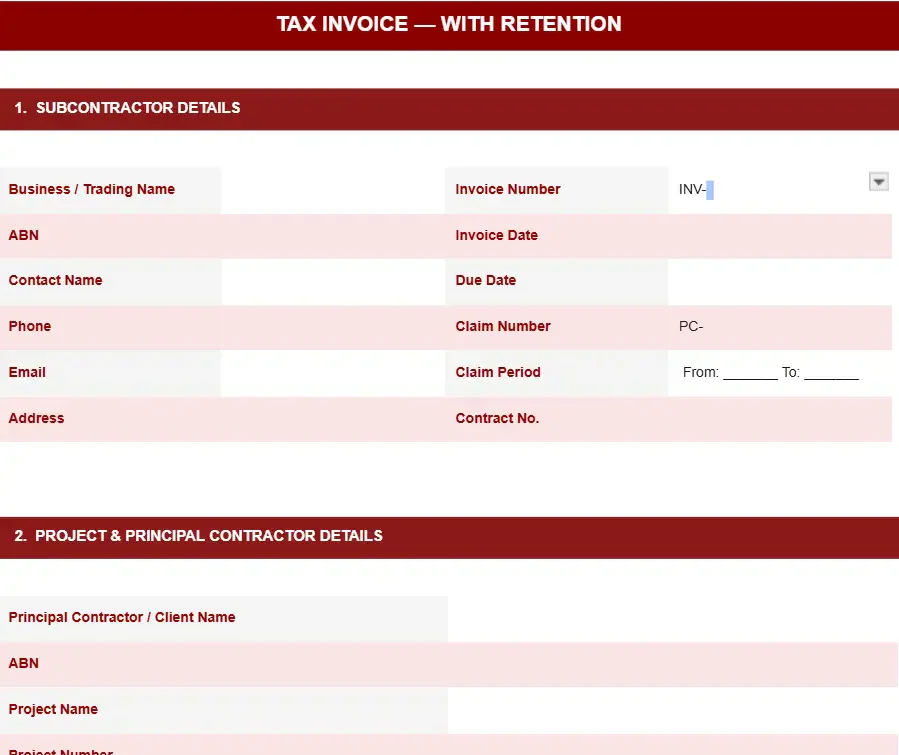
7. Subcontractor invoice with retention template
Includes retention percentage, withheld amounts, and release tracking to manage contract-based payment structures.
SUBCONTRACTOR INVOICE WITH RETENTION TEMPLATE
Subcontractor Invoice Requirements by Industry
Invoice requirements can vary depending on the industry and type of subcontracted work. Each sector may require additional details to align with operational processes and compliance expectations.
- Construction and trades: Invoices typically include project references, site details, and progress-based billing. Retention and staged payments are also common.
- IT and professional services: Invoices often focus on deliverables, time-based billing, and milestone completion. Clear descriptions help validate completed work.
- Labour hire and transport: Invoices usually track hours worked, shift details, and service periods. Accuracy is important for payroll alignment and cost control.
GST Rules for Subcontractor Invoices
GST rules determine how tax should be applied and reported on subcontractor invoices. Understanding these requirements is important to ensure compliance and avoid errors in billing or tax reporting.
- When GST registration is required: Subcontractors must register for GST once their annual turnover exceeds the required threshold. Once registered, GST must be applied to all taxable services provided.
- How to display GST correctly: GST should be clearly shown on the invoice, either as a separate line item or included in the total price. The invoice must also include all required tax details to be considered valid.
- When recipient-created tax invoices apply: In some cases, the contractor issues the invoice on behalf of the subcontractor. This arrangement is only valid when both parties agree and proper documentation is maintained.
Progress Payments and Retention
Subcontractor invoices often reflect more complex payment structures, especially in long-term or staged projects. Progress payments and retention are commonly used to manage risk and ensure work is completed as agreed.
- How progress payments work: Progress payments allow subcontractors to bill in stages based on completed work. Instead of waiting until the end of a project, payments are made periodically to support ongoing cash flow.
- How retention is applied: Retention is a portion of the payment withheld by the contractor until the project is completed. It acts as a safeguard to ensure work meets agreed standards.
- How to reflect these in invoices: Invoices should clearly show the total value of work, the amount claimed, and any retention withheld. This ensures transparency and avoids confusion during payment processing.
Subcontractor Invoice Best Practices
Applying consistent invoicing practices helps reduce delays, prevent disputes, and maintain healthy cash flow. These practices ensure invoices are accurate, compliant, and easy to process.
- Always reference contract and project details: Include subcontract numbers, purchase orders, or project names in every invoice. This helps the contractor verify the work quickly.
- Invoice promptly after completing work: Sending invoices on time reduces payment delays and keeps cash flow consistent, especially for ongoing projects.
- Maintain complete and accurate records: Store copies of all invoices and supporting documents for at least the required retention period. This supports audits and dispute resolution.
- Use invoicing software to streamline processes: Digital tools help automate calculations, standardise formats, and reduce manual errors. This improves efficiency and keeps records organised.
Common Subcontractor Invoice Mistakes to Avoid
Small invoicing mistakes can delay approvals, create payment disputes, and cause compliance issues. The points below are some of the most common problems found in subcontractor invoices.
- Missing ABN or incorrect ABN can result in invoice rejection or payment withholding.
- Forgetting to mark “Tax Invoice” when GST-registered may create GST compliance issues.
- Not separating the GST line item clearly can complicate payment reconciliation.
- No progress claim reference can make staged project invoices harder to verify.
- Unclear payment terms or missing due dates may delay approvals and payments.
- Missing retention breakdown details reduce transparency for withheld amounts.
- Sending invoices too late can slow approval cycles and affect subcontractor cash flow.
- No purchase order or subcontract reference makes invoice matching more difficult.
Conclusion
A well structured subcontractor invoice ensures accurate billing, faster approvals, and fewer payment disputes. By including the right details and following proper formats, subcontractors can maintain compliance while keeping cash flow stable.
To simplify the process, using structured templates or invoicing systems can help standardise records and reduce manual errors. If you want to streamline your invoicing process, book a free consultation with our experts to find the right solution for your business.

Frequently Asked Questions About Subcontractor Invoices
What is an example of a subcontractor invoice?
A subcontractor invoice typically includes the subcontractor’s business details, ABN, invoice number, project reference, labour or material charges, GST information, and payment terms.
What must a subcontractor invoice include in Australia?
A subcontractor invoice should include the business name, ABN, invoice date, invoice number, description of work, total payable amount, and GST details if applicable.
Do subcontractors need an ABN to issue an invoice?
Yes. Subcontractors generally need an ABN to issue invoices properly in Australia. Without an ABN, contractors may withhold part of the payment under withholding tax rules.
How long does a subcontractor have to issue an invoice?
There is no fixed timeframe, but subcontractors should issue invoices promptly after completing work or reaching agreed project milestones to avoid payment delays.
Can a subcontractor invoice without GST?
Yes. Subcontractors who are not registered for GST can issue invoices without GST, provided the invoice does not include tax charges or “Tax Invoice” wording.
What happens if a subcontractor invoice has no ABN?
If a subcontractor invoice does not include a valid ABN, the contractor may be required to withhold a portion of the payment before processing the invoice.