




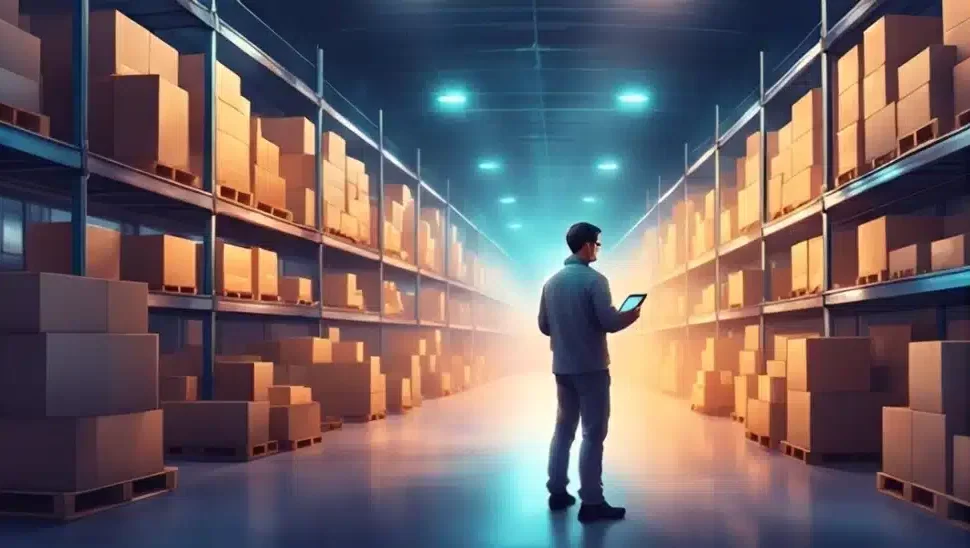
A backorder happens when a customer buys a product that is not available at the moment but will be restocked soon. Instead of stopping the sale, the business keeps the order and delivers it once the stock arrives.
This allows businesses to continue generating sales even during stock shortages. But without clear stock tracking and realistic delivery timelines, it can lead to delays and unhappy customers.
Key Takeaways
Explains what a backorder is and how it reflects the gap between demand and available stock in daily operations.
Clarifies the difference between backorder and out of stock, helping businesses decide when to accept or pause orders.
Helps businesses manage backorders with clear communication, prioritisation, and supplier coordination.
Shows how to prevent backorders through better forecasting, safety stock planning, and real time inventory tracking.
What Is a Backorder and What It Means
A backorder is when a product is out of stock, but the business still accepts the order and plans to fulfil it later. The item is not available now, but it is expected to arrive from the supplier.
This situation shows a gap between demand and available stock. In some cases, it reflects strong demand where customers are willing to wait instead of choosing another option.
But if backorders happen too often, they can point to issues like inaccurate forecasting, supplier delays, or limited stock visibility. This is why businesses need to monitor backorders and manage them carefully.
Backorder Vs Out of Stock: What’s the Difference?
Backorder and out-of-stock describe two different inventory situations, even though they are often confused. A backorder allows customers to place an order and wait for delivery, while out of stock means the product cannot be purchased at all.
The choice between these two affects how businesses handle sales, customer expectations, and fulfilment risks.
| Aspect | Backorder | Out of stock |
|---|---|---|
| Order status | Orders are still accepted | Orders are not accepted |
| Revenue impact | Sales are secured for later fulfilment | Sales are lost |
| Customer behaviour | Customers are willing to wait | Customers may switch to alternatives |
| Stock condition | Inventory is expected to arrive | No confirmed restock timeline |
| Operational risk | Requires accurate tracking and communication | Risks immediate loss of potential sales |
Why Backorders Happen
Backorders usually occur when supply cannot keep up with demand or when inventory planning is not aligned with actual sales patterns.
Understanding the root causes of managing stock availability issues helps businesses reduce delays and improve stock availability
Unexpected demand surges
Demand can increase quickly due to promotions, seasonal trends, or sudden changes in customer interest. When this happens, available stock is depleted faster than expected.
Supply chain disruptions
Logistics delays, shipping issues, or external disruptions can slow down the movement of goods. This makes it difficult for businesses to replenish inventory on time.
Inaccurate inventory forecasting
Poor forecasting leads to incorrect stock planning, especially when demand patterns change. As a result, businesses may run out of stock sooner than anticipated.
Supplier delays and lead time constraints
Suppliers may face production delays or scheduling issues that extend delivery timelines. This creates a gap between outgoing orders and incoming stock.
Insufficient safety stock levels
Without enough buffer stock, even small disruptions can lead to shortages. Businesses that operate with minimal safety stock are more exposed to backorders.
How Backorders Work
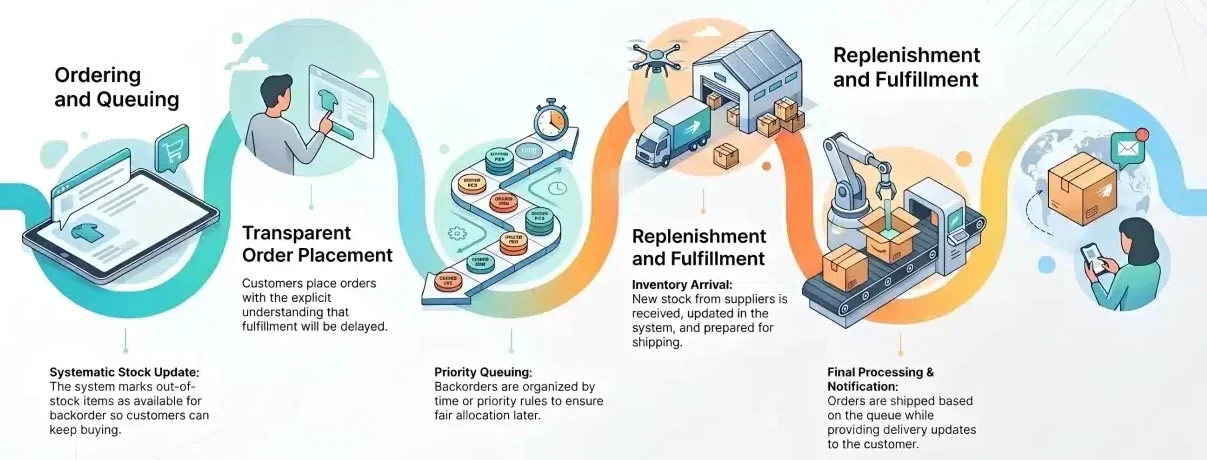
Backorders follow a structured process that involves inventory tracking, order management, and fulfilment coordination. Each stage needs to be handled carefully to avoid delays and maintain customer trust.
Refer to an inventory operations guide to understand how each stage connects across tracking, order management, and fulfilment
How the backorder process works
- The product runs out of stock and is marked as available for backorder
The system updates the stock status, allowing customers to continue placing orders despite the shortage. - Customers place orders with an expected delay
Orders are recorded with the understanding that fulfilment will happen once inventory is replenished. - Orders are queued in the system
Backorders are organised based on order time or priority rules to ensure fair allocation later. - New inventory arrives from the supplier
Once stock is received, it is updated in the system and prepared for fulfilment. - Orders are processed and shipped
The business fulfils backorders based on queue order while notifying customers about delivery updates.
Backorder vs pre order differences
A backorder applies to products that were previously available but are temporarily out of stock. A pre order is used for products that have not been released yet and are sold before they become available.
Customers placing pre orders already expect a waiting period, while backorder customers may not anticipate delays. This difference affects how businesses communicate timelines and manage expectations.
Types of Backorders
Backorders can vary depending on how long the delay lasts and how orders are fulfilled. Understanding these types helps businesses decide how to handle each situation.
Short term backorders
Short-term backorders happen when stock is expected to arrive within a few days or weeks. These are easier to manage because the waiting time is relatively short and customers are more likely to stay.
Long term backorders
Long-term backorders occur when restocking takes a longer time due to supplier or production delays. This type carries higher risk because customers may cancel orders or switch to other options.
Partial backorders
Partial backorders happen when only part of an order is out of stock while other items are available. Businesses need to decide whether to ship items separately or wait until the full order is complete.
Impact of Backorders on Your Business
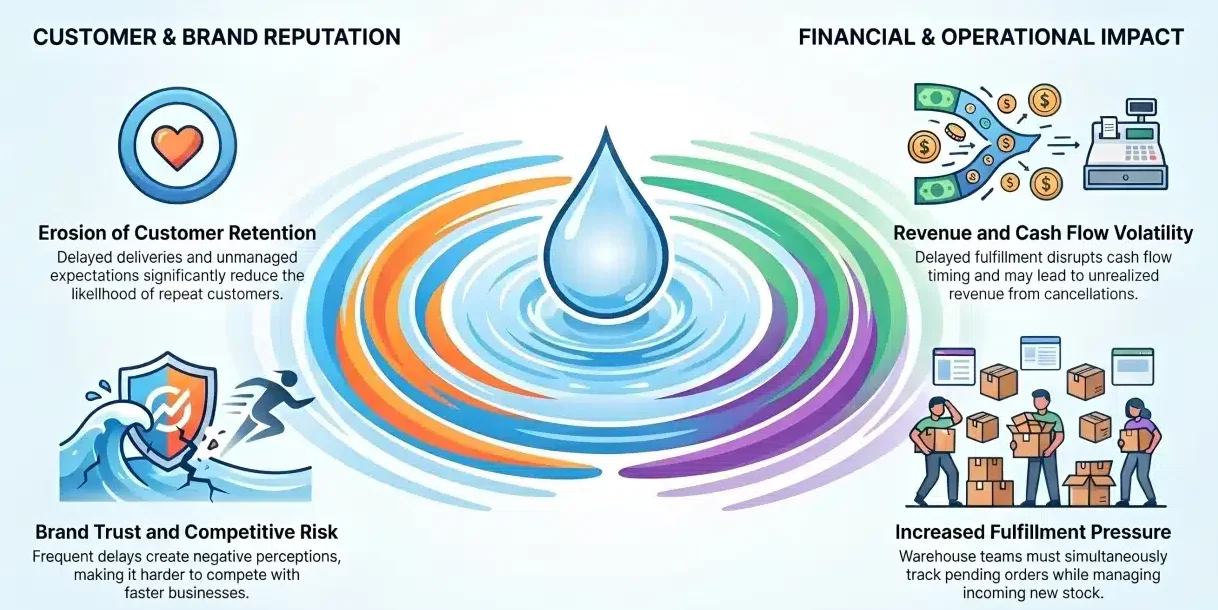
Backorders can affect more than just delivery timelines, they also influence customer experience and operational performance. The impact depends on how often they occur and how well they are handled.
Customer satisfaction and retention
Delayed deliveries can reduce customer satisfaction, especially when expectations are not clearly managed. Over time, repeated delays can make customers less likely to return.
Revenue and cash flow impact
Backorders allow businesses to secure sales, but delayed fulfilment can affect cash flow timing and financial planning. If cancellations increase, expected revenue may not be fully realised.
Operational and fulfilment pressure
Managing backorders adds complexity to order processing and warehouse operations. Teams need to track pending orders while handling incoming stock at the same time.
Brand reputation risks
Frequent backorders can create a negative perception if customers experience delays too often. This can affect trust and make it harder to compete with businesses that offer faster delivery.
How to Manage Backorders Effectively
Managing backorders requires clear communication, proper prioritisation, and coordination across teams. These actions help reduce delays and maintain customer trust.
- Communicate clearly with customers
Provide accurate information about stock availability and expected delivery timelines so customers know what to expect. - Prioritise and manage order queues fairly
Process orders based on clear rules such as order time or customer priority to avoid confusion and complaints. - Collaborate closely with suppliers
Stay in regular contact with suppliers to monitor delivery schedules and reduce unexpected delays. - Set realistic lead time expectations
Avoid overpromising delivery timelines and allow buffer time to handle possible disruptions.
How to Prevent Backorders
Preventing backorders starts with better planning and visibility across inventory and supply chain. Businesses that stay proactive can reduce stock shortages and keep fulfilment running smoothly.
- Improve demand forecasting accuracy
Predicting stock requirements using historical sales data and current trends helps businesses plan before shortages happen. - Maintain optimal safety stock levels
Keep a buffer stock to handle unexpected demand or supply delays. This reduces the risk of running out of inventory too quickly. - Diversify supplier sources
Relying on a single supplier increases risk when delays occur. Working with multiple suppliers helps ensure a more stable supply. - Monitor inventory in real time
Real-time tracking allows businesses to respond quickly when stock levels drop. This helps prevent delays before they turn into backorders. - Use inventory management software
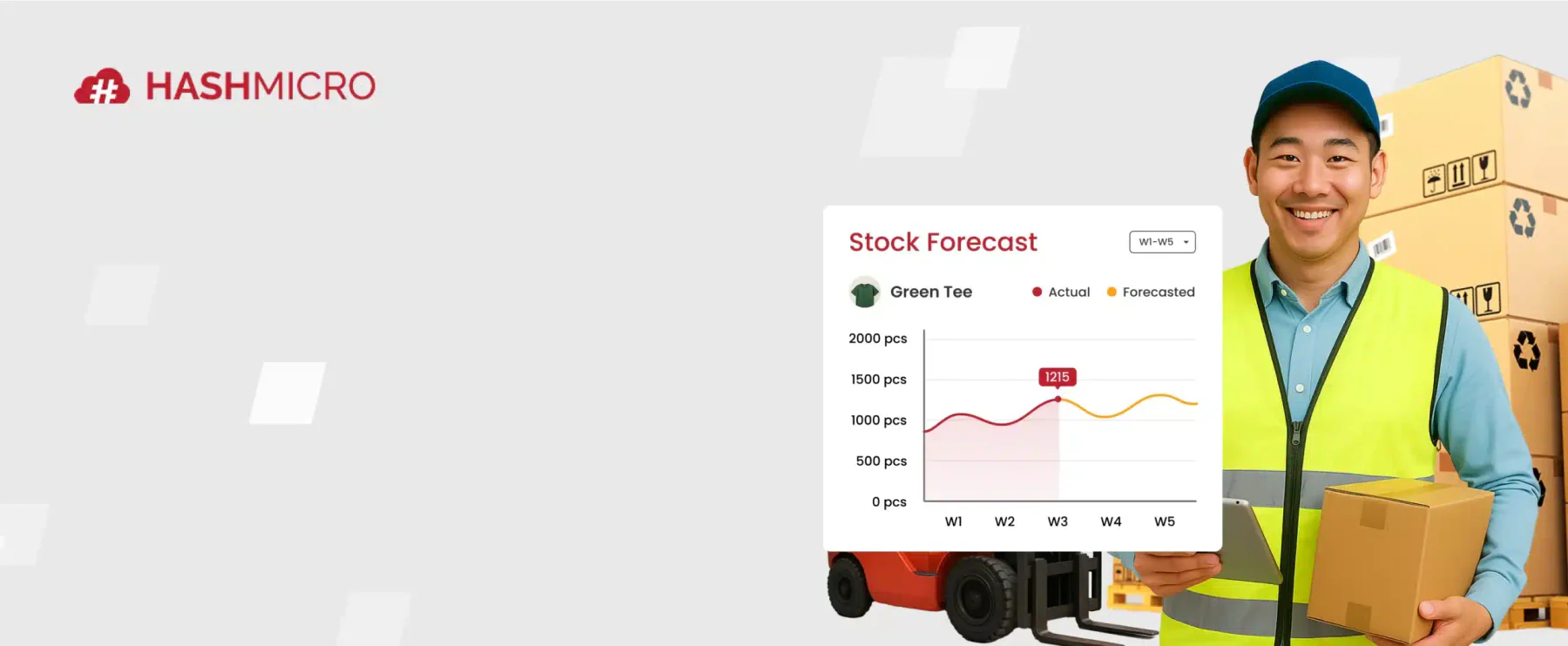
A stock management platform helps automate stock tracking, forecasting, and order management. It improves accuracy and reduces manual errors.






Backorder Metrics to Track
Tracking the right metrics helps businesses understand how often backorders happen and how well they are managed. These indicators support better decision-making and continuous improvement.
Using the best tools for solving backorder issues makes it easier to track these metrics accurately and act on them in time.
Backorder rate
This measures how often orders cannot be fulfilled immediately due to stock shortages. A high rate may indicate issues in forecasting or inventory planning.
Backorder fulfilment rate
This shows how quickly backorders are completed once stock becomes available. A higher rate means the business can recover faster from stock shortages.
Average backorder duration
This tracks how long customers wait before receiving their orders. Longer durations can impact satisfaction and increase the risk of cancellations.