





Are you struggling with inaccurate stock levels or frequent inventory discrepancies during your inventory count? Many businesses find it challenging to keep their inventory records precise, which can lead to costly stockouts, surplus stock, and unhappy customers. These issues can directly affect your company’s profitability and efficiency.
Recent data indicate that 43% of small businesses do not adequately track their inventory, exposing them to operational risks caused by inventory inaccuracies. This challenge is even more significant for companies competing in dynamic markets where quick decision-making is essential to stay ahead.
Fortunately, conducting a thorough physical inventory count helps businesses reconcile their stock records with actual quantities, minimizing errors and streamlining operations. Methods like cycle count inventory and other inventory cycle count techniques offer flexible solutions tailored to business needs.
Many companies have benefited from implementing regular inventory counts to boost accuracy and efficiency. Curious about how this process can transform your inventory management? Let’s explore what a physical inventory count is, its importance, and the different methods available.
Key Takeaways
What is a Physical Inventory Count?A physical inventory count involves regularly counting and verifying the actual quantities of stock on hand. This process is crucial for all types of businesses to maintain accurate stock records and ensure smooth operations. Physical counts help reconcile what is physically available with what inventory systems report, addressing discrepancies that often arise. Although inventory management software provides stock data, physical verification remains necessary to ensure accuracy and avoid costly errors, especially when supported by active vs passive RFID tracking for more reliable item identification and real-time visibility. Due to the scale of the task, especially for larger businesses, physical inventory counts are usually scheduled at specific times such as the end of a financial period. Some companies choose to hire temporary staff to assist in counting, so regular business activities can continue without disruption. Why is Physical Inventory Count Important?
Conducting a physical inventory count provides businesses with a true picture of their stock. Instead of relying solely on system data, staff verify the items on hand, helping to uncover discrepancies early. This proactive check ensures that inventory records stay accurate and reliable. Physical counts also serve broader purposes. For instance, companies often schedule them before financial reporting periods to guarantee correct reporting and budgeting. Using cycle count inventory methods further enhances accuracy by allowing regular checks on high-value or fast-moving items without disrupting daily operations.
By combining traditional physical counts with inventory cycle count techniques, companies can maintain operational efficiency while keeping stock data precise, supporting smarter business decisions. Benefits of Physical Inventory CountPerforming a physical inventory count clarifies stock levels and prevents disruptions. Confirming actual stock against records helps spot inconsistencies early. Integrating cycle count methods enables continuous monitoring without disrupting daily workflows. 1. Reduce stockoutsA key benefit of a physical inventory is preventing stockouts by comparing actual stock with records to spot shortages early. Combining this with cycle counts keeps items available, reducing disruptions. 2. Minimize lost profitsAccurate stock levels directly impact a company’s bottom line. When inventory is properly counted, businesses avoid overstocking or running out of high-demand items, preventing unnecessary financial losses. Transitioning from manual checks to inventory cycle count practices also optimizes profit management by maintaining reliable data. 3. Identify discrepanciesPhysical inventory counts help detect mismatches between recorded and actual stock. These discrepancies can stem from data entry errors, theft, or misplacement of items, which may otherwise go unnoticed. By integrating cycle count inventory methods, businesses can uncover issues more frequently, improving overall inventory accuracy. 4. Diagnose recurring issuesRepeated errors in stock records often indicate deeper process inefficiencies. Conducting regular physical counts allows managers to spot patterns, such as consistently misplaced items or incorrect recording practices. With inventory cycle count strategies, these recurring problems can be addressed gradually without halting daily operations. 5. Reduce inventory wasteInventory waste occurs from expired, damaged, or obsolete items. Regular counts identify these losses, allowing timely redistribution or liquidation. Combining physical and cycle counts with backflushing promotes ongoing monitoring and helps prevent waste more effectively. 6. Lower missing SKUsMaintaining a complete and accurate SKU list is essential for operational efficiency. Physical counts, reinforced by inventory cycle count procedures, make it easier to track every item in stock. This approach reduces the likelihood of missing SKUs, helping teams manage orders accurately and fulfill customer expectations consistently. 7. Improve planning and customer satisfactionRegular inventory counts empower better financial and operational planning. Knowing what is physically available allows companies to forecast demand, schedule replenishments, and optimize procurement. Ultimately, accurate stock information supports timely order fulfillment, boosting customer satisfaction and loyalty Different Types of Inventory CountsInventory counting can be approached in several ways, each designed to fit specific operational needs. Businesses commonly use four methods: full counts, cycle counting, tag counting, and ad hoc counting. By understanding each type, you can choose the most effective approach for your organization. To give you a clearer picture, here’s a simple comparison of the main inventory count methods:
Each method involves distinct processes and benefits that are worth exploring in detail.
A full count involves reviewing all products in a warehouse or store at once, including shelves, incoming stock, and items in transit. This method provides a comprehensive snapshot, which is crucial for financial reporting and auditing. However, it can be time-consuming and may temporarily disrupt normal operations.
Cycle counting, also called periodic counting, targets small inventory sections on a rotating schedule. It helps maintain accuracy year-round, quickly identifies issues, reduces disruptions versus full counts, and supports ongoing verification.
Tag counting is similar to full or cycle counts but uses tags assigned to each product. Staff record product details on the tags, then reconcile the information against inventory records. This approach enhances traceability and accuracy, particularly for high-value or frequently moved items.
Ad hoc counting is performed selectively for specific areas, products, or during unusual situations. It allows employees to update inventory quickly without scheduling a full or cycle count. As a result, businesses can respond to discrepancies in real time and maintain operational efficiency. How Do You Perform a Physical Inventory Count?The inventory count is a critical process for any business, ensuring that products are available when customers need them. It involves reviewing each item for quantity and quality, confirming that records match the actual stock. Proper execution reduces errors and helps prevent stockouts, keeping operations running smoothly. Preparing for the countStart by organizing storage areas and labeling bins and shelves clearly. Gather all necessary materials, such as count sheets, barcode scanners, or clipboards, and inform staff about their roles during the process. Clear preparation sets the stage for an efficient and accurate inventory count. Assigning tasks to teamsDivide the warehouse or storage area into sections and assign each team to a specific zone. Provide training on counting procedures and, if applicable, on electronic counting tools. Assigning responsibilities ensures accountability and minimizes the risk of duplicated or missed counts. Conducting the inventory countCount each item systematically, documenting part numbers, quantities, and conditions. Pay close attention to items that are difficult to count or stored in sealed containers. Double-checking these items ensures that the inventory records remain precise and reliable. Verifying and investigating discrepanciesOnce the counting is complete, compare results with existing inventory records to identify any differences. Investigate discrepancies caused by damage, loss, or recording errors, and make necessary adjustments. Accurate verification prevents future stock issues and improves overall inventory management. Analyzing inventory dataAfter verification, analyze the inventory results to detect patterns, trends, or recurring discrepancies. This step helps highlight areas for improvement, optimize stock levels, and improve turnover rates. Continuous analysis ensures your inventory process becomes more efficient over time. Using inventory software to streamline countingInventory management software simplifies counting by enabling digital record-keeping, real-time tracking, and quick discrepancy detection. It reduces errors, saves time, and ensures accurate records, easing management of large warehouses. With these steps, it’s clear how much time and effort manual inventory counts require. To simplify and maintain consistency, explore HashMicro’s inventory management pricing. Eligible Singapore businesses can also use the CTC grant to offset costs by checking the banner below.
Boost Inventory Count Accuracy Effortlessly with HashMicro Inventory Software
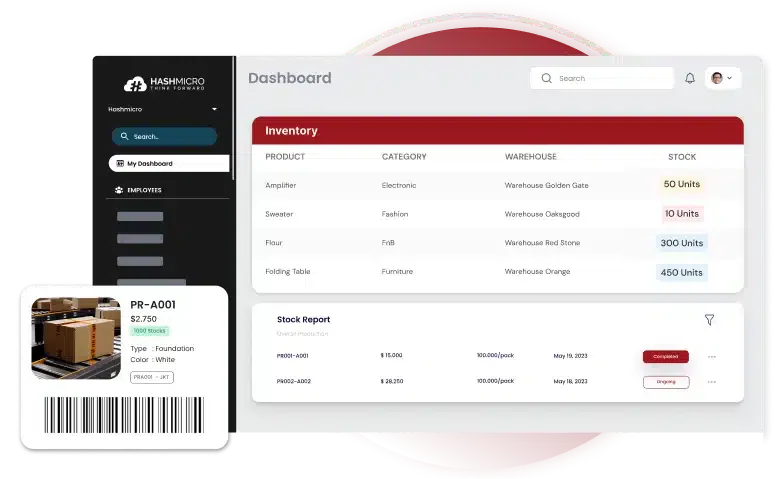
Keeping inventory accurate involves having complete control over your operations. Accurate records of stock levels help reduce costly mistakes, cut down discrepancies, and keep your supply chain flowing smoothly and without interruptions. HashMicro inventory management software supports this goal by automating stock movements, synchronizing real-time data, and tracking items from arrival to delivery. It integrates seamlessly with your existing processes, enhancing accuracy and providing confidence that your inventory is always where it should be. Key features of HashMicro to optimize your inventory include:
ConclusionPerforming an accurate inventory count is essential for any business looking to maintain operational efficiency and avoid costly errors. By following a structured counting process and ensuring proper verification, you can gain complete visibility over your stock and improve decision-making across your supply chain. Integrating a solution like HashMicro inventory management software takes this process to the next level. With real-time tracking, automated stock movements, and advanced features such as cycle counting and stock forecasting, your business can achieve precise inventory accuracy while saving time and reducing manual workload. Take control of your inventory today and experience the benefits of seamless stock management. Schedule a free demo of HashMicro inventory software to see how it can streamline your operations and help your business thrive.
FAQ about Inventory CountHow can inventory accuracy impact customer satisfaction?
|