





Have you ever faced disputes from customers claiming their order never arrived, even though it was sent out on time? This is where proof of delivery becomes essential. Without clear confirmation, businesses risk damaged reputations and avoidable revenue losses.
A 2020 GEODIS survey found only 16% of companies have real-time supply chain visibility for KPIs, highlighting a critical need for more transparent and accountable customer-facing logistics systems. Significant visibility gaps lead to costly blind spots and slower decision-making.
Manual delivery tracking, paper-based confirmations, and siloed communication between logistics teams only make things worse. These outdated approaches are prone to human error, take too long to verify, and often leave too much room for disputes. As deliveries scale up, so do the risks.
To overcome these risks, businesses are adopting digital proof of delivery tools. These systems offer electronic verification, real-time updates, and stronger control across logistics workflows. The result is faster response times and significantly fewer delivery issues.
Key Takeaways
What is Proof of Delivery?Proof of delivery is a document that verifies a shipment has arrived at its destination and was received by the correct person. Often called POD, this confirmation acts as the final receipt in the delivery process, providing both sender and receiver with assurance. Many businesses in the logistics industry now rely on electronic proof of delivery to ensure accurate and fast confirmation. Compared to manual methods, these digital systems reduce tracking errors and improve accountability across all delivery operations. What is the Importance of Proof of Delivery?
As delivery operations grow more complex, ensuring proper handoff and receipt becomes essential. Proof of delivery provides confirmation that goods reach the right person, in good condition, at the right time, which makes it a vital tool for accountability and trust. Accountability across the delivery chainProof of delivery acts as a final checkpoint where responsibility shifts from sender to receiver. This is especially vital in cases involving regulated products, legal documents, or time-sensitive items, where tracking handoff is a business-critical function. Validating product condition on arrivalRecipients usually inspect items before signing, ensuring no damage occurred. The person signing may not always be the one listed on the label, but the POD confirms successful delivery. This adds a layer of delivery confirmation for both sender and recipient. Dispute resolution made easierIf customers claim a shipment wasn’t received, POD offers verified proof that the delivery took place. Time, date, name, and even photo evidence may be recorded. Without this documentation, businesses struggle to validate deliveries or resolve disputes properly. Improving shipment visibility and performanceWith real-time tools, POD systems help teams track deliveries more effectively. When paired with shipment tracking, they increase transparency and reduce reporting delays. Many businesses choose digital proof of delivery to automate this process. Enhancing the customer experienceCustomers expect transparency, and POD helps deliver that. With features like live tracking and electronic receipts, clients stay informed and confident. These systems also ease communication, resolving issues faster and creating a more reliable delivery experience. Boosting logistics efficiency for businessesBy adopting structured proof of delivery solutions, businesses gain better insight into delivery timelines and bottlenecks. POD records support performance reviews, reduce missed delivery claims, and help teams make improvements based on real-time data. What Are the Benefits of Proof of Delivery?Proof of delivery provides more than a receipt. It brings traceability and structure to the delivery process. By offering detailed confirmation, it supports accuracy, builds customer trust, and gives businesses the confidence to scale operations smoothly. Clear accountability in delivery handoffsIn logistics, knowing who is responsible at each stage is essential. Proof of delivery identifies when ownership shifts from sender to receiver. With proof of delivery solutions, businesses can prevent finger-pointing and protect themselves from costly miscommunication. Stronger customer experienceClear documentation helps customers feel more in control of the delivery process. Recipients can check goods before accepting them, which builds trust. Meanwhile, digital proof of delivery lets businesses respond to complaints faster and close service gaps efficiently. Easier delivery tracking and organizationManaging dozens of deliveries daily is no easy task. With POD, every transaction is logged and easily referenced. Storing delivery confirmations digitally allows logistics teams to locate, review, and evaluate drop-offs without wasting time digging through paperwork. Better performance reporting and insightsDelivery systems today can do more than collect signatures. With tools that track time, location, and driver info, businesses gain clearer insight into operations. This supports better shipment tracking and gives managers the data they need to improve delivery outcomes. For companies looking to enhance these capabilities, automating your delivery process with the right tools is a smart move, specially with up to 70% funding support available through the CTC grant in Singapore. Click the banner below to find out the price of implementing it in your company.
Which Types of Proof of Delivery Exist?
Proof of delivery can take different forms depending on the tools used, the delivery volume, and customer expectations. As logistics operations evolve, businesses are shifting from traditional paper documentation toward real-time, digital confirmation methods. Paper-based proof of deliveryPaper POD is still widely used in traditional delivery setups. Drivers carry printed delivery notes, orders, or dockets and collect a signature from the recipient upon arrival. While these documents vary by name, they serve similar roles in confirming successful delivery. Although commonly used, paper POD has limitations. It requires manual handling, offers no real-time visibility, and is prone to loss or damage. For companies handling multiple deliveries a day, these physical documents can delay processes and reduce operational efficiency. Electronic proof of delivery (E-POD)E-POD replaces paper with handheld devices used by drivers to collect signatures and delivery data. Customers can access this information via email or tracking links. These systems offer immediate confirmation, faster billing, and fewer delays in documentation flow. Some advanced tools allow drivers to capture photos, scan barcodes, log failed deliveries, record comments, and track geo-location in real time. These features give businesses and customers complete delivery confirmation while enhancing visibility and control. Customers no longer need to call support for updates. E-POD systems allow them to download or print delivery records instantly. With growing e-commerce demand, electronic proof of delivery is quickly becoming the standard for fast, transparent, and reliable logistics. Proof of Shipment vs Proof of DeliveryIn logistics, the terms “proof of shipment” and “proof of delivery” are often used interchangeably, but they serve very different purposes. Knowing when and how to use both documents is essential for maintaining transparency and accountability across each delivery stage. To simplify the distinction, here’s a side-by-side comparison:
While the table gives a clear snapshot, the difference between both documents goes deeper when you look at their practical use cases and who relies on them. Proof of shipment acts as an internal checkpoint. It proves that goods have left the facility and are now the responsibility of a delivery partner. This is particularly useful when goods pass from a warehouse to a third-party courier, creating a documented handoff between two businesses. Proof of delivery, by contrast, confirms the transaction is complete. It is customer-facing, providing delivery confirmation that goods were accepted. If the recipient rejects any part of the shipment, the reasons must be documented, especially with digital proof of delivery, where notes, photos, or e-signatures are easily attached. Together, these two documents give full visibility across the supply chain. They reduce liability gaps, help avoid disputes, and ensure every handoff is recorded from dispatch to doorstep. Challenges of Tracking Proof of Delivery
On the surface, proof of delivery seems like a straightforward process. But when delivery volumes increase and timing becomes tight, capturing accurate, real-time data becomes more difficult. Without the right tools, even small mistakes can cause major delays or disputes. Maintaining accuracy during high delivery volumeDelivery drivers often manage packed schedules. Each stop requires collecting photos, signatures, and comments without slowing down the route. Even minor delays or missed entries can affect delivery confirmation and lead to customer complaints or reporting errors. Real-time tracking and timestamp issuesPrecise location and time data are essential for validating proof of delivery. Without automated systems, timestamps may be inaccurate or incomplete. Using digital proof of delivery paired with GPS tracking helps ensure reliable documentation and minimizes errors. Reliance on paper-based systemsPaper documents still exist in many parts of the logistics industry, especially in small and mid-sized businesses. But they’re prone to loss and hard to manage at scale. Adopting paperless solutions like ePOD systems allows teams to streamline operations and centralize records. Streamline Proof of Delivery Management with HashMicro
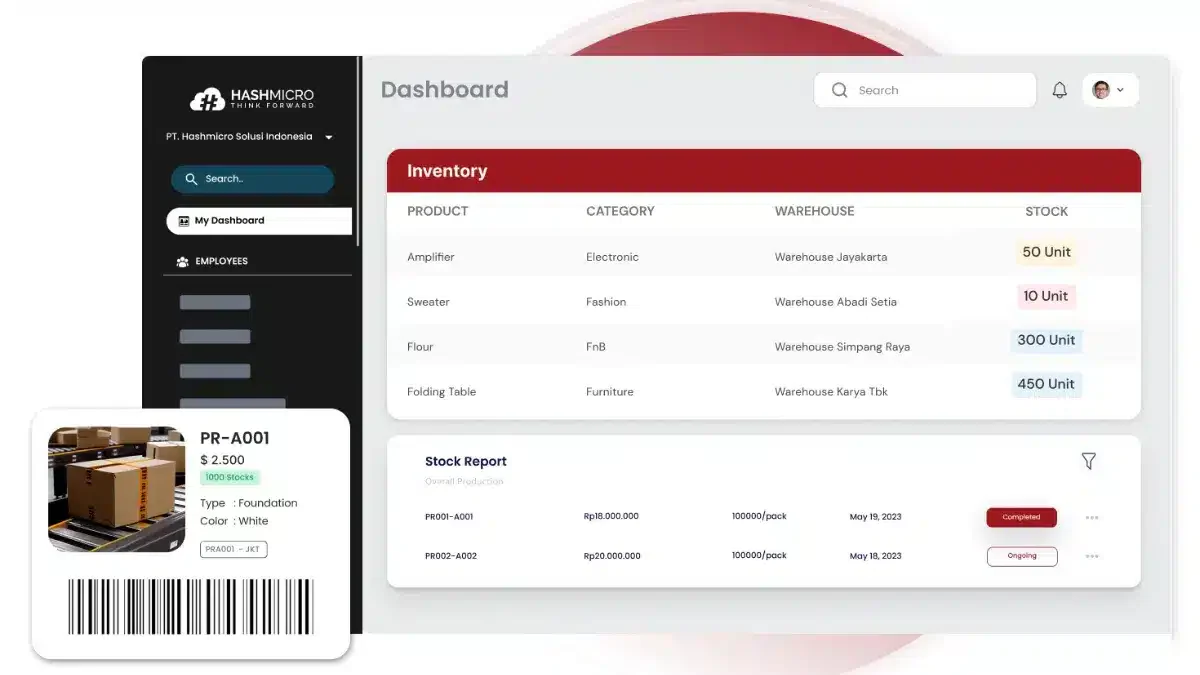
Manually managing delivery records often causes errors, delays, and incomplete data, especially with paper-based processes. HashMicro SCM offers a centralized, automated system that helps businesses streamline proof of delivery collection and improve logistics efficiency workflows. Through real-time delivery tracking, digital proof of delivery capture, and centralized document storage, your team can improve accountability, reduce disputes, and ensure customer satisfaction. Whether you’re managing multiple drivers or complex delivery routes, automation ensures every delivery is logged, confirmed, and traceable. HashMicro SCM brings together key features designed to optimize proof of delivery operations:
With all proof of delivery records digitized, accessible, and secure, your business gains full control over delivery accuracy and customer satisfaction. HashMicro’s SCM software empowers your team to stay efficient, even at scale. ConclusionDelivering goods is only half the job, confirming those deliveries is where accountability starts. From understanding the purpose of proof of delivery to exploring its benefits, challenges, and digital transformation, one thing is clear: reliable POD systems are now a logistics essential. HashMicro SCM helps businesses automate and manage every part of their delivery process. With features like real-time shipment tracking, digital proof of delivery capture, and centralized data, companies can reduce disputes, improve efficiency, and boost customer trust. Ready to modernize your delivery operations? Book a free demo with HashMicro today and discover how our SCM software can help you streamline your logistics, increase accuracy, and bring greater visibility to every shipment you send.
FAQ about Proof of DeliveryCan proof of delivery be legally used in a dispute?
|