







Have project delays or material mismatches disrupted your construction timelines? Many contractors face these issues due to missing or unclear submittals. Without clear documentation early on, errors multiply and teams lose time fixing problems that should have been avoided.
In fact, inefficient submittal processes can contribute to up to 30% of project delays and cost overruns. This highlights how crucial a well-structured submittal workflow is, especially for contractors, architects, and project managers navigating complex builds.
Submittals verify that materials, equipment, and plans align with project requirements. They help prevent miscommunication between designers, contractors, and suppliers. When used properly, submittals ensure work gets approved and delivered exactly as specified.
This makes it all the more important for construction professionals to understand how the submittal process works and how it affects project timelines. This article will walk you through what a submittal is, its types, benefits, and how to improve your submittal management for construction projects in 2026.
Key Takeaways
What is a Submittal in construction?A submittal in construction is a set of documents or samples submitted by contractors to the architect or engineer for review before materials are ordered or work begins. These may include drawings, technical data, product cut sheets, and certifications. The goal is to ensure all materials and systems meet design and performance expectations. Understanding what is submittal in construction helps keep everyone aligned on project goals. Submittals verify whether proposed materials and methods meet the project’s requirements before anything is ordered or built. This reduces costly changes and ensures a smoother approval process. Submittals are typically documented through a construction submittal log, which tracks submissions and approvals throughout the project. This process helps enforce accountability and ensures traceability. A clear and consistent submittal workflow also improves communication among subcontractors, consultants, and project managers, especially when supported by construction estimating software that keeps documents, revisions, and approvals organized in one place. What are the Benefits of Submittal?
|




|
Submittal |
Submission |
| A document or sample related to materials or systems used in construction. | The act of sending or delivering any document for review or approval. |
| Often includes shop drawings, submittal forms, or product data. | Can refer to any kind of document, from bids to reports. |
| Reviewed to verify compliance with project specifications. | Reviewed depending on the type of document submitted. |
| Part of a formal construction submittal process. | A general administrative action, not limited to construction. |
A submittal is a specific document containing technical or product-related details that must be reviewed before use on site. In contrast, a submission refers to the act of sending documents for evaluation, whether they are submittals, RFIs, or project proposals.
For example, when a contractor prepares a set of shop drawings and fills out the submittal form, this is considered a submittal. Once these documents are handed to the architect for review, the process of doing so is called a submission. These differences may seem minor but can create confusion if not clearly understood.
In summary, submittals are part of the larger submission process, and knowing how to track both correctly in a submittal log is essential for smooth communication and compliance throughout the project.
Improve Submittal Accuracy with HashMicro Construction Management Software
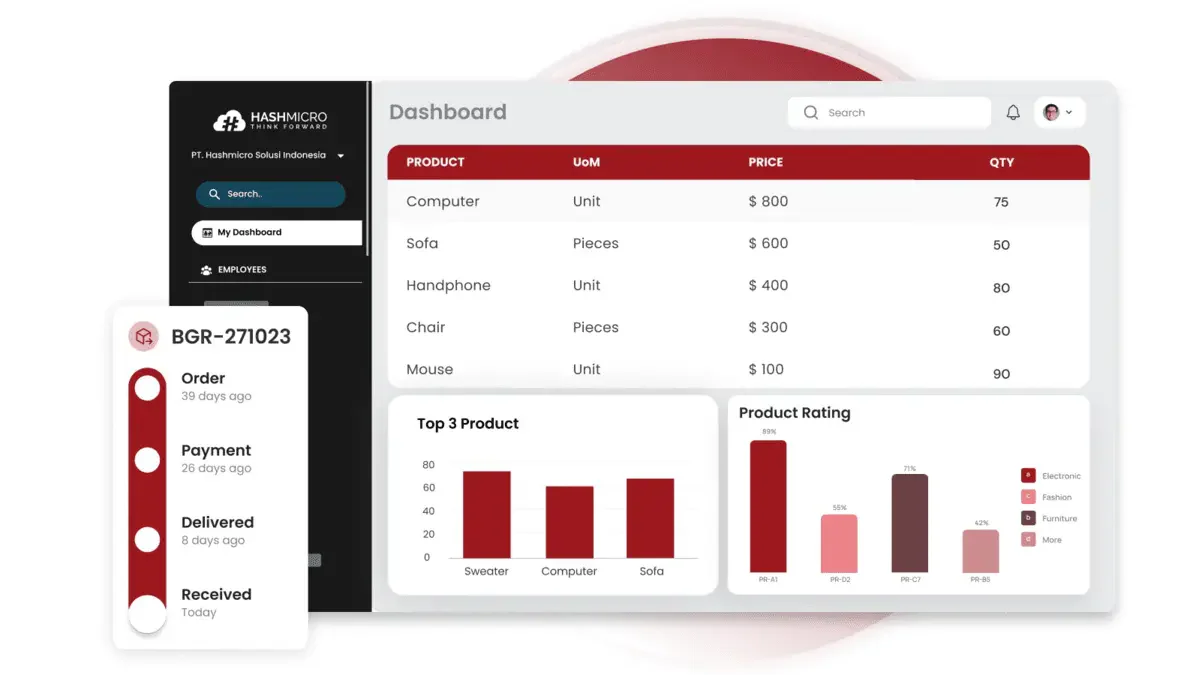
Managing submittals manually can slow down coordination between contractors, architects, and suppliers. These inefficiencies often lead to missed deadlines and costly revisions. To address these issues, many construction firms now rely on digital tools that simplify submittal workflows.
HashMicro’s construction software simplifies how submittals and other project documents are handled. It centralizes workflows, automates routine tasks, and improves collaboration between contractors, project managers, and design teams. This streamlining helps prevent late-stage design conflicts and approval bottlenecks.
First introduced in 2015, HashMicro provides a complete and cost-effective ERP solution tailored for construction companies in Singapore. Trusted by major brands like Danone, Forbes, and Bee Cho, the system offers precise cost estimation, real-time project tracking, and seamless integration with financial tools to boost efficiency.
Key features of HashMicro’s Construction Software
- Accurate cost and contract control: Manage job estimates, contracts, cost sheets, and progressive claims in one place.
- Flexible and detailed budgeting: Create budgets based on specific categories like materials, overhead, petty cash, and subcontractors.
- Real-time financial tracking with S-Curve: Compare planned budgets with actual project costs using visual S-curve reports.
- Budget actualization monitoring: Track how reserved, purchased, and used budgets are allocated throughout the project.
- Integrated accounting visibility: The system connects with accounting functions to provide live insights into project profit and loss, as well as balance sheets, for better financial control.
- Subcontractor contract flexibility: Easily manage variation orders related to subcontractor contracts.
- Automated billing and invoicing: Generate progressive invoices based on monthly milestones or project phases.
Moreover, HashMicro offers a free demo and consultation to help you explore the software’s capabilities and suitability for your business. This allows you to experience the system firsthand, ensuring it meets your needs while gaining valuable insights to make an informed decision.
Conclusion
Managing submittals effectively plays a crucial role in ensuring that construction projects stay on track, meet design specifications, and avoid costly delays. By understanding their types, benefits, and how they differ from general submissions, project teams can improve coordination and execution across all phases.
To make this process even more efficient, HashMicro’s construction management software offers integrated tools that simplify documentation, budgeting, subcontractor management, and progressive billing. With accurate cost tracking and real-time project visibility, it supports informed decisions and seamless collaboration across departments.
Ready to streamline your construction workflows and improve documentation accuracy? Book a free demo with HashMicro today and explore how our solution can support your project’s success from planning to completion.

FAQ About Submittal
What is another word for submittal in construction projects?
Submittal can also be called a “submission package” or “review document,” though the former is the formal industry term. These terms are sometimes used interchangeably depending on company or project style.
What’s the difference between a submittal and an RFI?
Submittals detail choices for approval (e.g., material specs, shop drawings); RFIs clarify project document uncertainties. Submittals validate decisions, while RFIs seek information.
What is the difference between a submittal and a deliverable?
A submittal is a document or sample sent for approval before execution, whereas a deliverable is the final product or outcome that the contractor must provide under contract, such as a completed structure or system.
What is a transmittal vs. submittal?
A transmittal is a cover sheet for documents, clarifying what’s sent. A submittal is the actual document for review/approval. Transmittals aid submittals but aren’t technically reviewed.
HashMicro follows strict editorial standards and uses primary sources such as regulations, industry guidance, and trusted publications to keep content accurate and relevant.







Grace
Typically replies within an hour