





Are you facing challenges in optimizing your industrial processes? Perhaps your operations are often delayed, or you struggle to keep track of performance metrics in real-time? Inefficiencies in industrial engineering can lead to missed opportunities, increased costs, and lower productivity.
In fact, a stochastic frontier analysis study on 8,653 Malaysian manufacturing firms revealed significant technical inefficiencies impacting production output and profitability. Poorly optimized operations can significantly reduce business competitiveness and profitability, especially in industries where precision and time management are crucial.
Fortunately, there are modern solutions that can help streamline industrial engineering processes. These tools offer smarter, data-driven decision-making, allowing businesses to enhance productivity, reduce waste, and improve overall operations. Many companies in Malaysia have already seen improvements by addressing these challenges. Keep reading to explore the principles of industrial engineering and how they can transform your operations.
Key Takeaways
What is Industrial EngineeringIndustrial engineering is a branch of engineering management that focuses on improving processes to make them more efficient, effective, and sustainable. It covers various disciplines related to manufacturing and service industries, aiming to reduce costs, boost productivity, and enhance quality. The primary goal of industrial engineering is to minimize waste (whether in time, materials, energy, or labor) by optimizing operations. Industrial engineers analyze and design systems that predict and evaluate outcomes, helping to create more efficient processes. These improvements also contribute to enhanced safety standards, improved employee health, and greater regulatory compliance. Industrial engineers collaborate across fields like production, systems, and supply chain management. They use operations research, systems engineering, and ergonomics to solve complex challenges and improve operations. Why is Industrial Engineering Important
Industrial engineering combines physical and social sciences to improve processes and designs, boosting efficiency and saving time, money, energy, and resources. It’s valuable for businesses seeking to reduce costs and boost productivity. Industrial engineering would also guarantee safety, quality, and regulatory compliance. This benefits businesses, employees, and consumers. By analyzing, designing, predicting, and evaluating systems, industrial engineers remove obstacles and enhance processes. An ERP system can enhance efficiency by streamlining production, inventory, and logistics. Check pricing below for details.
What Does an Industrial Engineer DoIndustrial engineers are vital in enhancing production and operations. They work across industries, designing, adapting, and improving processes to boost efficiency, cut waste, and optimise performance. 1. Designing and adapting processesAt the core of an industrial engineer’s role is the design and adaptation of processes. Whether it’s creating a completely new system or refining an existing one, industrial engineers work to ensure that every step of the process meets the desired standards. They constantly look for opportunities to streamline and optimize production flows. 2. Problem-solving and solution developmentIndustrial engineers are problem solvers at heart. They employ a range of techniques, including data analysis and simulation, to pinpoint areas for improvement. By implementing these solutions, businesses can achieve improved performance and reduce inefficiencies in their operations. 3. Equipment and process designDesigning and specifying equipment is essential for industrial engineers. They ensure new equipment meets performance specs, work with vendors on purchased equipment, or repurpose machinery. Engineers frequently redesign processes and tools to adapt to evolving business needs, particularly in engineer-to-order environments. 4. Knowledge of engineering and work processesTo excel in their role, industrial engineers must possess a broad knowledge base. This includes understanding various engineering fields, work processes, tools, equipment, and materials. By combining this knowledge, they can design systems that align with business goals while meeting safety, environmental, and quality standards. 5. Using technology to improve efficiencyIndustrial engineers frequently use computer-aided design (CAD) systems to design equipment or facilities. Additionally, they employ computer modelling techniques to simulate processes and supply chains, helping businesses identify inefficiencies and reduce costs. 6. Involvement in operations managementIndustrial engineers are vital in managing operations and production. They focus on activities like production planning, materials handling, and logistics management. By improving these aspects of business operations, they contribute significantly to overall efficiency and cost reduction. Impact of Automation and Growing Demand for Industrial Engineering
Industrial engineering remains largely unaffected by automation. While automation is reshaping various sectors, industrial engineers continue to play a vital role in optimizing processes, improving efficiency, and ensuring safety across industries. Despite the rise of automation, industrial engineering is still in high demand. In Malaysia, the demand for skilled engineers is increasing, particularly with the government’s emphasis on enhancing manufacturing efficiency and reducing operational expenses. The Malaysia Digital Economy Blueprint (MyDIGITAL) has emphasized industrial automation software for productivity and innovation. With digital transformation and manufacturing expansion, the need for skilled industrial engineers is expected to grow. Simplify Industrial Engineering Processes with HashMicro Software
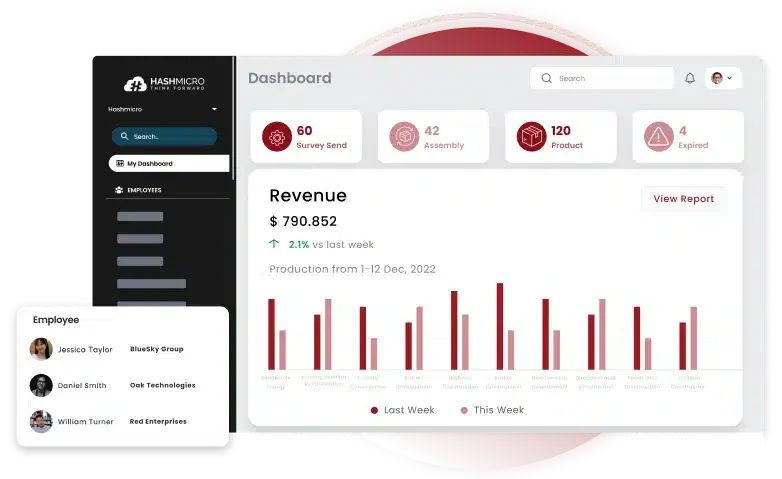
Industrial engineers are tasked with optimizing complex processes across various operations. To manage production, logistics, and inventory effectively, they need real-time data and seamless coordination across departments. HashMicro ERP centralizes these functions, providing engineers with the tools to make informed decisions and boost efficiency. Industrial engineers optimize efficiency via process management (production, logistics, inventory) using real-time data and inter-departmental coordination. HashMicro ERP centralizes these functions, empowering engineers with tools for informed decisions and increased operational efficiency. By automating key tasks such as procurement, costing, and scheduling, HashMicro ERP reduces the need for manual input, freeing up time for engineers to focus on process improvements. The system offers real-time insights, helping engineers manage every stage of production from start to finish with ease. Key benefits of HashMicro ERP for industrial engineering:
HashMicro’s cloud-based ERP provides industrial engineers with an efficient solution to streamline operations, cut costs, and ensure smooth production cycles. With better control and automation, engineers can focus on strategic improvements that lead to long-term business success. ConclusionReverse logistics plays a critical role in optimizing supply chain efficiency, managing returns, and enhancing sustainability. By properly implementing reverse logistics processes, businesses can reduce waste, recover value from returned goods, and improve customer satisfaction. Companies need to recognise the value of reverse logistics as a strategic tool to drive cost savings and sustainability. With HashMicro ERP, businesses can eliminate manual processes, enhance cross-departmental collaboration, and improve overall productivity. Whether it’s managing supply chains or optimizing production workflows, this comprehensive ERP solution helps industrial engineers stay ahead in an increasingly competitive market. Ready to take your reverse logistics management to the next level? Book a free demo today to see how HashMicro ERP can transform your business, simplify your processes, and drive long-term success in managing returns and supply chain operations.
FAQ About Industrial EngineeringIs industrial engineering a good career?
|