





Imagine a Malaysian company running out of stock during peak demand or dealing with excess inventory piling up in storage. Poor inventory management like this leads to budget waste, missed sales, and disrupted operations ultimately affecting customer satisfaction.
This issue is especially pressing as Malaysia’s logistics and supply chain sector is projected to hit RM208.5 billion by 2027. According to the Malaysian Investment Development Authority (MIDA), the rise of e-commerce and logistics digitization is driving higher demand for efficient inventory systems.
To stay ahead, businesses need an integrated inventory optimization strategy that combines accurate forecasting, automation, and real-time visibility. This approach minimizes waste, improves stock turnover, and enhances customer satisfaction. Solutions like HashMicro can help companies in Malaysia implement these practices effectively.
Key Takeaways
What is Inventory Optimization?Inventory optimization is the process of ensuring a business maintains the optimal inventory levels to meet customer demand without overspending on storage or holding excess inventory. It focuses on preventing issues like stockouts, overstocking, and delays by maintaining the right products at the right time. To achieve this, businesses rely on tools such as real-time stock monitoring, demand forecasting, and safety stock management. They also use reorder points and inventory turnover analysis to determine when to restock and how quickly items are selling. These practices enable companies to reduce costs, enhance efficiency, and maintain smooth operations. Why Inventory Optimization Matters?Before delving into the details, it’s essential to understand why inventory optimization plays a crucial role in overall business performance. Here are the key reasons: 1. Align supply with demandA fundamental goal of inventory optimization is to ensure stock availability aligns with market needs. This means maintaining enough inventory to fulfill customer orders without excessive surplus. Accurate demand forecasting, sales trend analysis, and predictive tools are essential to anticipate and respond to future demand effectively. 2. Lower costs while ensuring service qualityOptimized inventory helps businesses minimize carrying costs and avoid surplus stock, all while maintaining strong service levels. With the help of technologies like AI-based analytics and cloud-powered inventory systems, companies can enhance forecasting accuracy, streamline supply chains, and maintain product availability. 3. Minimize waste and avoid product obsolescenceInventory optimization strategies help detect slow-selling items early, allowing businesses to act quickly, whether through promotions or clearance efforts, to minimize excess stock. This reduces waste and prevents financial loss due to obsolete products, which is especially crucial in rapidly changing markets such as tech and fashion. 4. Boost inventory turnoverEffective optimization leads to improved inventory turnover, meaning products move through the supply chain faster. This reduces the time items remain in storage, decreases holding expenses, and allows businesses to allocate capital more efficiently. 5. Strengthen supply chain operationsInventory optimization also enhances the overall supply chain by keeping stock levels just right and avoiding delays. This leads to better product availability, higher order fulfillment rates, and smoother day-to-day operations. Inventory Optimization Techniques
Effective inventory optimization techniques enable businesses to maintain ideal inventory levels, cut operational costs, and meet market demand. Through strategic planning, companies can streamline inventory control and boost supply chain effectiveness. 1. Demand forecastingDemand forecasting involves analyzing historical sales data, industry trends, and predictive models to estimate future demand. It allows businesses better to plan inventory, production, and distribution activities. For instance, a brand selling outdoor wear may use seasonal data and weather insights to determine the quantity of jackets to stock. 2. Inventory turnover ratioThis metric tracks how frequently a company sells and restocks inventory within a set period. It’s determined by dividing the cost of goods sold by the average inventory value. A high turnover ratio often indicates healthy demand, while a low ratio could point to excess inventory or weak sales performance. 3. Safety stock calculationSafety stock provides a buffer against demand fluctuations and supply delays and is typically calculated using average daily usage and the desired coverage period. For example, a medical supply company that distributes 200 units of critical items per day would keep 1,400 units as safety stock for seven days, a process that can be planned and monitored more effectively with the best medical inventory software to prevent shortages while controlling holding costs. Advantages of Inventory OptimizationInventory optimization offers numerous benefits that help businesses streamline operations, cut expenses, and deliver better service. Below are the key advantages of implementing an effective inventory strategy: 1. Lower holding costsInventory optimization helps reduce holding costs such as warehouse rent, insurance, and utilities. By keeping stocks ideal, companies can avoid the accumulation of unnecessary items. This makes storage space more efficient and manageable. In addition, accurate demand forecasting reduces the risk of product obsolescence. This is especially important for seasonal or perishable goods. The company can also focus more on high-value, fast-turnaround products. 2. Stronger cash flowWith stock aligned with market needs, funds are not held in unsold goods. This speeds up cash flow and increases financial flexibility. Businesses can allocate funds to other important needs. The implementation of just-in-time systems and real-time stock tracking also support financial efficiency. Companies can reduce waste and maximize liquidity. This strategy also encourages investment in growth opportunities. 3. Better customer satisfactionInventory optimization ensures products are available on time when customers need them. This reduces the risk of stock-outs or late deliveries. Customer satisfaction also increases due to reliable service. Proper forecasting also helps maintain the consistent availability of popular products. This builds trust and loyalty to the brand. Customers are more likely to place repeat orders and recommend a business. 4. Higher operational productivityBy knowing demand patterns, companies can plan production and distribution more accurately. This reduces delays due to raw material shortages. Work processes become more structured and efficient. Inventory automation, such as stock monitoring and reordering, reduces manual errors. Administrative work is reduced so employees can focus on strategic tasks. Productivity increases, and operational processes run smoothly. 5. Balanced stock levelsInventory optimization techniques help strike a balance between availability and market needs. Companies do not need to stock too many or too few items. This prevents high costs and lost sales. With a reliable monitoring system, stock can be updated automatically when it hits the minimum limit. This enables proactive replenishment. Product availability is maintained without burdening the warehouse. 6. Improved vendor relationshipsAccurate stock planning makes the ordering process more consistent and timely. This makes it easier to coordinate with suppliers and avoid sudden requests. Vendors can manage their production more efficiently. Predictable demand also increases trust between the two parties. The working relationship becomes more stable and mutually beneficial. In the long run, companies can get better prices and priority services. Still unsure if inventory optimization is right for your business? Start by calculating your estimated budget using the banner below to see what best fits your needs.
Inventory Optimization ChallengesWhile inventory optimization offers numerous benefits, businesses face several challenges that can complicate the process. Recognizing these challenges helps companies develop strategies to optimize inventory effectively. 1. Fluctuating market demandsChanges in consumer trends, seasons and economic conditions make demand difficult to predict. For example, an economic downturn can reduce the appetite for luxury goods. This leads to stock buildup and decreased rotation of goods. To cope with this uncertainty, businesses need to implement flexible inventory approaches such as just-in-time methods. Regular data analysis can detect new trends. By adjusting strategies based on the latest market data, the stock remains optimized. 2. Supply chain disruptionsSupply chain disruptions, such as natural disasters, global conflicts, or pandemics, can delay the distribution of goods. This uncertainty makes demand and supply projections less accurate, resulting in under- or overstocked stocks. Preventive strategies include maintaining backup stocks of critical items and expanding supplier networks. A flexible supply chain management system is also indispensable. With this readiness, companies can respond to challenges quickly. 3. Technological barriersManual processes and legacy systems are often unable to support effective stock optimization. Lack of integration between sales and stock systems keeps data out of sync. This can lead to errors in forecasting requirements. The solution is to adopt a single inventory management software platform that supports real-time tracking and cross-departmental collaboration. Modern technology speeds up processes and improves business efficiency. As a result, stock management becomes more precise. Read more: What is Physical Inventory and Why is it Important? Inventory Optimization Best PracticesImplementing best practices in inventory optimization is essential for businesses aiming to maintain efficiency and adapt to changing demands. Here are three key practices to optimize inventory effectively. 1. Efficient inventory managementThe efficient approach to stock management emphasizes procuring goods according to customer needs. This strategy lowers storage costs, reduces waste, and improves cash flow by avoiding excess stock. To illustrate, automotive manufacturers often apply just-in-time methods to receive parts according to production schedules. Regular monitoring of sales trends helps companies adjust stock volumes to real demand. 2. Strategic relationships with suppliersEstablishing good partnerships with suppliers greatly supports accurate stock planning. Timely information on product availability and delivery estimates helps companies anticipate supply disruptions. These partnerships allow flexibility in order quantities and accelerated distribution of goods. Close collaboration also supports joint forecasting that maintains alignment between stock and market needs. 3. Continuous adaptation and evaluationInventory optimization is not a one-off step, but requires regular evaluation. Monitoring performance indicators such as supply chain efficiency and sales trends forms the basis for strategic improvements. The application of modern technology, including AI-based prediction tools and smart inventory systems, improves decision-making accuracy. Through the lean inventory approach, companies can remain adaptive and competitive despite market dynamics. How HashMicro Enhances Your Inventory Management Efficiency
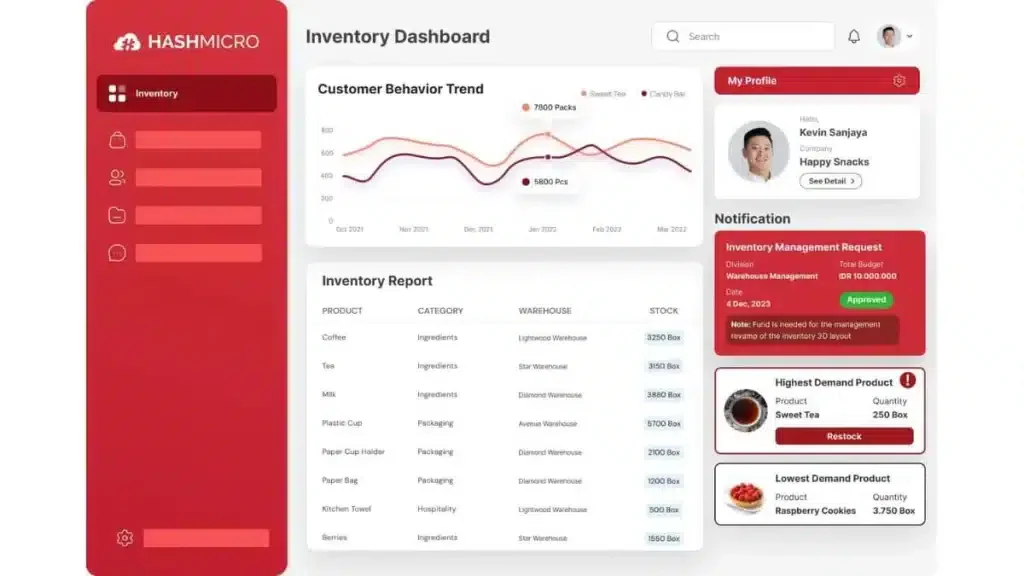
HashMicro delivers a powerful Inventory Management System designed to boost accuracy and streamline inventory optimization. Its standout features include automated inventory tracking and demand forecasting, fully integrated to provide real-time stock level management. Discover the potential of HashMicro’s IMS Solution with a free demo. See firsthand how automation reduces stock errors, enhances inventory precision, and accelerates replenishment for superior stock control. Why choose HashMicro? IMS software automates essential processes such as inventory monitoring, stock optimization, and demand prediction, cutting down manual mistakes and elevating operational efficiency. Its smooth integration with other business systems offers an all-in-one inventory management approach. This system empowers businesses to adopt best practices while maximizing stock utilization and resource management. Below are some key features of HashMicro’s IMS Solution:
ConclusionEffective inventory optimization plays a vital role in helping businesses enhance operational efficiency, cut costs, and maintain optimal stock levels. Leveraging the right inventory management software allows companies to automate key processes, reduce human error, and gain real-time visibility, empowering better decision-making and smarter resource use. HashMicro’s Inventory Management System stands out as a leading solution for businesses in Malaysia. With features like automated inventory control, intelligent forecasting, and live reporting, it is tailored to support local businesses and drive sustainable growth. Interested in elevating your inventory strategy? Request a free demo of HashMicro’s IMS Solution today and explore how it can streamline your operations, boost accuracy, and maximize productivity. Question About Inventory Optimization
Angela Tan is a Regional Manager at HashMicro with a strong focus on ERP and accounting solutions, leading regional market strategies that support strategic growth and people-centered management. Through her experience overseeing multi-market operations, she plays a key role in helping organizations improve financial accuracy, strengthen customer relationships, and build long-term business sustainability across Southeast Asia. HashMicro follows strict editorial standards and uses primary sources such as regulations, industry guidance, and trusted publications to keep content accurate and relevant.        Alia Alia Looking for a Free Demo?
Contact us via WhatsApp and let us know the software you are looking for. 13.49 |