





Running out of stock too often or dealing with piles of unsold goods? It’s a common problem, as 74% of businesses face shipping delays and extended lead times. Hence, many are turning to Vendor Managed Inventory (VMI) to let suppliers take over the task of managing stock levels.
Instead of waiting for you to place an order, suppliers monitor your inventory directly and restock based on real-time data. This approach reduces guesswork, prevents delays, and helps avoid both shortages and excess inventory.
In this article, we’ll explain how VMI works, why major retailers in Malaysia are adopting it, and how your business can benefit from handing over inventory control to trusted suppliers.
Key Takeaways
What is Vendor Managed Inventory?Vendor Managed Inventory (VMI) is a system where the supplier is in charge of managing the buyer’s inventory, even after the stock is delivered to the buyer’s warehouse. Instead of the retailer managing stock and reordering, the supplier tracks inventory and handles restocking using real-time data. In Malaysia, many large retailers, such as Mydin or Aeon, use VMI with their local suppliers. For example, a beverage supplier may track product sales directly from the retailer’s system and replenish drinks on the shelves before they run out. How Vendor Managed Inventory WorksTraditional inventory management puts the responsibility on the distributor or retailer to track stock and create purchase orders (POs) when new items are needed. In this setup, inventory may be owned either by the retailer or supplied under a consignment agreement. In contrast, Vendor Managed Inventory (VMI) allows the supplier to retain ownership of the stock, even though it is stored at the retailer’s warehouse. To manage this, both parties need a system, usually via Electronic Data Interchange (EDI) or online platforms that lets the supplier access sales and inventory data. Using this information, along with insights like lead times, production schedules, and possible shipping delays, the supplier can replenish stock efficiently and keep inventory levels well-balanced. VMI works especially well when supported by wholesale inventory software, which helps vendors monitor large stock volumes across multiple locations with accuracy. Metrics of Vendor Managed InventoryBefore starting a VMI partnership, both the retailer and supplier agree on key performance indicators (KPIs) to guide inventory decisions that benefit both sides. Common KPIs in a VMI setup include:
In addition to KPIs, both parties also agree on terms and conditions (T&C), including payment timelines and responsibilities in the VMI agreement. With shared access to the retailer’s inventory list, suppliers can monitor stock movements in real time and plan replenishment. What are the Benefits of Vendor Managed Inventory?
By now, you likely have a good grasp of how Vendor Managed Inventory (VMI) works. So, what are the real benefits for businesses? Here are some key advantages companies can gain from adopting VMI:
While VMI offers many benefits, companies should also consider potential drawbacks such as miscommunication, resistance to change, or unclear role definitions. Read more: What is Physical Inventory and Why is it Important? What Are the Drawbacks of Vendor Managed Inventory?As mentioned earlier, vendor-managed inventory (VMI) can boost factory productivity. However, that doesn’t mean it comes without challenges. Like any strategy, VMI has certain drawbacks that businesses should consider before implementation. Here are some potential disadvantages of VMI:
Companies should identify strategies to reduce these risks and strengthen their VMI operations. Implement HashMicro’s Vendor Inventory System for Effective Inventory Management
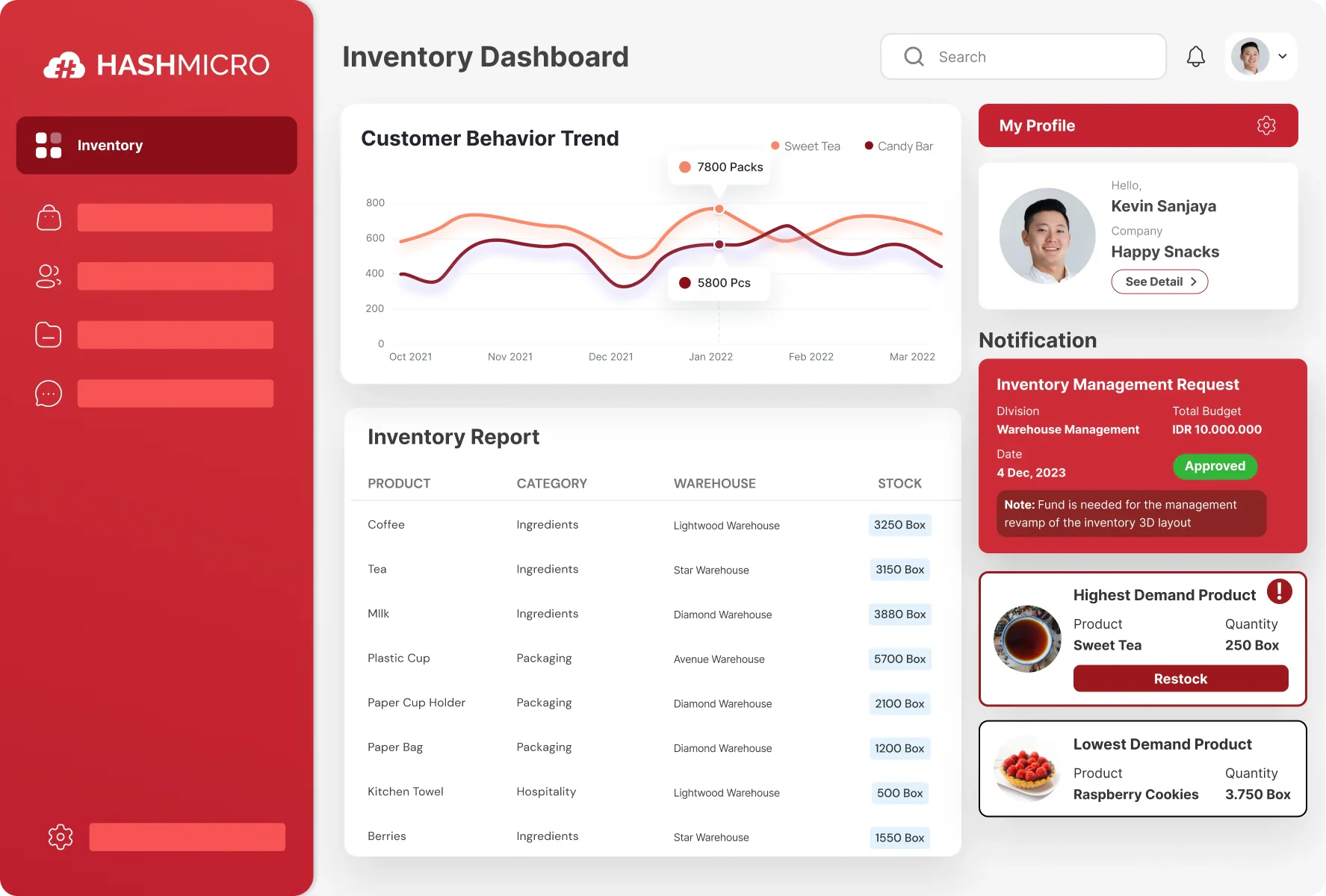
If your business is adopting a Vendor Managed Inventory (VMI) approach, having the right inventory system is critical. HashMicro’s Inventory Management Software is built to support this model by giving both you and your suppliers better visibility and control over stock levels, whether the inventory sits in your warehouse or theirs. With this system, suppliers can access accurate, up-to-date inventory data to make informed restocking decisions. At the same time, your team stays in the loop and avoids common VMI issues like stockouts, missed deliveries, or overordering. Here’s how HashMicro’s system supports a VMI setup:
By using HashMicro’s software to support VMI, companies can reduce miscommunication with vendors, cut down on delays, and keep shelves stocked with the right products at the right time. ConclusionVendor Managed Inventory lets suppliers manage stock for retailers using real-time data and shared system access. It reduces stockouts, improves coordination, and helps maintain ideal inventory levels without constant back-and-forth. If you’re planning to use VMI, HashMicro’s Inventory Management Software is the perfect tool to support it. It gives suppliers full visibility, while your team stays informed and avoids costly supply chain issues. With features like stock alerts, barcode tracking, and sales-based forecasting, managing inventory becomes easier and faster. Don’t leave stock decisions to guesswork. Try the free demo and keep your shelves stocked effortlessly. FAQ on Vendor Managed InventoryDoes a VMI forecasting model account for promotions and seasonal demand?Yes. Modern VMI systems can integrate promotional schedules, seasonal trends, and even transport factors into their demand forecasts to adjust restocking plans accordingly. Can VMI reduce inventory shrinkage and excess carrying costs?Absolutely. By aligning stock levels with actual usage, VMI helps prevent overstock and minimizes loss from shrinkage, lowering storage costs and freeing up cash. How do you get started with a VMI program?To begin VMI, start by choosing which products to include and setting minimum/maximum stock thresholds. Then share inventory data with your supplier and agree on replenishment frequency and responsibilities. What is the difference between VMI and CMI?VMI (Vendor-Managed Inventory) refers to a system where the supplier is responsible for monitoring stock levels and replenishing inventory for the buyer. CMI (Customer-Managed Inventory) refers to a system where the buyer manages and controls their own stock levels, coordinating orders with the supplier. Who typically uses Vendor Managed Inventory?VMI is especially common in consumer-packaged goods, industrial parts, and large e-commerce businesses with many SKUs. Big retailers like Amazon, Walmart, and Home Depot use it, as do manufacturers managing critical components. Angela Tan is a Regional Manager at HashMicro with a strong focus on ERP and accounting solutions, leading regional market strategies that support strategic growth and people-centered management. Through her experience overseeing multi-market operations, she plays a key role in helping organizations improve financial accuracy, strengthen customer relationships, and build long-term business sustainability across Southeast Asia. HashMicro follows strict editorial standards and uses primary sources such as regulations, industry guidance, and trusted publications to keep content accurate and relevant.        Alia Alia Looking for a Free Demo?
Contact us via WhatsApp and let us know the software you are looking for. 13.51 |