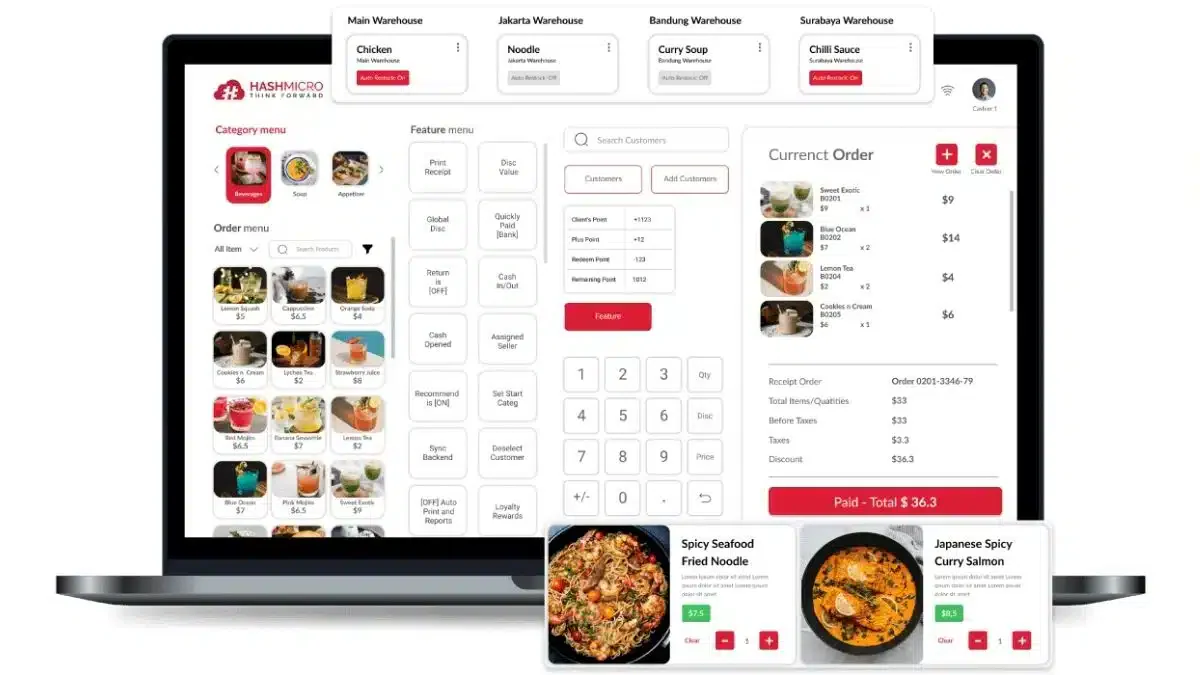






A Point of Sale (POS) system is a combination of hardware and software that businesses use to manage sales transactions efficiently. It serves as the central hub that integrates sales, inventory tracking, customer management, and employee monitoring into a single streamlined platform.
For many businesses in Malaysia, outdated methods such as manual record-keeping and spreadsheet-based tracking are still common. However, these approaches often lead to errors, inefficiencies, and financial losses. With digital transformation shaping industries worldwide, businesses that continue to rely on manual processes risk falling behind.
Implementing a modern restaurant POS system automates essential business operations, reduces errors, and provides real-time data insights. This article will explore what a POS system is, how it works, and the key benefits it offers to businesses in Malaysia. Keep reading to discover how an advanced POS system can optimize your business and drive long-term growth.
Key Takeaways
What is a Point of Sale (POS) System?A Point of Sale (POS) system is a technology that businesses use to process sales transactions. It functions as an advanced version of a cash register, integrating both hardware and software to handle payments, track inventory, and generate invoices in real-time. Whether it’s a physical store, an online shop, or a mobile business, a POS system helps streamline operations and enhance efficiency. Modern POS systems go beyond basic sales processing. They include features such as barcode scanning, digital payment integration, and customer data management, allowing businesses to optimize workflows. In Malaysia, especially in several states, businesses commonly rely on a POS system provider in Penang to support industries like retail, F&B, and hospitality, where seamless transaction management and accurate inventory tracking are essential for business success. With the ability to automate and centralize multiple business processes, POS software enables businesses to reduce human errors, improve transaction speed, and gain valuable insights through detailed sales reports. By integrating with other business tools such as CRM, accounting software, and retail sales, a POS system ensures smooth daily operations and better decision-making. How Does a POS System Work?
A POS system functions as the central hub for processing sales, tracking inventory, and managing customer transactions. It streamlines the checkout process by automating sales calculations, applying discounts, and generating receipts. When a customer makes a purchase, the cashier scans the product barcode or selects the item from the system. The POS software calculates the total price, including applicable taxes or discounts. The customer then chooses a payment method—cash, card, or digital wallet—and once the payment is processed, a receipt is printed or sent electronically. Beyond transactions, POS system also helps with inventory management by automatically updating stock levels after each sale. Advanced systems integrate with CRM tools, allowing businesses to track customer purchase history and offer personalized promotions. Some POS ERP solutions also include reporting features, helping business owners analyze sales trends and optimize stock replenishment. A well-implemented POS system, especially a reliable retail POS software, enhances operational efficiency, minimizes manual errors, and provides businesses with real-time insights to improve decision-making and customer satisfaction. Types of POS SystemsDifferent businesses require different types of POS systems depending on their operational needs. Here are six common types and their ideal applications:
Common Types of POS Hardware
To maximize the efficiency of a POS system, businesses need the right hardware components. Below are some essential POS hardware devices used in various industries:
Optimize Transaction Processes with HashMicro POS Software
HashMicro POS Software is an all-in-one solution designed to help businesses streamline sales transactions, manage inventory, and improve customer experiences. As a cloud-based system, it offers flexibility and real-time data tracking, ensuring seamless business operations. With HashMicro POS, businesses can automate pricing updates, monitor stock levels, and generate comprehensive sales reports. The system is built to integrate with other essential business functions, including CRM and accounting, for a more efficient workflow. Why choose HashMicro POS?
Investing in the right POS system software Malaysia is crucial for businesses aiming to enhance operational efficiency and customer satisfaction. With HashMicro POS Software, companies can simplify transactions and focus on business growth. ConclusionA POS system is an essential tool for modern businesses, helping to streamline sales transactions, improve inventory management, and enhance customer experiences. By automating key processes, businesses can reduce errors, speed up operations, and gain valuable insights to drive growth. With the right POS system powered by ERP software, businesses can manage multiple payment methods, track real-time stock levels, and generate detailed sales reports. This leads to better decision-making, increased efficiency, and improved customer satisfaction. If you are looking for a reliable POS system in Malaysia, investing in a feature-rich, scalable, and cloud-based solution is crucial. HashMicro POS Software offers a comprehensive system that integrates sales, inventory, and customer data, ensuring smooth and efficient business operations. Take your business to the next level with a powerful POS system. Try HashMicro POS Software today! Get a free demo and experience the benefits firsthand. FAQ about POS SystemWhat does POS mean?POS stands for Point of Sale, referring to the place where customers complete transactions for goods or services. A POS system consists of hardware and software that facilitate payments, inventory tracking, and sales processing. What is the most used POS system?The most commonly used POS systems vary by industry, but many businesses prefer cloud-based POS solutions due to their flexibility and scalability. Popular options include integrated POS systems that connect sales with inventory, accounting, and customer management. What is an example of a POS payment?A POS payment occurs when a customer completes a transaction at a checkout counter using cash, credit/debit cards, or digital wallets like Apple Pay and Google Pay. POS systems process the payment, generate a receipt, and update inventory records instantly. Which POS is the best in Malaysia?The best POS system in Malaysia depends on business needs, but cloud-based, AI-powered, and fully integrated solutions are preferred by modern businesses. HashMicro POS Software offers a comprehensive system that enhances efficiency, automates processes, and ensures seamless business operations. Chelsea is a professional expert who holds a Bachelor of Accounting degree from Victoria University of Wellington, with a background in business analysis and financial management. Her accounting background has shaped her analytical approach in understanding business dynamics and corporate growth strategies. Over the past five years, Chelsea has been actively involved in the field of business development at HashMicro, further strengthening her expertise in sales strategy, negotiation, strategic partnership development, and sales pipeline management to drive sustainable business growth. HashMicro follows strict editorial standards and uses primary sources such as regulations, industry guidance, and trusted publications to keep content accurate and relevant.        Alia Alia Looking for a Free Demo?
Contact us via WhatsApp and let us know the software you are looking for. 15.13 |