






For many businesses in Malaysia, warehouse teams often deal with rising order volumes, mixed SKU categories, and pressure to ship faster without increasing picking errors. When pickers move across large storage areas without a clear workflow, fulfillment can slow down, workloads become uneven, and customer orders may take longer to complete.
Debold, Gönsch, and Dochow (2025) explain that zone picking can improve throughput and scalability, but poor routing or workload distribution may cause bottlenecks, overloaded zones, and fulfillment delays.
Zone picking helps organize warehouse work by dividing storage areas into specific zones, so each team can focus on assigned sections before orders are consolidated. This article explains how zone picking works, its benefits, its comparison with other picking methods, and how technology can support better warehouse performance.
Key Takeaways
|
A warehouse management system helps organize picking zones, stock movement, and order fulfillment so warehouse teams can manage daily operations with clearer visibility.

What is Zone Picking?
Zone picking is a warehouse order fulfillment method where the warehouse is divided into specific zones, and each picker is responsible for collecting items only from their assigned area. This allows multiple pickers to work at the same time, reducing walking distance, improving picking focus, and helping orders move faster to the packing stage.
Benefits of Zone Picking

Zone picking helps warehouses work more efficiently by organizing areas based on product type, demand, storage needs, or security level. This structure reduces unnecessary movement, improves picking accuracy, protects sensitive goods, and supports higher order volumes.
1. Better warehouse organization
Dividing a warehouse zone based on product characteristics, such as size, demand, or security requirements, helps improve organization and retrieval speed. Pick zones can be structured for fast-moving vs. slow-moving SKUs, hazardous materials, or temperature-sensitive goods, ensuring efficient storage.
This segmentation allows each zone to have its storage strategy, picking equipment and technology suited to the items stored. As a result, zone picking in warehouse operations becomes smoother, reducing misplaced inventory and fulfillment delays.
2. Improved efficiency and productivity
By assigning pickers to specific warehouse zones, zone-picking reduces travel time and ensures a continuous workflow. Unlike traditional picking methods, where workers move across the warehouse, pickers stay within their designated zones, leading to faster and more accurate order fulfillment.
This method also supports conveyor-based or robotic-assisted transport, further streamlining picking operations. Compared to zone picking vs. wave picking, this system minimizes downtime by ensuring each order progresses seamlessly from one zone to another.
3. Enhanced safety and security
A well-zoned warehouse prevents safety risks by storing hazardous or high-value items separately in controlled environments. For example, corrosive materials or flammable liquids can be placed in specialized warehouse zones with proper labelling, ventilation, spill control, and restricted handling procedures.
High-security SKUs, such as electronics or luxury items, can be placed in restricted-access areas with monitoring systems. For hazardous goods, this approach also supports Malaysia’s workplace safety requirements under DOSH, the Occupational Safety and Health Act 1994, and chemical safety rules such as the USECHH Regulations 2000 and CLASS Regulations 2013.
4. Reduced product spoilage
Proper zoning helps businesses maintain separate storage areas for items that require specific environmental conditions. Perishable goods can be stored in refrigerated zones, while dry storage areas prevent moisture damage, extending product shelf life.
This structured approach ensures inventory control, minimizes spoilage, and prevents financial losses. By maintaining optimal storage conditions, zone picking helps businesses achieve better stock rotation and reduce waste.
5. Scalability and operational flexibility
One of the most significant advantages of zone-picking is its ability to scale with business growth and adapt to changing demands. Large warehouses handling thousands of SKUs can implement hybrid picking methods, such as zone-wave or zone-batch picking, to enhance efficiency.
Pickers become more familiar with their assigned zones, improving accuracy and speed while reducing operational bottlenecks. Whether combined with automation or manual processes, zone-picking in warehouse settings provides flexibility to meet diverse business needs.
How does Zone Picking Work?

The process begins when a Warehouse Management System (WMS) receives an order. The system identifies where each item is stored and generates separate pick instructions for the relevant zones.
There are two main operational approaches:
1. Sequential zone picking (pick and pass method)
In sequential zone-picking, each picker retrieves items only from their assigned warehouse zone before passing the order to the next area. For example, a picker in Zone One gathers pasta and canned tomatoes, then places the bin on a conveyor or hands it off to another worker.
The bin moves through different zones, where additional items such as pet food in Zone Two and headphones in Zone Three are added before reaching the packing station. This method ensures a structured workflow but can take longer if multiple zones are involved.
2. Simultaneous zone picking (pick and merge method)
In simultaneous zone-picking, all pickers collect the required items from their designated warehouse zones simultaneously. Unlike sequential picking, they do not pass the bin from one zone to another; instead, they bring their items directly to the packing area.
For instance, while the grocery zone picker collects pasta and tomatoes, the pet supplies picker grabs cat food, and the electronics picker retrieves Bluetooth headphones simultaneously. This approach speeds up the process compared to zone picking vs. wave picking, making it ideal for high-volume warehouses.
Both zone-picking methods improve efficiency by reducing unnecessary movement and allowing workers to specialize in their zones. Choosing between them depends on warehouse size, order volume, and operational requirements, ensuring flexibility in warehouse zone management.
Wave Picking vs. Zone Picking

Both zone picking and wave picking help warehouses improve order fulfillment, but they work in different ways. Zone picking focuses on dividing warehouse areas by responsibility, while wave picking focuses on grouping orders into scheduled picking batches.
| Aspect | Zone Picking | Wave Picking | Best Used For |
|---|---|---|---|
| Picking Method | Pickers stay in assigned warehouse zones and collect only items from their designated area. | Similar orders are grouped and picked together within a scheduled time window. | Zone picking suits warehouses with many SKU categories; wave picking suits operations with strict shipping schedules. |
| Workflow Focus | Reduces picker travel distance by keeping workers within specific warehouse zones. | Improves order planning by aligning picking activities with dispatch schedules and carrier deadlines. | Zone picking is better for organized multi-zone warehouses; wave picking is better for time-sensitive fulfillment operations. |
| Order Handling | Orders may move between zones and be consolidated after each zone completes its portion of the pick. | Multiple orders are picked in batches before sorting, packing, or shipping. | Zone picking works well for varied product locations; wave picking works well for bulk order processing. |
| Main Advantage | Improves picking accuracy, worker focus, and warehouse movement efficiency. | Helps manage labor allocation, shipping deadlines, and high-volume order waves. | Zone picking supports SKU complexity; wave picking supports high order volume and scheduled dispatch. |
| Potential Challenge | Requires strong zone coordination to prevent bottlenecks or overloaded picking areas. | Requires accurate scheduling so picking waves do not delay packing or shipping activities. | Zone picking needs balanced workload distribution; wave picking needs strong order planning and scheduling. |
In short, zone picking is more suitable for warehouses with wide SKU variety and clearly divided storage areas, while wave picking is better for businesses that need to process large order batches within specific fulfillment schedules.
Examples of Zone-Picking

Zone picking is essential for wholesale distributors handling large, multi-item orders efficiently. A company like Convenient divides its warehouse zone into sections such as kitchen supplies and cleaning products so pickers stay in designated areas, reducing travel time.
This warehouse-picking best practice improves order accuracy and speeds up fulfillment. Pickers place selected items in totes, which are then moved along conveyors or manually transported to the next zone.
Unlike wave picking, which follows a set schedule, this warehouse picking strategy enables a more continuous workflow. This approach allows distributors to process high volumes faster, minimize errors, and meet demand efficiently.
Zone Picking Best Practices

Implementing this order picking method effectively requires strategic planning and clear organization. Below are key picking workflow practices that enhance efficiency, reduce errors, and improve overall productivity.
- Minimize handling to reduce errors: Reducing unnecessary handling lowers the risk of dropped items and breakage. The fewer times an item is touched, the faster and more accurate the zone-picking process becomes.
- Store fast-moving products near shipping areas: Placing high-demand SKUs close to the shipping area minimizes travel time and speeds up fulfillment. This approach optimizes zone picking vs wave picking by ensuring frequently picked items are always within easy reach.
- Prioritize worker safety: Proper equipment, such as pallet jacks and ergonomic support, prevents injuries and improves efficiency. A safer warehouse zone reduces errors and ensures employees sustain productivity throughout their shifts.
- Track and optimize Key Performance Indicators (KPIs): Monitoring metrics like order accuracy and picking speed helps identify areas for improvement. Setting benchmarks encourages workers to refine their zone-picking accuracy and maintain high fulfillment standards.
- Keep zones clean and organized: A well-maintained warehouse zone prevents congestion and ensures easy item location. Clear aisles improve workflow and enhance overall warehouse picking best practices for seamless operations.
How to Organize a Warehouse for Zone Picking

Effectively setting up a warehouse zone for zone picking requires strategic planning and the right technology. Below are key steps to optimize zone picking in warehouse operations and improve efficiency.
- Choose between a WMS or a ZPS: A warehouse management system (WMS) helps manage all warehouse operations by analyzing labor and product flow, including zone picking. Meanwhile, a zone picking system (ZPS) is more specialized, guiding totes through pick-and-pass zones using conveyors for seamless order fulfillment.
- Implement a warehouse organization strategy: Dividing warehouse space based on factors like sales volume, packaging needs, or temperature control improves zone picking definition and efficiency. Ensuring sufficient space for receiving, picking, and shipping operations prevents congestion and enhances workflow.
- Select the right equipment for zone picking: Zone-picking equipment ranges from simple pushcarts and totes to automated goods-to-picker systems with robotics and conveyors. The best option depends on warehouse size, order volume, and a cost-benefit analysis of automation vs. manual processes.
By following these picking workflow practices, businesses can improve their fulfilment process and maximize productivity. Proper planning ensures faster fulfillment, reduced errors, and more organized warehouse zoning for long-term success.
Optimize Zone Picking Using HashMicro’s WMS Solution
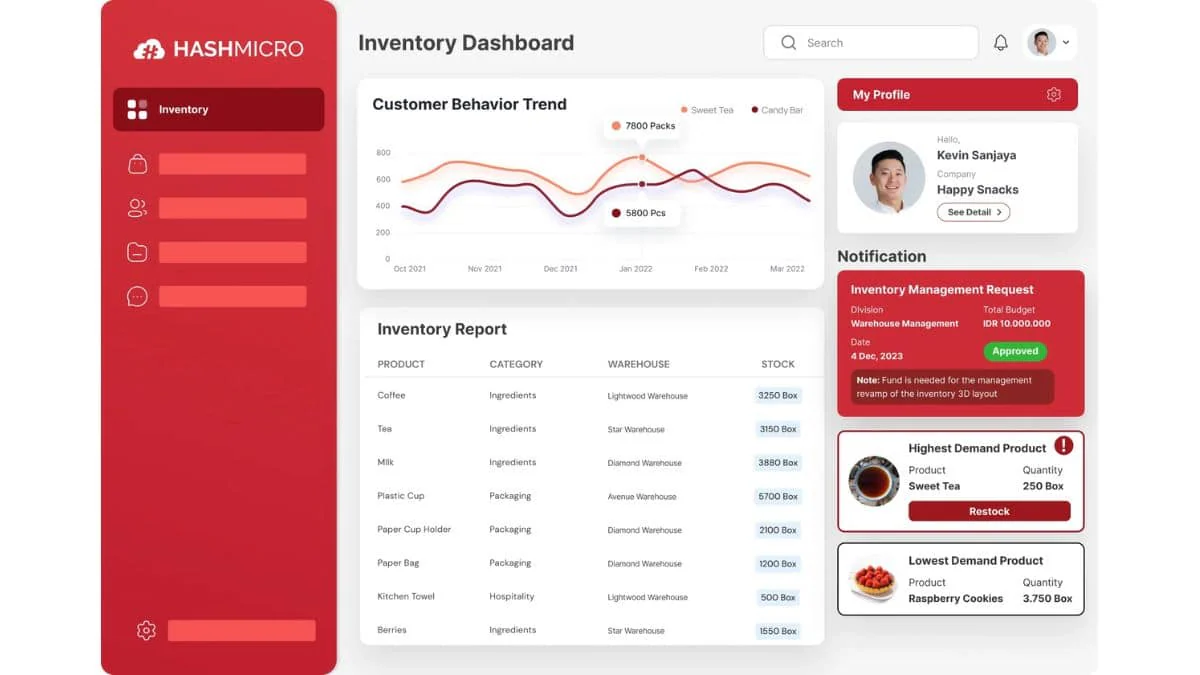
HashMicro offers a powerful Warehouse Management System (WMS) designed to enhance efficiency and accuracy in zone-picking operations. One key feature is automated zone assignment and order tracking, which are seamlessly integrated into our WMS solution for real-time warehouse optimization.
Experience the capabilities of HashMicro’s WMS Solution through a free demo. Explore how automation streamlines warehouse zone-picking, reduces travel time, and improves order accuracy, ensuring faster fulfillment and better inventory control.
Why choose HashMicro? Our WMS software automates critical tasks like zone allocation, picking route optimization, and inventory tracking, minimizing manual errors and increasing warehouse productivity. Its seamless integration with other logistics modules provides a comprehensive solution for warehouse zone management.
It helps businesses improve warehouse picking best practices while optimizing space and labor efficiency. Below are some of the key features of HashMicro’s WMS Solution:
- Product Dimension Tracking: Improve zone-picking efficiency by tracking item dimensions, ensuring optimal storage allocation that minimizes congestion and speeds up retrieval.
- Location Dimension Management: Automatically calculate and assign storage locations based on item size, reducing misplacements and improving picking accuracy in warehouse zones.
- Putaway Strategy Settings: Define smart storage strategies to place new inventory in the most efficient zones, reducing picker travel time and enhancing order fulfillment speed.
- Putaway Capacity Checking: Prevent overstocking by verifying storage capacity before placing items, ensuring a balanced distribution across warehouse zones for smoother picking.
- Warehouse Pallet Racking: Organize shelves strategically to categorize items by type and function, speeding up zone-picking and reducing search time for warehouse staff.
- Warehouse In-Depth Reporting: Generate real-time reports to track zone-picking performance, identify inefficiencies, and refine warehouse strategies for maximum productivity.
These capabilities enhance order fulfillment speed, reduce operational costs, and improve warehouse organization. With HashMicro’s WMS Solution, businesses can efficiently manage zone picking, maximize productivity, and achieve long-term warehouse efficiency.
Conclusion
Zone picking can help warehouses manage order fulfillment more efficiently by dividing work into focused areas. However, its effectiveness depends on proper zone planning, balanced workloads, accurate stock placement, and clear coordination between picking and packing teams.
Before applying this method, businesses should review their warehouse layout, SKU movement, order volume, and fulfillment priorities. This helps determine whether zone picking is the right approach or whether another method, such as wave picking or batch picking, would better match daily operations.
A free demo can help warehouse teams see how zone assignment, picking routes, inventory visibility, and fulfillment tracking work inside a warehouse management system before deciding how to structure their picking process.
FAQ Zone Picking
What Is Zone Picking in Warehouse Operations?
Zone picking is a warehouse order fulfillment method where the storage area is divided into specific sections, called zones. Workers are assigned to pick items only from their designated zone rather than walking through the entire warehouse for each order. This strategy reduces travel time and increases picking accuracy.
How Can a WMS Improve Zone Picking Efficiency?
A good Warehouse Management System (WMS) helps automate zone assignments, monitor order progress, optimize pick routes, and provide real-time inventory tracking. This reduces manual errors and improves overall warehouse productivity by aligning zone picking with inventory control and labor planning.
Is Zone Picking Suitable for All Warehouses?
No, zone picking is not suitable for all warehouses. It works best for larger warehouses with high order volumes, wide SKU variety, and clearly divided storage areas. Smaller warehouses with limited SKUs may not gain the same efficiency benefits because the benefit of reduced travel time is less significant. Warehouses should evaluate their layout, order volume, and product diversity before implementing this strategy.
What Are Common Challenges with Zone Picking?
Even though zone picking boosts efficiency, it can present challenges like uneven workload distribution across zones, coordinating order consolidation when items come from multiple zones, and balancing picker assignments to avoid bottlenecks.