






Businesses often need a structured way to manage purchasing requests before operational spending occurs. Without proper approval workflows, procurement activities can become difficult to track, control, and validate across departments.
Purchase requisitions help businesses standardise purchasing requests through approval, budget validation, and procurement review processes. This improves spending visibility while reducing procurement errors and unauthorised purchases.
Key Takeaways
Understand how purchase requisitions support procurement control, approval workflows, and purchasing visibility across business operations.
Learn the operational differences between purchase requisitions and purchase orders within the procurement process.
Explore the complete workflow for creating, approving, validating, and processing purchase requisitions more efficiently.
Discover how procurement software improves approval routing, budget tracking, procurement visibility, and purchasing coordination.

What Is a Purchase Requisition?
A purchase requisition is an internal document used by employees or departments to request the purchase of goods, services, or materials for business operations. It acts as the starting point of the procurement process before any purchase is made.
The document helps businesses review spending requests through approval workflows before converting them into purchase orders. This improves procurement control, budget visibility, and policy compliance across purchasing activities.
Purchase Requisition vs Purchase Order
Purchase requisitions and purchase orders serve different functions in the procurement process. A purchase requisition is used internally for approval, while a purchase order is sent to suppliers to confirm a purchase.
Understanding the difference helps businesses improve procurement control and purchasing accuracy.
1. Key differences between PR and PO
A purchase requisition is an internal request document created before a purchase is approved. It helps businesses validate operational needs, budgets, and approval requirements before committing company funds.
A purchase order is generated after the requisition approval process is completed. The document is sent to suppliers to confirm pricing, quantities, delivery terms, and purchasing agreements.
2. Internal vs external documents
Purchase requisitions are internal procurement documents used between employees, department managers, finance teams, and procurement departments. They are designed to support approval workflows and spending control within the business.
Purchase orders are external purchasing documents sent directly to vendors or suppliers. Once accepted by the supplier, the purchase order may also serve as a legally binding commercial agreement.
3. When each is used
Purchase requisitions and purchase orders are used at different stages of the procurement process.
- A purchase requisition is used when employees or departments need approval to purchase goods or services.
- A purchase requisition is reviewed through approval workflows, budget checks, and procurement validation processes.
- A purchase order is created after the requisition receives approval from authorised stakeholders.
- A purchase order is then sent to the selected supplier to officially initiate the transaction.
Why Purchase Requisitions Are Important
Purchase requisitions help businesses improve purchasing control, approval visibility, and budget management before spending occurs. Structured workflows also support procurement accountability across departments.
As businesses scale, formal requisition processes become increasingly important for reducing unauthorised purchases and improving procurement compliance.
1. Prevent unauthorised spending
Purchase requisitions help businesses review purchasing requests before company funds are committed. Approval workflows also reduce purchases made outside approved procurement policies or budgets.
This process also helps procurement and finance teams maintain better oversight of operational spending across departments and business units.
2. Improve budget control and visibility
Purchase requisitions give businesses better visibility into operational spending before purchases are finalised. This helps finance teams monitor budgets more accurately and reduce unplanned expenses.
Centralised approval records also improve financial tracking, reporting accuracy, and purchasing accountability across procurement activities.
3. Reduce errors and duplicate purchases
Structured requisition workflows help businesses reduce procurement errors and standardise purchasing requests. Employees can submit clearer specifications, quantities, and budget information before procurement processing begins.
Centralised procurement visibility also helps businesses avoid duplicate purchases, inconsistent ordering processes, and unnecessary operational spending.
Purchase Requisition Process
Purchase requisitions follow a structured approval process before purchases are officially made. This helps businesses maintain procurement control, budget visibility, and purchasing compliance across departments.
1. Identify business needs
The process starts when employees or departments identify a need for goods, services, or operational materials. This may include inventory replenishment, equipment requests, software purchases, or project-related procurement needs.
2. Create purchase requisition
Employees submit a purchase requisition form containing item descriptions, quantities, estimated costs, supplier details, and business justification. The request is then routed into the procurement approval workflow.
3. Approval workflow
Managers, procurement teams, or finance departments review the requisition before approving the purchase request. Approval requirements often depend on purchasing value, department policies, or operational budgets.
4. Budget check and validation
The requisition is reviewed against available budgets and procurement policies before purchasing approval is finalised. This helps businesses reduce overspending and maintain financial visibility across departments.
5. Convert to purchase order
Once approved, converting requests into orders is completed by generating a purchase order sent to the selected supplier. The procurement process then moves into purchasing, delivery, and invoice management stages.
What to Include in a Purchase Requisition Form
Purchase requisition forms should contain complete operational and financial information before entering approval workflows. Accurate documentation helps businesses improve procurement visibility, reduce processing delays, and maintain purchasing accuracy.
1. Requester and department details
- Employee or requester name
- Department or business unit
- Contact information
- Project or cost centre reference
2. Description of goods or services
- Item or service description
- Product specifications or requirements
- Required delivery timeline
- Business purpose or justification
3. Quantity, cost, and budget information
- Requested quantity
- Estimated unit price
- Total estimated cost
- Budget or expense category
4. Supplier details and supporting documents
- Preferred supplier or vendor
- Template for quotation requests or pricing documents
- Supporting files or procurement references
- Additional procurement notes or approvals
Purchase Requisition Workflow in Procurement

Purchase requisition workflows help businesses review, approve, and process procurement requests more efficiently. Structured workflows also improve purchasing visibility and policy compliance.
Clear approval structures and system integration become increasingly important as procurement operations grow.
1. Role of employees and departments
Employees identify operational needs and submit purchase requisition requests for approval. Department managers, finance teams, and procurement staff then review and validate the request before purchasing approval is granted.
Each department plays a role in validating budgets, operational requirements, procurement policies, and supplier selection throughout the approval process.
2. Approval hierarchies
Approval hierarchies help businesses control purchasing authority across departments and spending categories.
- Low-value purchases may only require manager approval
- Larger purchases may require finance or executive approval
- Procurement teams may review supplier or contract compliance
- Multi-level approvals help reduce unauthorised spending
3. Integration with procure-to-pay (P2P)
This integration supports centralised supplier coordination, improves procurement, reporting accuracy, and operational efficiency across the purchasing lifecycle.
Challenges in Purchase Requisition Management
Manual procurement processes can create approval delays, inconsistent workflows, and limited spending visibility. Businesses often struggle to maintain procurement control without structured systems and approval procedures.
1. Manual approval delays
Manual approval processes can slow procurement activities, especially when approvals rely on emails, spreadsheets, or paper-based documentation. Delayed approvals may affect purchasing timelines and supplier coordination.
2. Lack of spend visibility
Disconnected procurement processes make it difficult for businesses to monitor operational spending accurately. Limited visibility can lead to budgeting issues, duplicate purchases, and inconsistent procurement reporting.
3. Poor policy compliance
Without structured procurement workflows, employees may bypass approval procedures or submit incomplete purchasing requests. This increases the risk of unauthorised spending and procurement inconsistencies.
Best Practices for Managing Purchase Requisitions
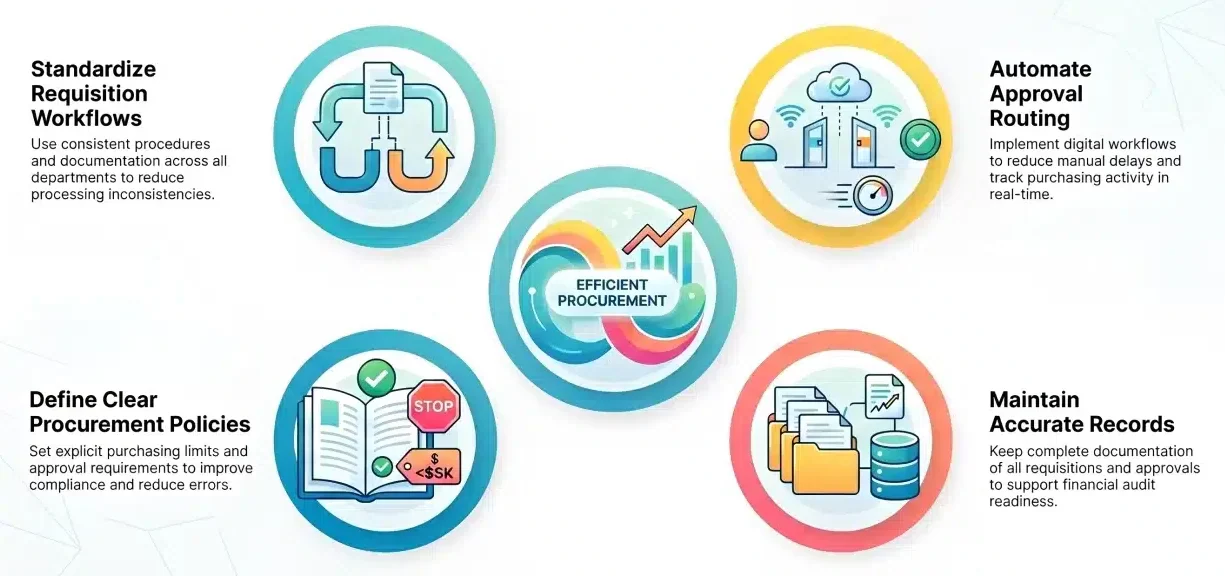
Businesses should establish clear procurement procedures to improve approval efficiency, purchasing visibility, and operational consistency. Structured workflows also help reduce procurement risks and compliance issues.
1. Standardise requisition processes
Businesses should use consistent purchase requisition procedures, approval structures, and documentation requirements across departments. Standardised workflows help improve procurement accuracy and consistency.
2. Automate approval workflows
Automated approval routing helps businesses reduce manual delays and improve procurement efficiency. Digital purchasing solutions help businesses automate approval routing, reduce manual delays and purchasing visibility.
3. Ensure clear procurement policies
Clear procurement policies help employees understand approval requirements, purchasing limits, and documentation standards. This improves compliance and reduces procurement errors.
4. Maintain accurate records
Businesses should maintain complete procurement records for requisitions, approvals, supplier documents, and purchasing activities. Accurate documentation supports reporting accuracy and audit readiness.

How Software Improves Purchase Requisition Management
Software for automating buying coordination helps businesses streamline purchase requisition workflows, approval tracking, and purchasing visibility. Integrated systems also reduce manual administration.
1. Automated approval routing
Procurement systems automatically route requisition requests to the correct approvers based on purchasing rules and approval thresholds. This helps reduce approval delays and workflow bottlenecks.
2. Real-time budget tracking
Integrated procurement software gives finance teams real-time visibility into purchasing requests, budgets, and operational spending. This improves budget control before purchases are approved.
3. Integration with procurement systems
Purchase requisition software can integrate with procurement, inventory, ERP, and finance systems to centralise purchasing workflows. Integrated systems improve visibility and reporting accuracy.
Role of Purchase Requisition in Procure-to-Pay (P2P)
Purchase requisitions help businesses control purchasing requests before procurement activities begin. Structured workflows also improve spending visibility and procurement coordination.
1. First step in the purchasing cycle
Purchase requisitions act as the starting point of the purchasing cycle before purchase orders and payment activities occur. The document helps validate operational needs before purchases are approved.
2. Link between demand and purchasing
Purchase requisitions connect operational requirements with procurement and supplier purchasing activities. This helps businesses align purchasing decisions with budgets and operational priorities.
3. Supporting compliance and audit
Conclusion
Purchase requisitions help businesses improve procurement control, approval visibility, and spending accuracy before purchases are finalised. Structured workflows also reduce procurement errors, unauthorised spending, and operational delays.
Businesses looking to improve purchasing workflows and procurement visibility can also explore procurement software solutions through a free consultation with our team.
Frequently Asked Question
A purchase requisition helps businesses request, review, and approve purchases before company funds are committed. It improves procurement control, spending visibility, and purchasing compliance across departments.
A purchase requisition is an internal document used to request purchasing approval, while a purchase order is an external document sent to suppliers to officially confirm a purchase.
Purchase requisitions are typically approved by department managers, procurement teams, finance departments, or authorised executives depending on company policies and purchasing value.
Purchase requisition forms usually include requester details, department information, item descriptions, quantities, estimated costs, supplier details, and supporting procurement documents.
Yes, procurement software can automate purchase requisition workflows through approval routing, budget tracking, procurement integration, and real-time purchasing visibility.